School life
In a Croatia classroom
Local school customs vary. The best way to learn about a class's day is to ask them directly.

Europe · Country briefing
A child-friendly mission briefing for Thursday 19 November - capital, climate, school day, languages, fun facts, native animals, and five questions to ask the class on the other side of the world.
Climate in November: Cold autumn moving towards winter; short daylight in the north.
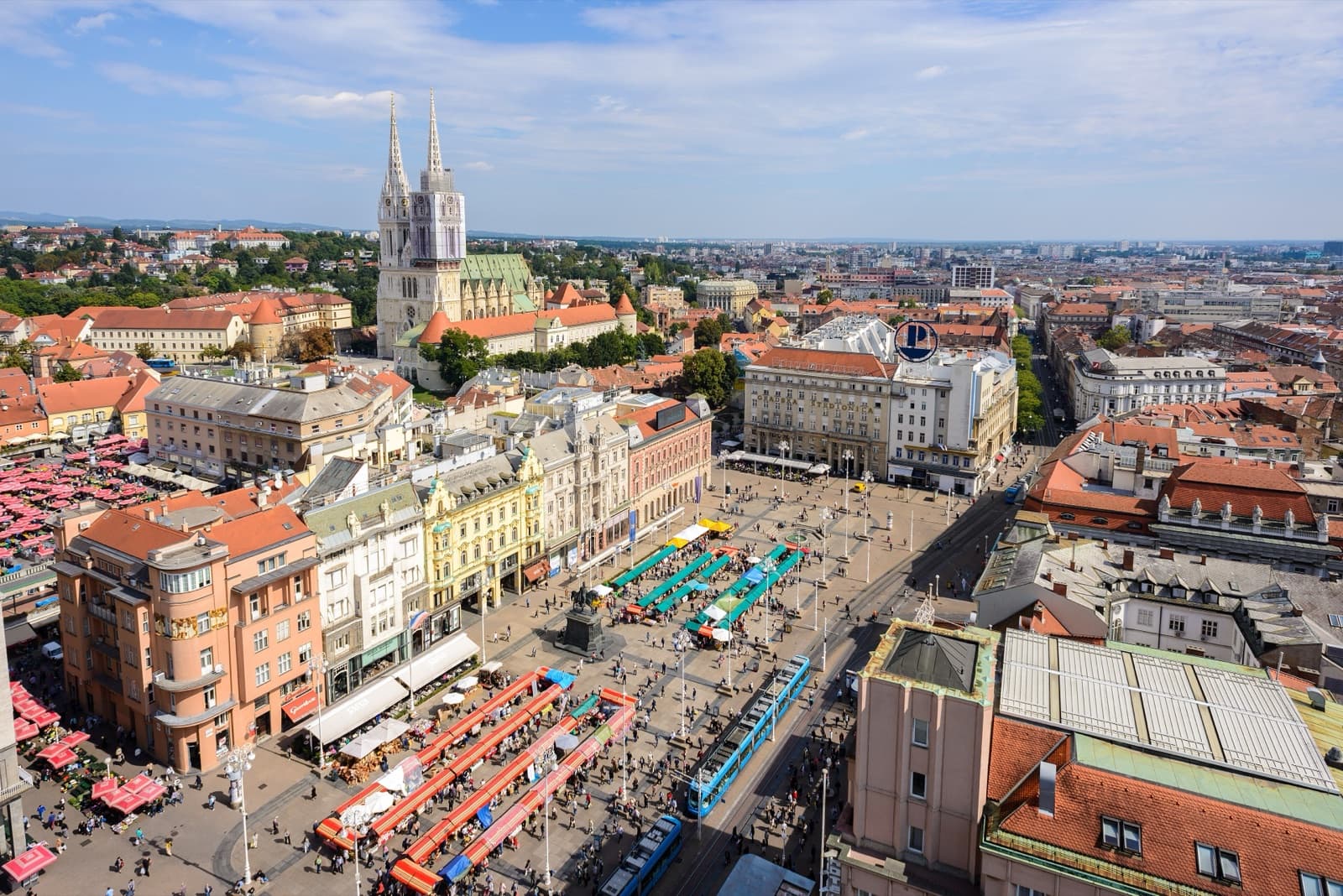
The capital
Zagreb
Photo · Wikimedia Commons
Fun facts
The Adriatic Coast and 1,000+ Islands
A shimmering sea dotted with more than a thousand islands
Open lesson
Plitvice Lakes
Sixteen turquoise lakes linked by waterfalls in a forest
Open lesson
Dubrovnik Old Town
A walled city on the sea, built entirely of white limestone
Open lesson
Diocletian's Palace, Split
A Roman palace turned into a whole living city
Open lesson
Hvar Island Lavender
A sun-baked island that turns purple every June
Open lesson
Istrian Truffles
The world's most prized hidden treasure - found by dogs in the forest
Open lesson
Tap any card to open a class-ready mini-lesson - for the teacher to walk through, or an older child to read aloud.
Native animals
The Brown Bear of Croatia
One of Europe's largest bear populations roams the Croatian forests
Open lesson
Bottlenose Dolphins of the Adriatic
A pod of wild dolphins that has called Croatian waters home for decades
Open lesson
Tap any animal to open a class-ready lesson about it.
School life
Local school customs vary. The best way to learn about a class's day is to ask them directly.
Greetings to learn
Five questions to ask
What not to assume
Culture
Food
Music
Sport
Festivals
Tap any chip to open a class-ready lesson - what it is, why it matters, fun facts.
Choose Croatia when you register - we'll show you the time-zone feasibility.
We'd like to use Google Analytics cookies to see how this site is used and make it better. No advertising, and never any pupil data. How we use cookies.