
Classroom lesson · Diocletian's Palace, Split · 🇭🇷 Croatia

Diocletian's Palace, Split

A Roman palace turned into a whole living city

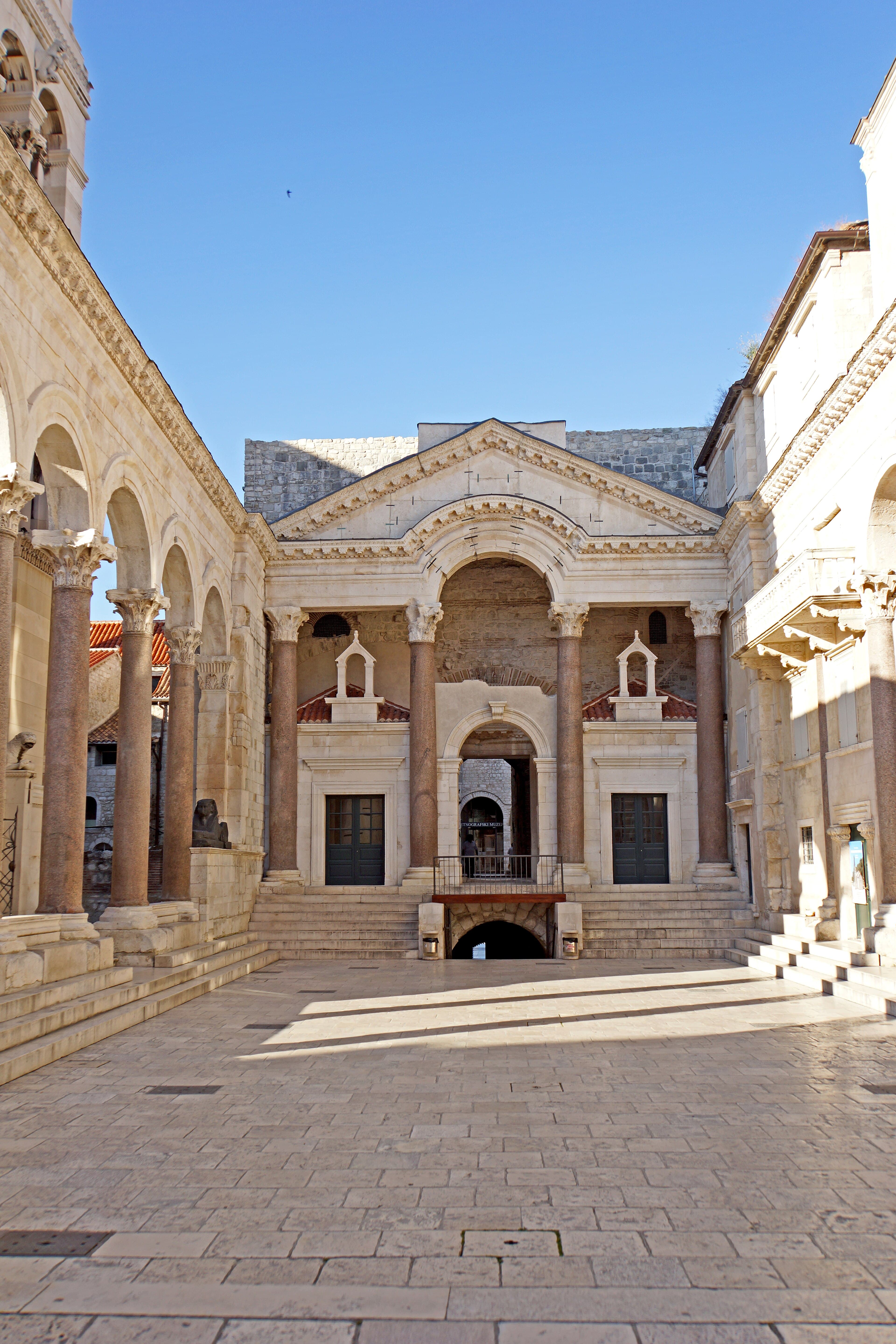
The colonnaded Peristyle courtyard inside Diocletian's Palace in Split

Photo · Wikimedia Commons

What is it?

In the city of Split, a Roman emperor named Diocletian built an enormous palace about 1,700 years ago. What makes it extraordinary is this: people never left. When the empire changed, local families moved into the rooms, halls and corridors of the palace and turned it into a town. Today, about 3,000 people still live, work and run cafés inside the ancient walls.

Tell me more

Diocletian's Palace was built around the year 300 AD, more than 1,700 years ago. It covered about 3 hectares - roughly the size of three football pitches - and had thick walls, towers, a grand courtyard and hundreds of rooms. Diocletian lived there for the last nine years of his life.

The palace was so well built that when the empire declined, the stone walls were simply too solid to demolish. People moved in and adapted the rooms. A temple became a cathedral. A mausoleum became a bell tower. Underground vaults that stored the palace's supplies became basement shops and galleries. Layer after layer of history piled on top of each other.

Today you can walk from a modern café straight into a 1,700-year-old Roman basement, with the original stone columns still standing. The peristyle - the grand open courtyard - is now used as an open-air concert venue in summer. Children play in the alleys that were once Roman corridors.

Archaeologists are still finding new things. The palace is so large and so densely inhabited that full excavation is almost impossible - there are apartments on top of Roman rooms on top of even older buildings. It is like a layer cake of history.

In the classroom

Walk your class through this in 15 minutes.

Talk together

Discussion prompts

  1. 01Why might people move into an old palace rather than knocking it down and building something new?
  2. 02The palace has been used for very different things over 1,700 years. What building near your school might people be using differently in 1,700 years?
  3. 03If you found an ancient room buried under your school playground, what would you hope was in it?
Try this

Classroom activity

Make a 'layer cake' timeline poster. Draw four horizontal strips: BOTTOM = what the palace was used for in Roman times; NEXT = what happened when the empire changed; NEXT = the Middle Ages; TOP = today. Label each layer with one building and one activity. What surprises you about how things change?