
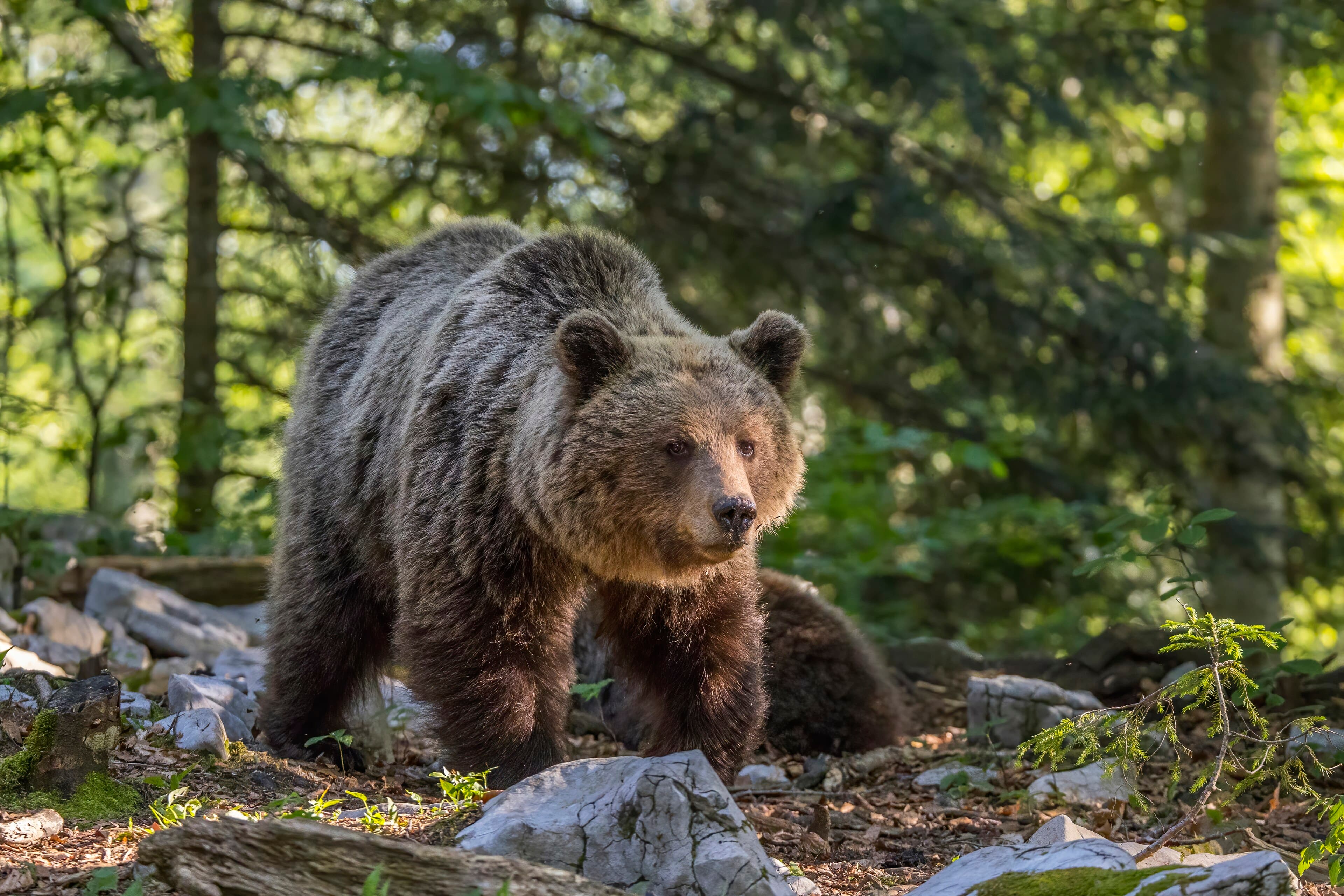
Croatian brown bears are omnivores, which means they eat both plants and animals. Most of their diet is actually plants - berries, acorns, grass, roots and honey from wild bee nests. In summer and autumn they eat as much as possible to build up thick layers of fat for the winter. A bear can put on several kilograms in a single day during berry season.
In winter, brown bears den in hollow trees, rocky caves or dug-out holes under the roots of fallen trees. They sleep for months in a very deep rest called torpor - not quite a full hibernation, because their body temperature does not drop as far as a true hibernator. Bear mothers give birth to their cubs during this winter sleep, while still inside the den.
The forests of Gorski Kotar, nicknamed 'the Green Lungs of Croatia', are so thick and undisturbed that the bears, wolves and lynx living there rarely encounter humans. Rangers monitor the population carefully. The bears have favourite routes through the forest, favourite berry patches and favourite drinking spots that they return to year after year.
Brown bears are important to the forest ecosystem. When they dig for roots and insects, they turn over the soil. When they carry fruit and berries and deposit the seeds elsewhere, they help plants spread to new areas. When they catch fish from rivers, the nutrients they leave behind fertilise the riverbanks.