
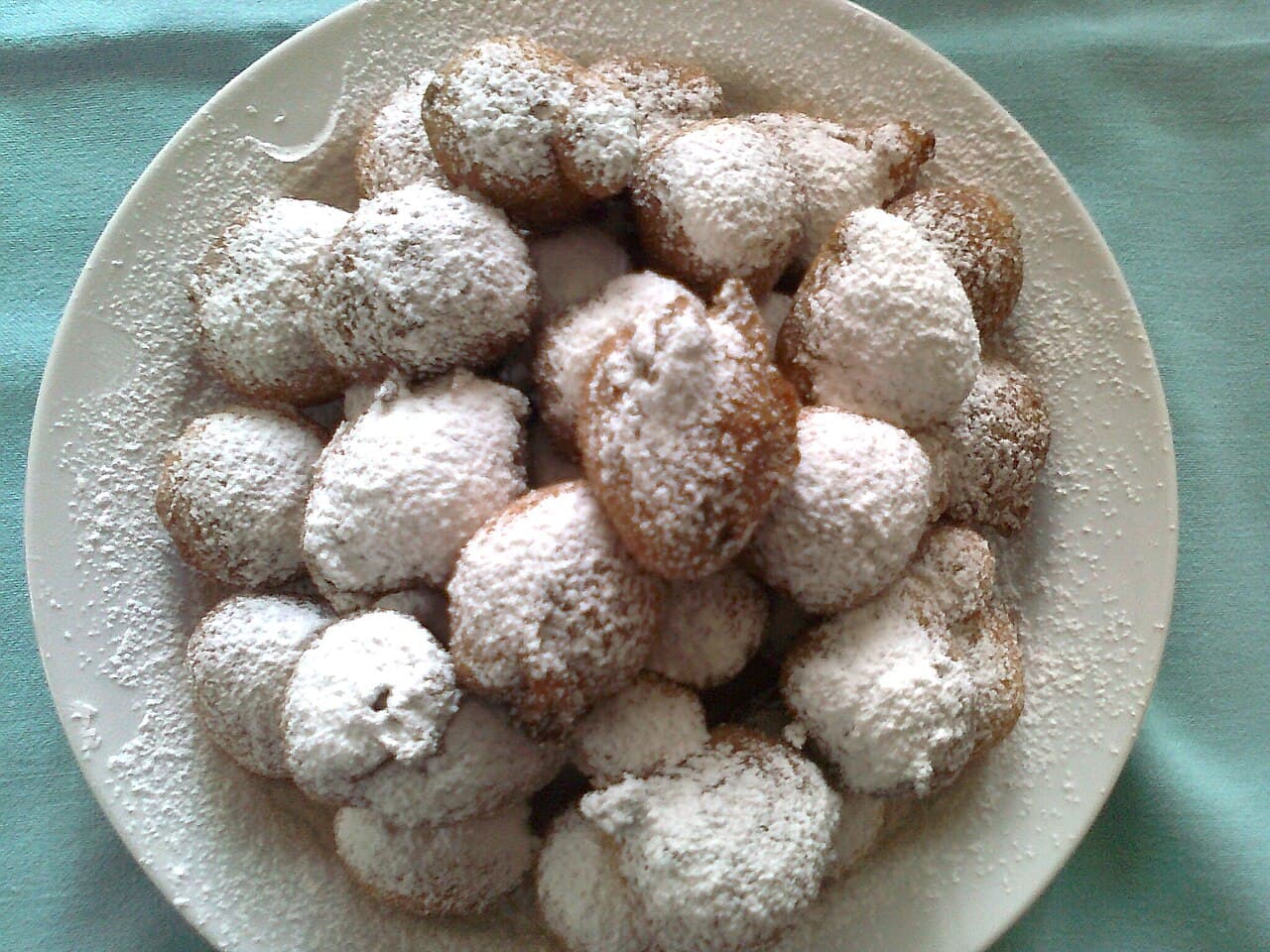
The batter is made from flour, eggs, sugar, a little brandy (or fruit juice for children), raisins, and lots of grated lemon and orange peel. Small spoonfuls are dropped into hot oil and fry into perfect little spheres, golden brown all over. They puff up as they fry, giving that soft, airy inside.
Fritule are especially connected to Dalmatia and the islands, where they have been made for hundreds of years. In some island villages, older women are famous for their fritule and bring enormous batches to church fairs and town celebrations. The secret, locals say, is always in the amount of lemon zest.
At Christmas, fritule are piled high on plates and passed around to every visitor. In some families they are iced with a dusting of powdered sugar. In others they are eaten plain and dipped into warm chocolate. In Istria, a very similar treat called krostule is made - thin, twisted fried pastry ribbons - showing how similar traditions can appear in slightly different forms across a small country.
Fritule are also popular at the famous Rijeka Carnival in February, sold from stalls while carnival floats parade through the streets. The smell of frying dough and sugar in cold February air has become one of the signature scents of a Croatian winter.