
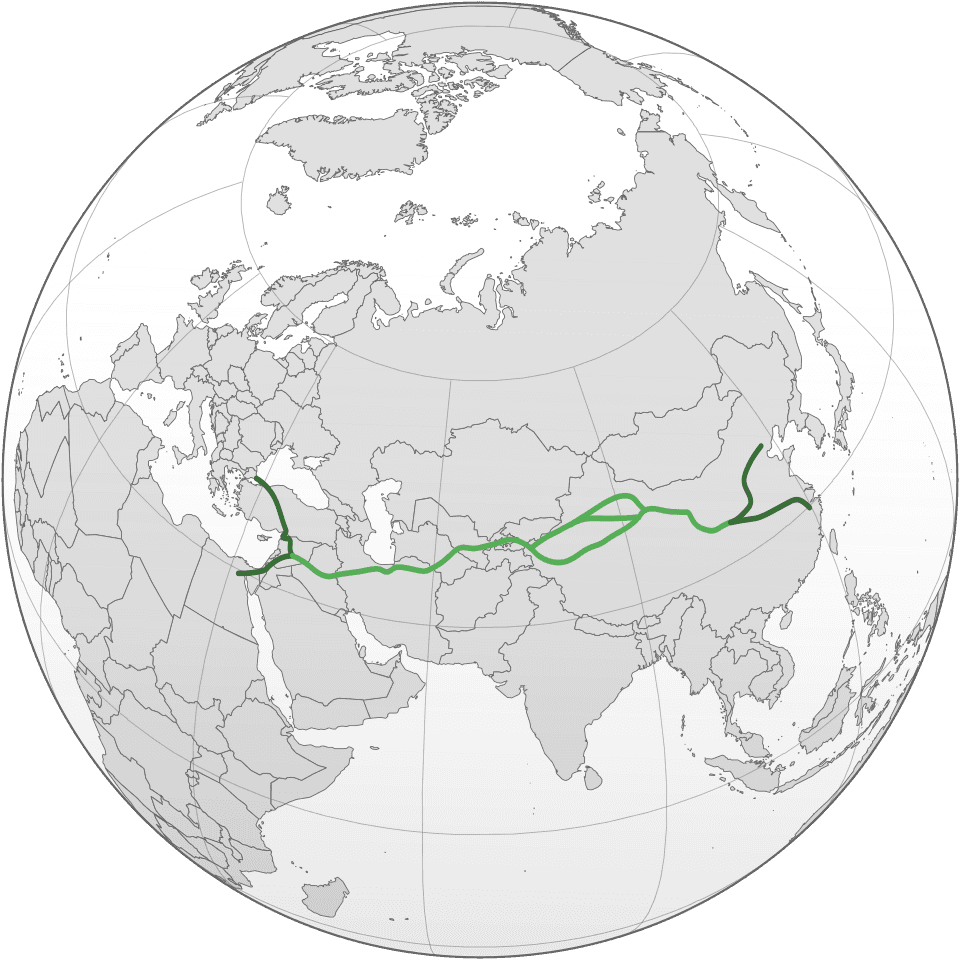
It got its name from silk, a soft fabric made in China from the threads of silkworms. Europe could not make silk yet, so traders carried it west on camels. In exchange, they brought back gold, glass, horses, spices, paper and even new foods. Apricots, peaches and noodles all travelled along the Silk Road.
But the most important things traded weren't really objects - they were ideas. New types of music travelled from one side of the world to the other. So did new types of maths, new ways of building, new alphabets and new stories. A song sung in a market in Samarkand might be sung the next year in a market in Italy.
Camels were the trucks of the Silk Road. A Bactrian camel (which has two humps) can carry around 200 kilograms on its back and walk for days without water. Long lines of camels - called caravans - would set off together for safety, sometimes with hundreds of animals.
By the time you got from China to the Mediterranean, you might have crossed three deserts, climbed two huge mountain ranges and changed languages five times. Few people did the whole trip. Most traders went part way, swapped their goods, and turned back. The Silk Road was a relay race, not a single race.