
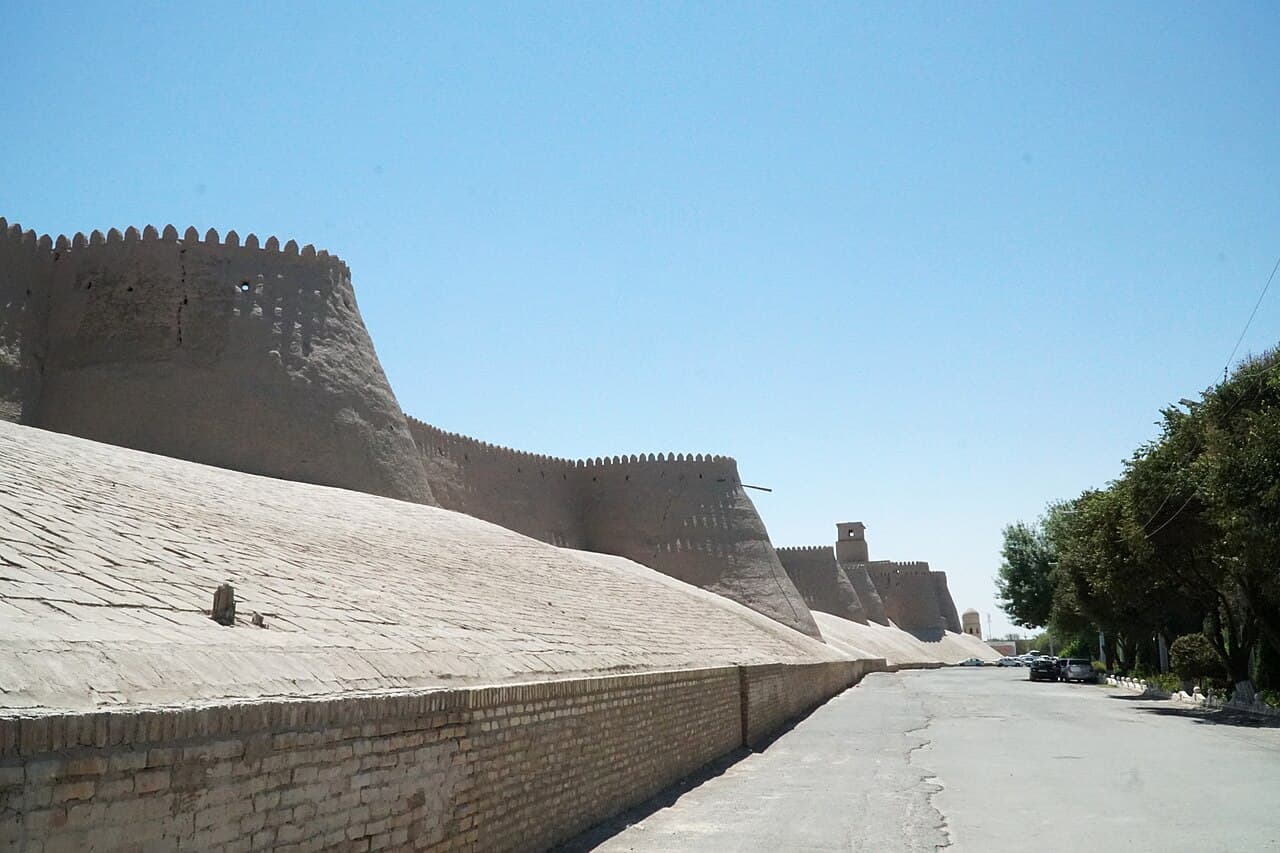
The wall around Itchan Kala is about 2 kilometres long and 10 metres high. It is made of clay bricks the colour of warm sand. Children playing inside the walls can climb the gentle slopes up to the top in some places and look out over the desert that stretches away to the west.
Inside the walls there are around 50 historic buildings, all close together: minarets (towers), madrasahs (old schools), little shops, and houses. The most famous is the Kalta-Minor, a fat, half-built tower covered in bright turquoise tiles. The plan was to build it to 70 metres high, but the builders stopped at 29 - so it looks like a tower that decided to take a break.
Khiva used to be a stop on a more southern branch of the Silk Road. Traders coming across the desert would be very happy to see the walls - inside meant water, food and safe sleep. The whole town has hardly changed in a hundred years, so when you visit you can imagine being a traveller arriving on a camel.
Outside Khiva is the Kyzylkum Desert. 'Kyzylkum' means 'red sand'. Tiny lizards, jerboas (little jumping mice) and even some wild camels live in the red dunes. At sunset, the colours of the sand and the walls blend together into one warm orange picture.