
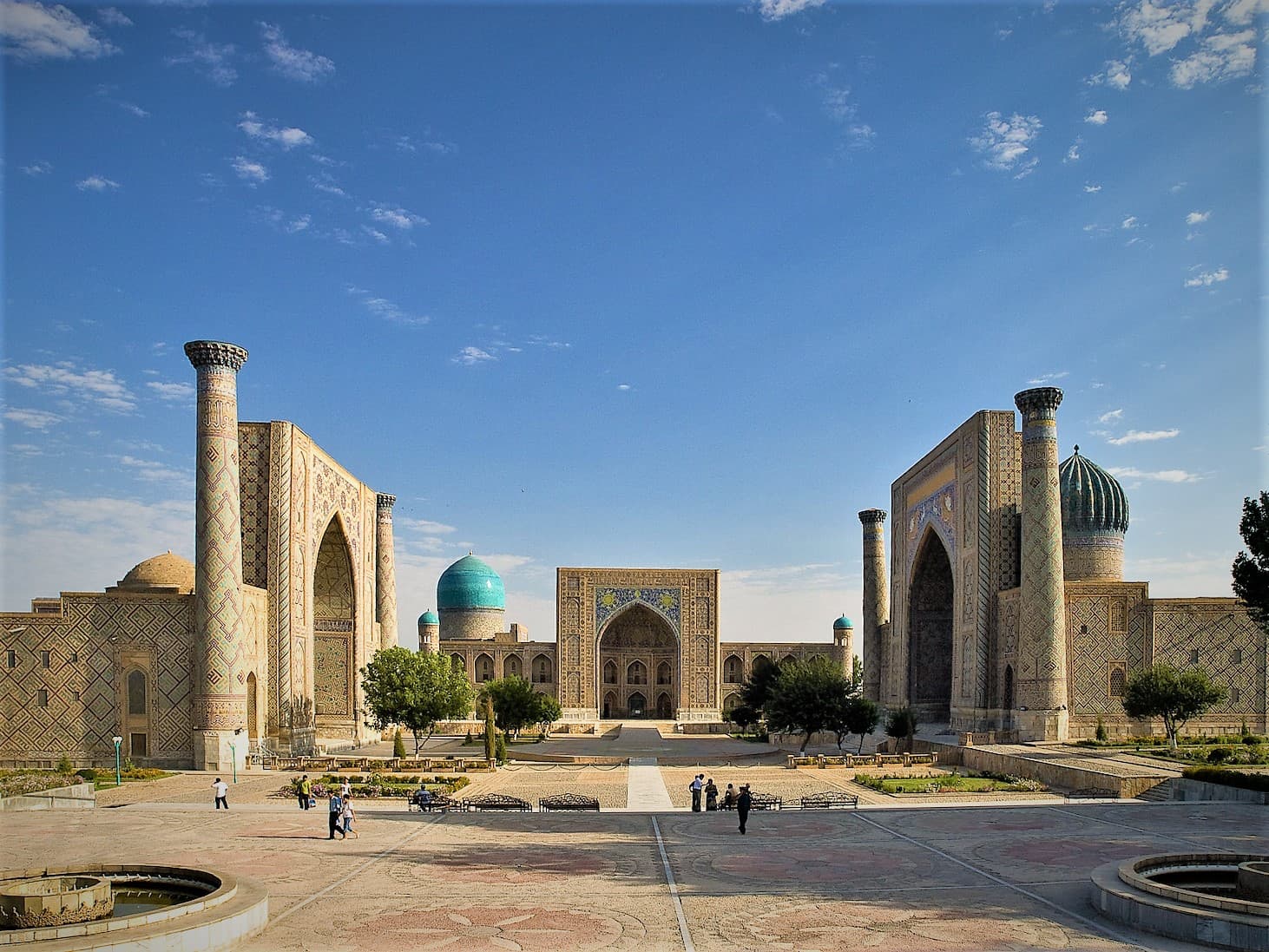
The most famous square in Samarkand is called the Registan. Three enormous buildings stand around it, covered in tiny patterned tiles. Each tile is no bigger than your hand, but together they make patterns of stars, flowers and Arabic letters that stretch up four storeys high. Builders have been keeping the tiles in good shape for more than 600 years.
Samarkand was an important stop on the Silk Road - the great trading route that connected China with Europe. Travellers would arrive on camels, rest in big courtyards called caravanserais, swap their goods, and head on. Because of all the visitors, Samarkand became a city of many languages, many foods and many ideas.
The city is full of bazaars (markets) where people still sell spices, fresh bread, dried fruit and beautiful fabrics. The smell of warm flatbread, called non, drifts out of every bakery. The market sellers call out, joke with the customers and weigh things on old metal scales.
Uzbek children growing up in Samarkand learn early to greet visitors with a hand over the heart and the word 'Assalomu alaykum' (which means 'peace be upon you'). It is a very old way of saying hello that travelled along the Silk Road with the city itself.