
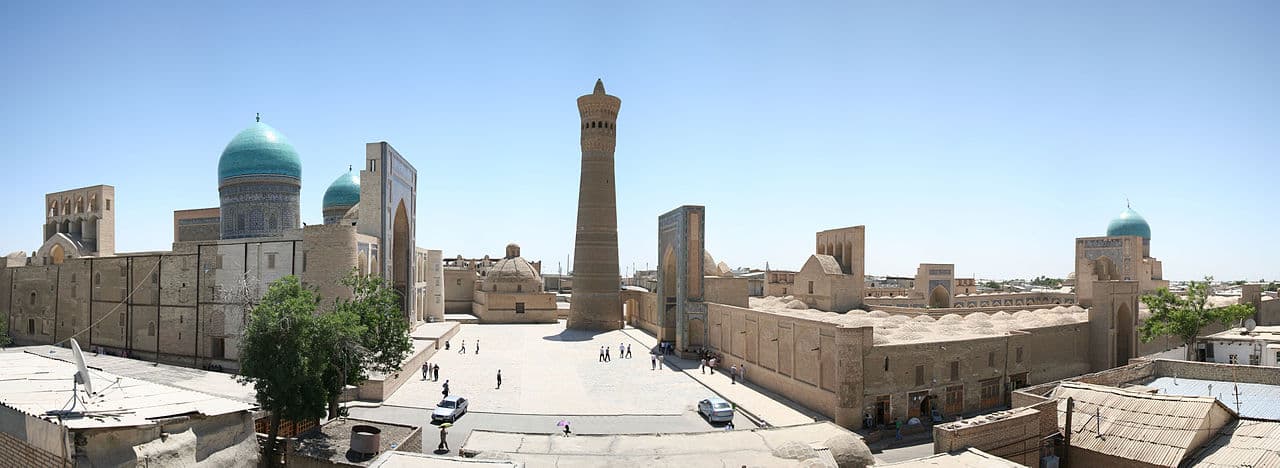
At the heart of Bukhara is the Kalyan Minaret - a tall, slim brick tower over 45 metres high. It was finished in 1127, which means it has been standing for nearly 900 years. Long ago, travellers crossing the desert at night could see lamps lit at the top and use it to find the city.
Bukhara has special covered markets called 'tims' or 'trading domes'. Each one is a brick building shaped like a giant dome, cool inside even in summer, and full of small stalls. One sold hats, another sold spices, another sold gold and silver. The domes are still used by traders today.
Like Samarkand, Bukhara was a key stop on the Silk Road. Around 60,000 camels are thought to have passed through every year at its busiest. Travellers stayed in big inns called caravanserais, with rooms upstairs for people and stables downstairs for camels.
Walking around Bukhara today, children might pass craftspeople hammering copper plates, weaving carpets on giant looms, or painting tiny pictures inside little wooden boxes. Many of these crafts have been passed from grandparent to parent to child for over a thousand years.