
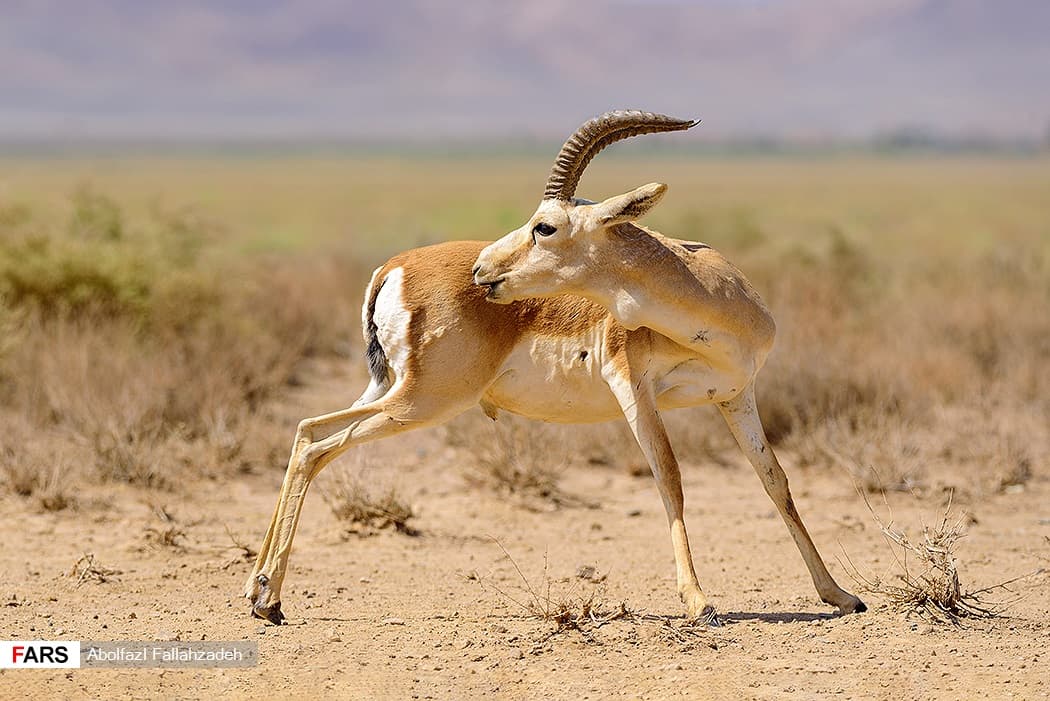
The gazelle gets its strange name from a soft, round lump on the throat of the males. 'Goiter' is an old word for a swelling on the neck. The males puff up this throat lump during the autumn, and it gives them a deeper voice for calling to each other across the open steppe.
Goitered gazelles live in small herds. Mothers and babies stay together in nursery groups in the spring, while young males form their own little gangs nearby. They eat tough desert grasses, the leaves of small bushes, and seeds. They get most of their water from their food and can go for days without drinking.
Their main trick when they sense danger is to run - very fast and very far. They can sprint at 60 km/h for short bursts and trot at 30 km/h for hours. On the flat, open steppe, that kind of speed is the gazelle's main protection.
Goitered gazelles used to be very common all across Central Asia. Today they are rarer. Uzbekistan has set aside special protected areas like the Bukhara Breeding Centre, where staff work to look after the gazelles and help their numbers grow back. School groups sometimes visit to learn about them.