
Classroom lesson 路 Music馃嚭馃嚳 Uzbekistan

The dutar - a two-string Uzbek lute

A wooden instrument that has been played for centuries

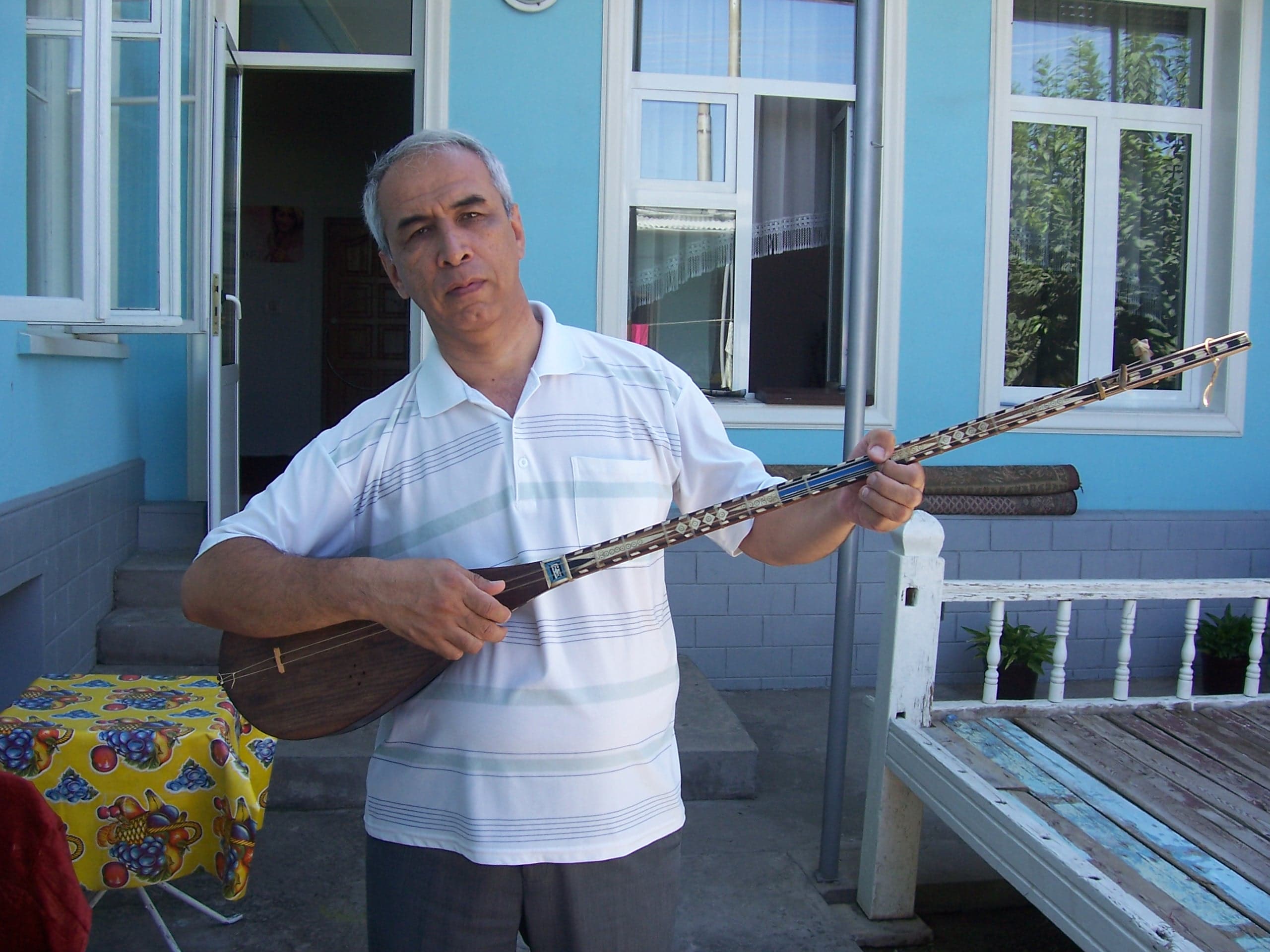
A traditional wooden dutar lute with a long neck and a pear-shaped body

Photo 路 Wikimedia Commons

What is it?

The dutar is a traditional Uzbek instrument that looks a little like a long-necked guitar. It has only two strings (in Persian, 'do' means two and 'tar' means string), and it is made entirely of wood. Its sound is gentle and a bit dreamy, perfect for telling stories with music.

Tell me more

The dutar has a pear-shaped body and a long, slim neck. The body is carved out of mulberry wood, which is light and resonant. The strings are usually made of silk - the same silk that travelled the Silk Road - so the dutar is, in a small way, made of the road itself.

Players pluck and strum the two strings with their fingers, not a pick. Even though there are only two strings, an experienced dutar player can make a huge range of sounds - happy, sad, fast, slow. Some traditional songs go on for half an hour, telling a long story with only the dutar and a singing voice.

Children in Uzbekistan often learn the dutar at music school. It takes a long time to be good - the fingertips get a bit sore at first - but most learners say it is a calming instrument to play. You can sit cross-legged on a cushion, hold the dutar lightly across your lap, and let the music flow.

The dutar is part of a wider Central Asian musical tradition called Shashmaqam, which means 'the six maqams' or 'the six modes'. Shashmaqam is a kind of classical music with old, careful patterns. UNESCO has added it to its list of important world traditions, because it has been kept alive for hundreds of years.

In the classroom

Walk your class through this in 15 minutes.

Talk together

Discussion prompts

  1. 01What might a two-stringed instrument do well that a six-stringed one cannot? And the other way around?
  2. 02The dutar can tell stories that last half an hour. Could you listen to one song that long?
  3. 03Is there a musical instrument from your family or community you wish more people knew about?
Try this

Classroom activity

Make a 'mini dutar' from a tissue box and two elastic bands stretched over it, with a pencil under the bands for a bridge. Pluck one and then the other. Discuss as a class: how is the sound changed by the length, tightness or thickness of the band?