
Classroom lesson 路 Music馃嚭馃嚳 Uzbekistan

Shashmaqam - the music of six modes

A classical Central Asian tradition over 600 years old

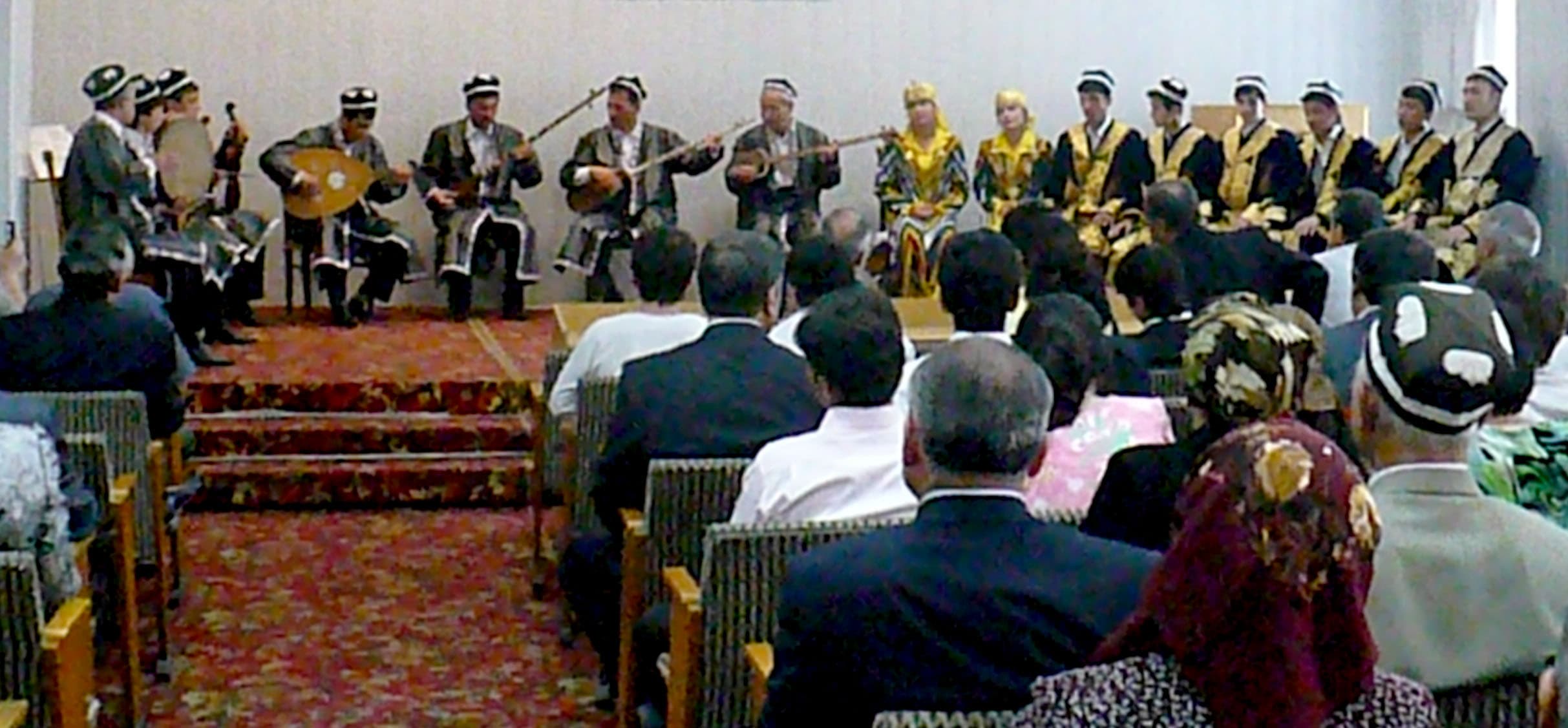
A group of Uzbek and Tajik musicians playing traditional Shashmaqam music together

Photo 路 Wikimedia Commons

What is it?

Shashmaqam is the classical music of Uzbekistan and Tajikistan. The name means 'six maqams', where a maqam is a kind of musical mode or scale - a special way of arranging notes. Each of the six maqams has its own mood. Shashmaqam has been carefully passed down by teachers and students for over 600 years.

Tell me more

A typical Shashmaqam performance has a small group of musicians sitting together. There is the dutar (two-stringed lute), the tanbur (a longer-necked lute), a tambourine called a doira and a singer or two. Sometimes there is also a small violin called a sato. They sit in a circle and listen carefully to each other.

Shashmaqam music does not have a 'big finish' the way pop songs do. Instead, it is a journey. A piece might start slow and quiet, build up to faster, more excited sections in the middle, and then settle back down. A whole Shashmaqam suite can last over an hour. Listeners often close their eyes.

The words sung in Shashmaqam are often old poems, hundreds of years old, full of pictures - flowers, gardens, friendship, far-away travellers, the moon. The singers are trained to give every word its proper feeling. Even people who don't speak Uzbek or Tajik can usually tell when the song is sad and when it is bright.

Today there are special schools and groups in Tashkent, Bukhara and Samarkand where children and teenagers learn Shashmaqam from older masters. UNESCO has added Shashmaqam to its list of important world cultural traditions, recognising it as a treasure shared by Uzbekistan, Tajikistan and the whole world.

In the classroom

Walk your class through this in 15 minutes.

Talk together

Discussion prompts

  1. 01Some music is meant to be a 'journey' rather than a quick song. What kinds of stories or feelings might need a long song to tell properly?
  2. 02Singers in Shashmaqam are trained to give every word its 'feeling'. Try saying 'good morning' in three different ways. How do you change the feeling?
  3. 03How do you think a piece of music can stay alive for 600 years? Who passes it on?
Try this

Classroom activity

Listen as a class to a short clip of Shashmaqam music. Without speaking, each pupil draws what they imagine - a place, a colour, a feeling. Compare drawings afterwards: how much did the same music make you imagine different things?