
Classroom lesson 路 Food馃嚭馃嚳 Uzbekistan

Samsa - the pastry pocket of Uzbekistan

A baked pastry stuffed with meat or pumpkin, fresh from a clay oven

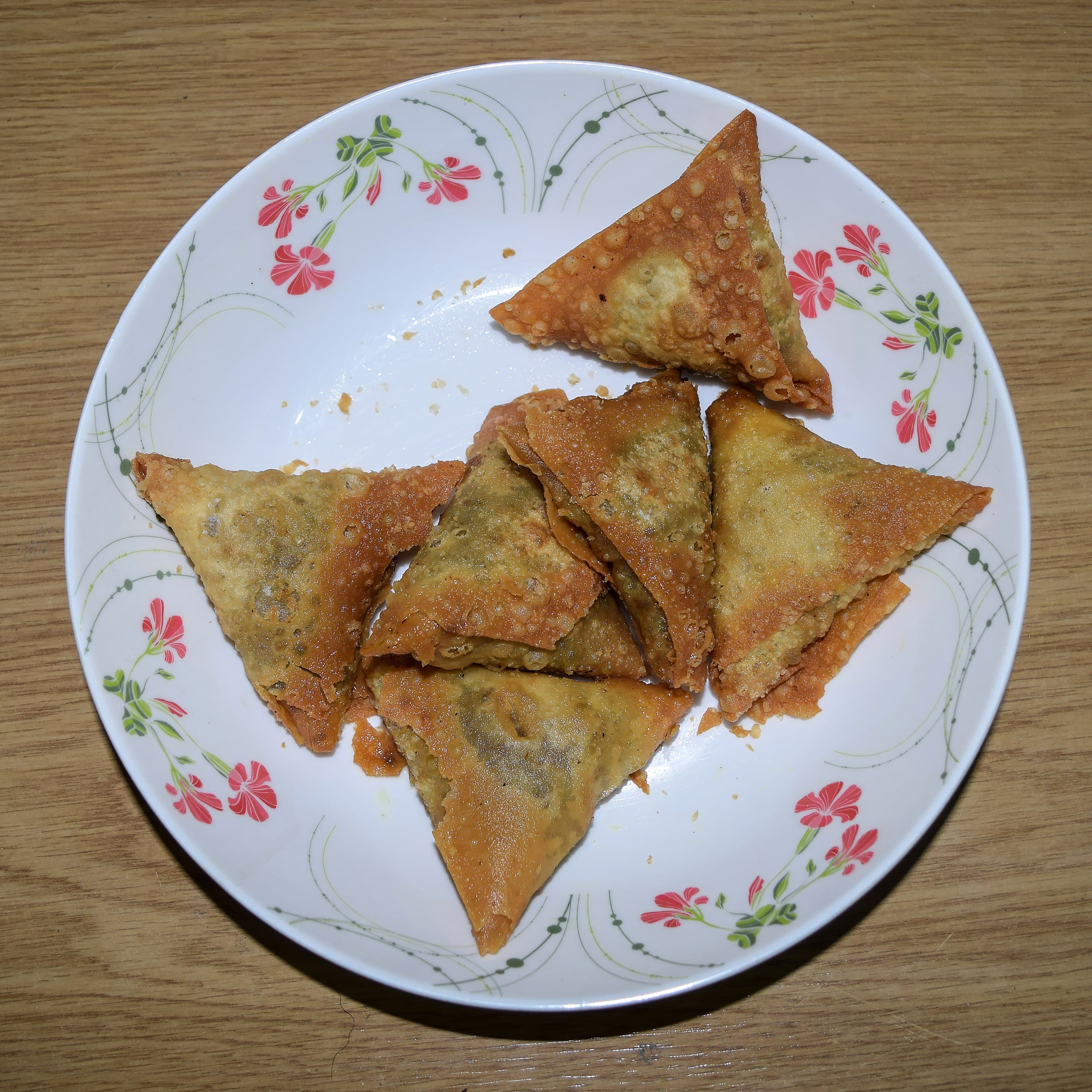
A tray of golden, triangular Uzbek samsas with sesame seeds on top

Photo 路 Wikimedia Commons

What is it?

Samsa is a small, golden pastry pocket, stuffed with chopped meat or vegetables and baked in a tandoor oven. It is one of the most popular street snacks in Uzbekistan. You can spot samsa stalls everywhere - in markets, near schools and along busy streets - because the smell drifts out a long way.

Tell me more

Samsas are usually triangular or round. The dough is rolled thin, filled with a spoonful of finely chopped lamb, onions and a little fat, then folded and sealed. Sesame or poppy seeds are sprinkled on top before baking. The baker presses each samsa against the inside wall of the tandoor, where it bakes in just a few minutes.

Different fillings appear in different seasons. In autumn, when pumpkins are everywhere, samsas are often stuffed with sweet orange pumpkin. In spring, fresh greens like spinach are popular. There are even sweet samsas for special days - filled with apples or with a paste of dried fruits.

Samsa is a cousin of foods you might already know. In India, samosa. In Turkey, b枚rek. In Britain, pasties. In Argentina, empanadas. Almost every culture along the old Silk Road has its own version of dough wrapped around a filling. The recipes travelled with the traders.

Samsa is meant to be eaten warm, with your hands. Most Uzbeks would never eat just one - two or three at a time is normal. They go very well with a cup of hot green tea, and a chat at a market stall in the cool of the late afternoon.

In the classroom

Walk your class through this in 15 minutes.

Talk together

Discussion prompts

  1. 01Why do you think 'pastry pockets' became popular along trade routes like the Silk Road?
  2. 02If your class invented a samsa, what would be inside?
  3. 03Some foods are designed to be eaten with hands while you walk. What other foods do you know that work that way?
Try this

Classroom activity

On a world map, mark every 'pocket pastry' the class can name (samsa, samosa, empanada, pasty, b枚rek, pierogi, ravioli). Connect the ones that look most alike with lines. Do they group along old trade routes?