
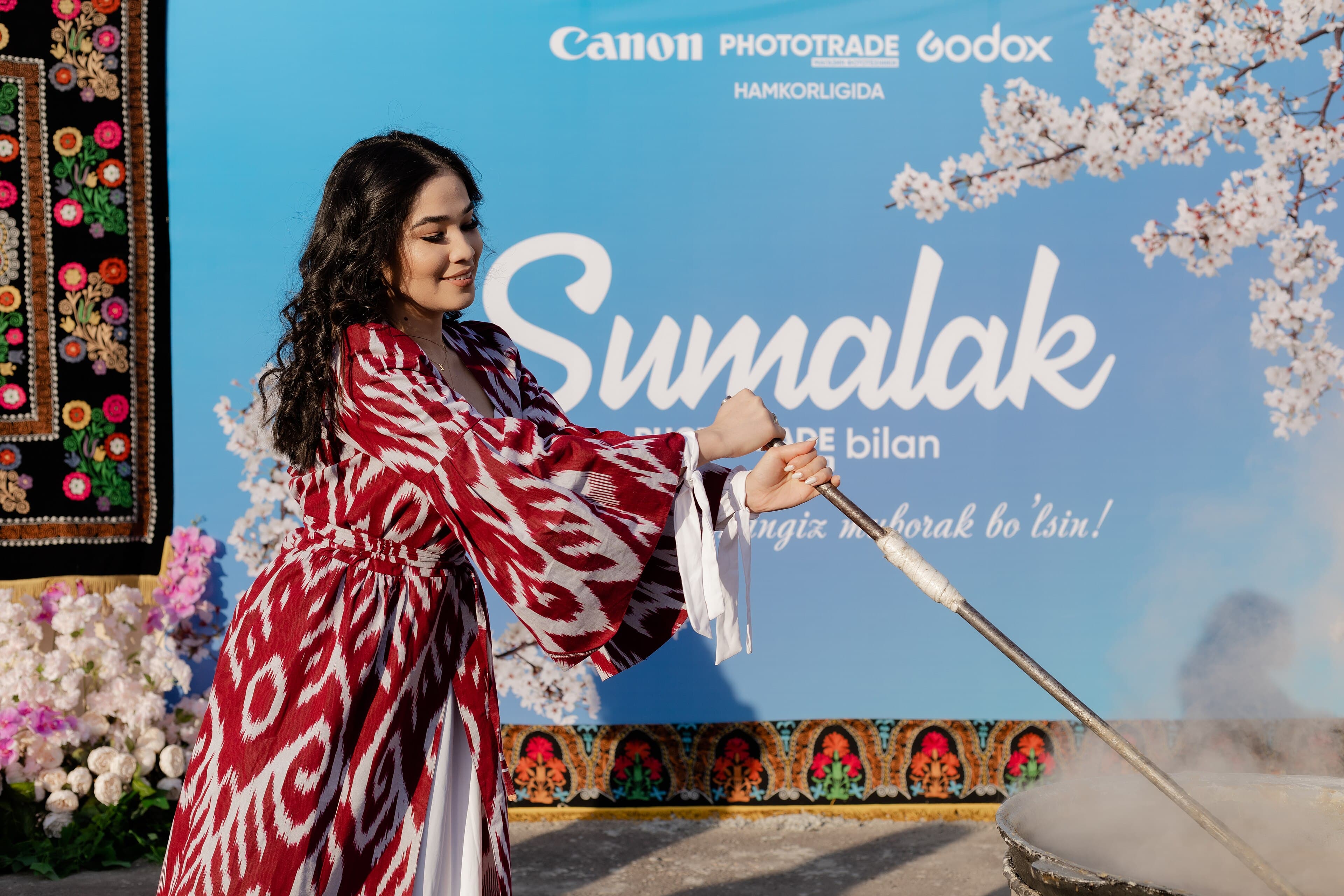
On Navruz, families clean their homes from top to bottom, put on new clothes and head outside to gather with friends. Parks fill up with people having picnics. Music plays from speakers and live musicians. Children get small presents and lots of sweets. The mood is friendly, sunny and excited.
The most special Navruz food is sumalak - a thick, sweet brown paste made from sprouted wheat. It takes nearly 24 hours to cook in a giant pot, and neighbours take turns stirring it through the night. Children love it because it is sweet without any sugar (the sweetness comes from the wheat as it sprouts). It is meant to be shared in small cups - one spoonful means a wish for a good year.
Navruz tables are decorated with seven things whose names start with the letter 's' in Uzbek - things like sprouted wheat (sabzi), apple (sib), garlic (sirka) and so on. Each item has a meaning - new life, health, sweetness, plenty. The whole table is a kind of picture-message about hopes for the year.
In schools, the day before Navruz is often a school party day. Children dress up in traditional clothes, learn old dances, and bring tiny gifts of sweets to friends. The poems and songs they sing are sometimes hundreds of years old. Navruz is one of the days when very old traditions feel brand new again.