
Classroom lesson 路 Wildlife馃嚢馃嚪 South Korea

The red-crowned crane

A graceful white bird with a small red 'hat'

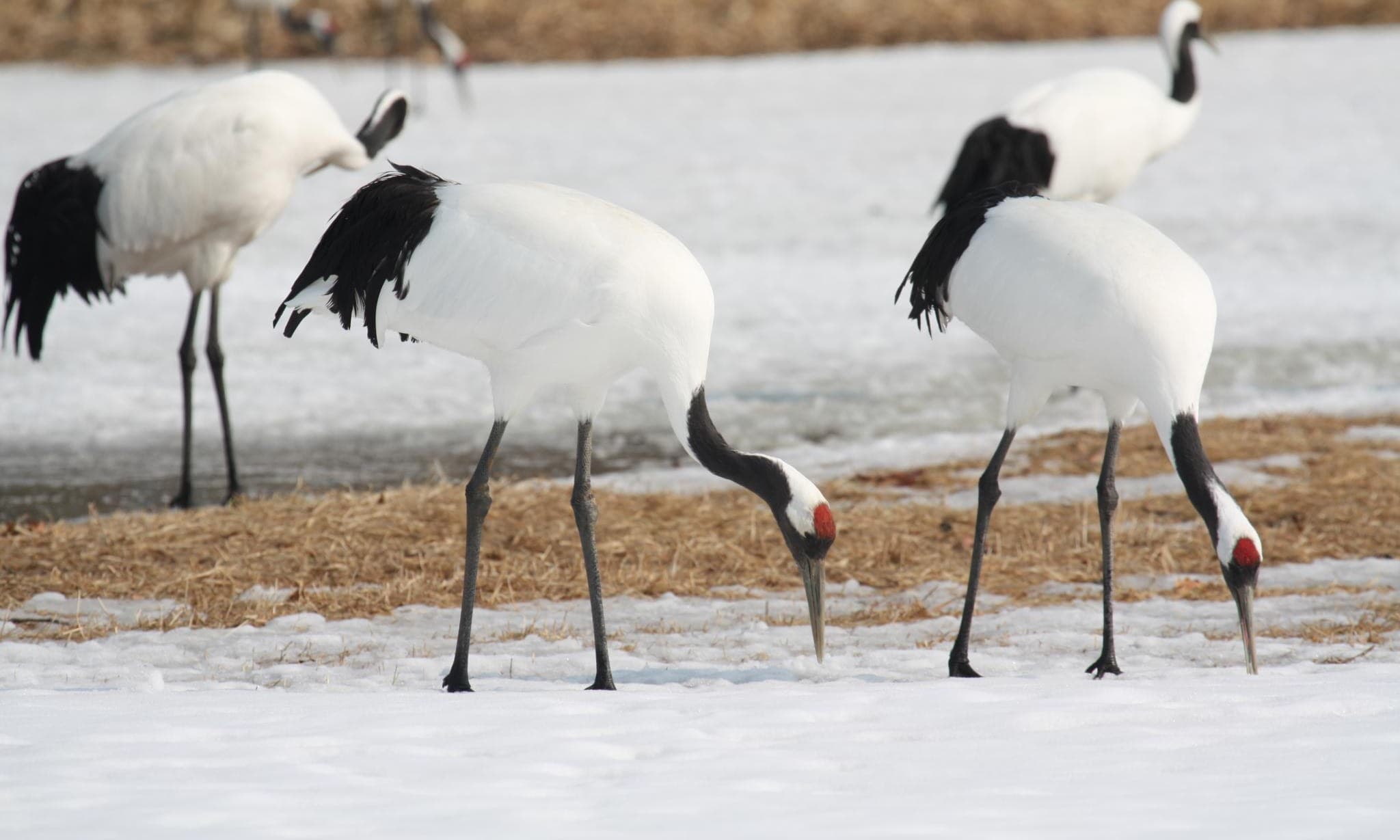
Two red-crowned cranes feeding on snowy ground

Photo 路 Wikimedia Commons

What is it?

The red-crowned crane is a tall, elegant bird with snow-white feathers, a black neck, and a small bright red patch on top of its head - the 'crown' that gives it its name. It is one of the rarest cranes in the world. In Korean tradition, the red-crowned crane is a symbol of long life and happiness.

Tell me more

These cranes are big - over 1.5 metres tall when fully grown. That is taller than many of the children in your class. Their wings spread out to nearly 2.5 metres when they fly, and their slow, gliding wingbeats are unmistakable in the sky.

They eat by wading through marshes and shallow water. Fish, frogs, snails and shoots all go on the menu. In winter, when Korean wetlands freeze, the cranes still find food in the slightly-warmer wet rice paddies, where farmers sometimes leave grains behind for them on purpose.

Red-crowned cranes are famous for their 'dance'. When two cranes form a pair, they bow to each other, jump in the air, throw sticks and grass with their beaks, and call to each other - all part of saying hello. Pairs often stay together for many years.

In Korea, paintings and embroidery of red-crowned cranes are everywhere - on old screens, traditional pillowcases, even modern Korean banknotes. The crane is said to bring long life, so parents and grandparents have been drawing it for hundreds of years as a wish for the family.

In the classroom

Walk your class through this in 15 minutes.

Talk together

Discussion prompts

  1. 01What might a 'dance' between two animals be saying?
  2. 02Why do you think people choose certain animals to be 'good luck'? Are there any in your culture?
  3. 03What would help protect a bird whose home is a wetland?
Try this

Classroom activity

Each child draws a tall, elegant red-crowned crane in flight on a piece of paper. Around the bird, add three small wishes - one for yourself, one for your family, one for the class. Display them on the wall together to make a 'wishing flock'.