
Classroom lesson 路 Seoul - the capital馃嚢馃嚪 South Korea

Seoul - the capital

A city where 600-year-old palaces sit between skyscrapers

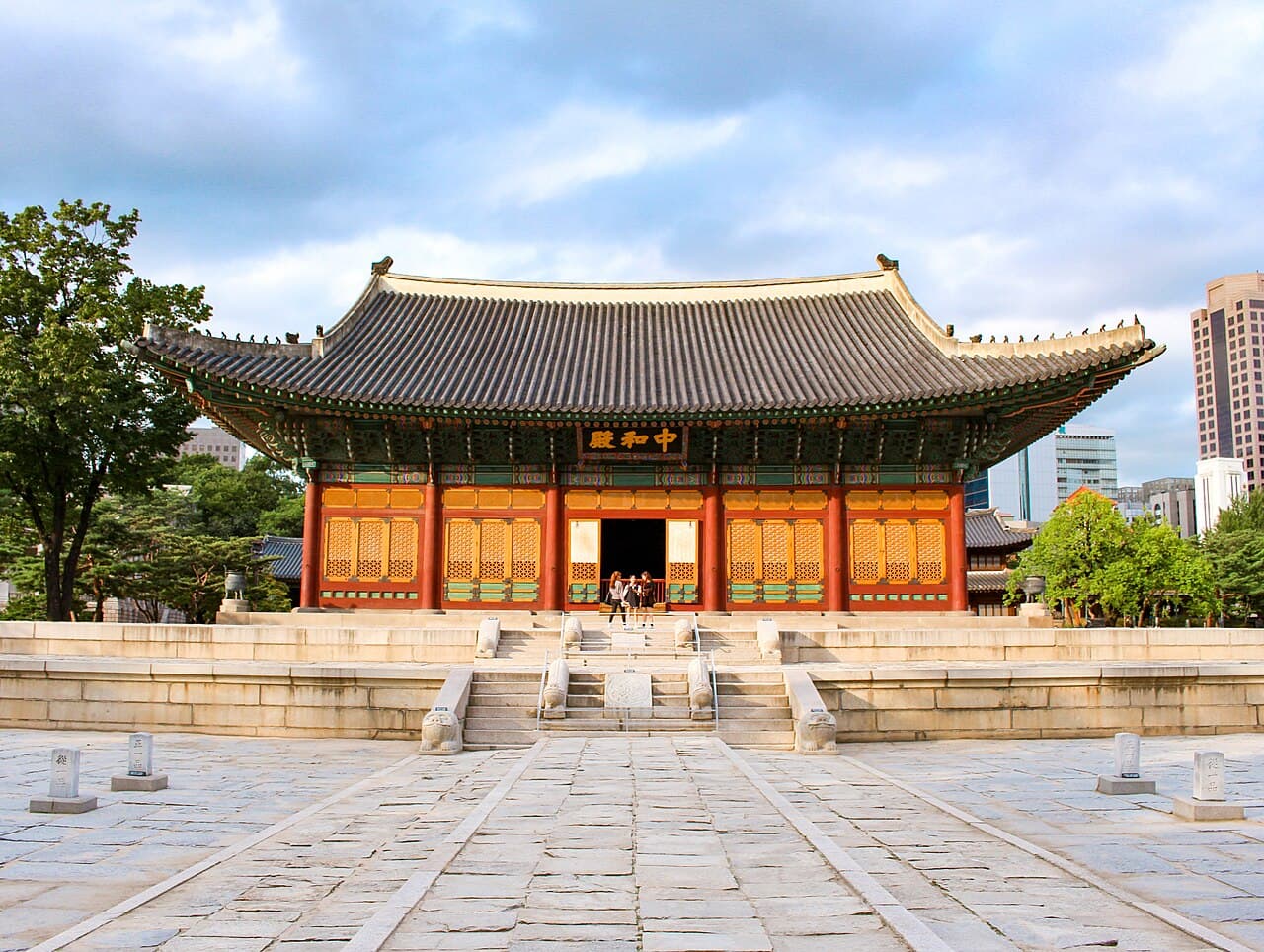
A traditional Korean palace hall with bright red columns and a curved tiled roof

Photo 路 Wikimedia Commons

What is it?

Seoul is the capital of South Korea, and one of the biggest cities in the world. Around 10 million people live there - more than the entire population of Sweden. In the middle of all the glass office towers, you can still find royal palaces with curving wooden roofs that are over 600 years old.

Tell me more

Seoul sits in the north-west of the country, on the Han River. It has been Korea's capital since 1394 - more than 600 years - which makes it one of the oldest continually-living capitals on Earth. In the very middle of the modern city you can walk straight into five royal palaces, each set inside its own walled garden.

The biggest palace is called Gyeongbokgung. Twice a day, guards in bright red and blue uniforms march in front of its main gate, with drums, in a ceremony that has been recreated from old paintings. Visitors who wear a hanbok (traditional Korean dress) get into the palace for free.

Above and below the streets, Seoul moves fast. It has one of the busiest underground train systems in the world. The internet is fast too - South Korea has some of the speediest broadband on Earth, so a film that takes ten minutes to download in some countries downloads in seconds in Seoul.

Surrounding the city are forested mountains. From the top of Namsan, a small mountain right in the middle of Seoul, you can stand at the bottom of the famous N Seoul Tower and look out across glass skyscrapers, ancient palaces, and green hills all at once.

In the classroom

Walk your class through this in 15 minutes.

Talk together

Discussion prompts

  1. 01What would it be like to walk past a 600-year-old palace on your way to school?
  2. 02Why might a city keep its old buildings even when it builds tall new ones around them?
  3. 03If you could design a city, what mix of old and new would you put in it?
Try this

Classroom activity

On a sheet of A3, draw a picture of your own imagined city. Include three new things (skyscrapers, trains, parks) and three old things (a castle, a market, a temple, an ancient tree). Label them. Explain to a partner why you included each one.