
Classroom lesson 路 Jeju Island - the volcano island馃嚢馃嚪 South Korea

Jeju Island - the volcano island

South Korea's biggest island, made by a huge volcano

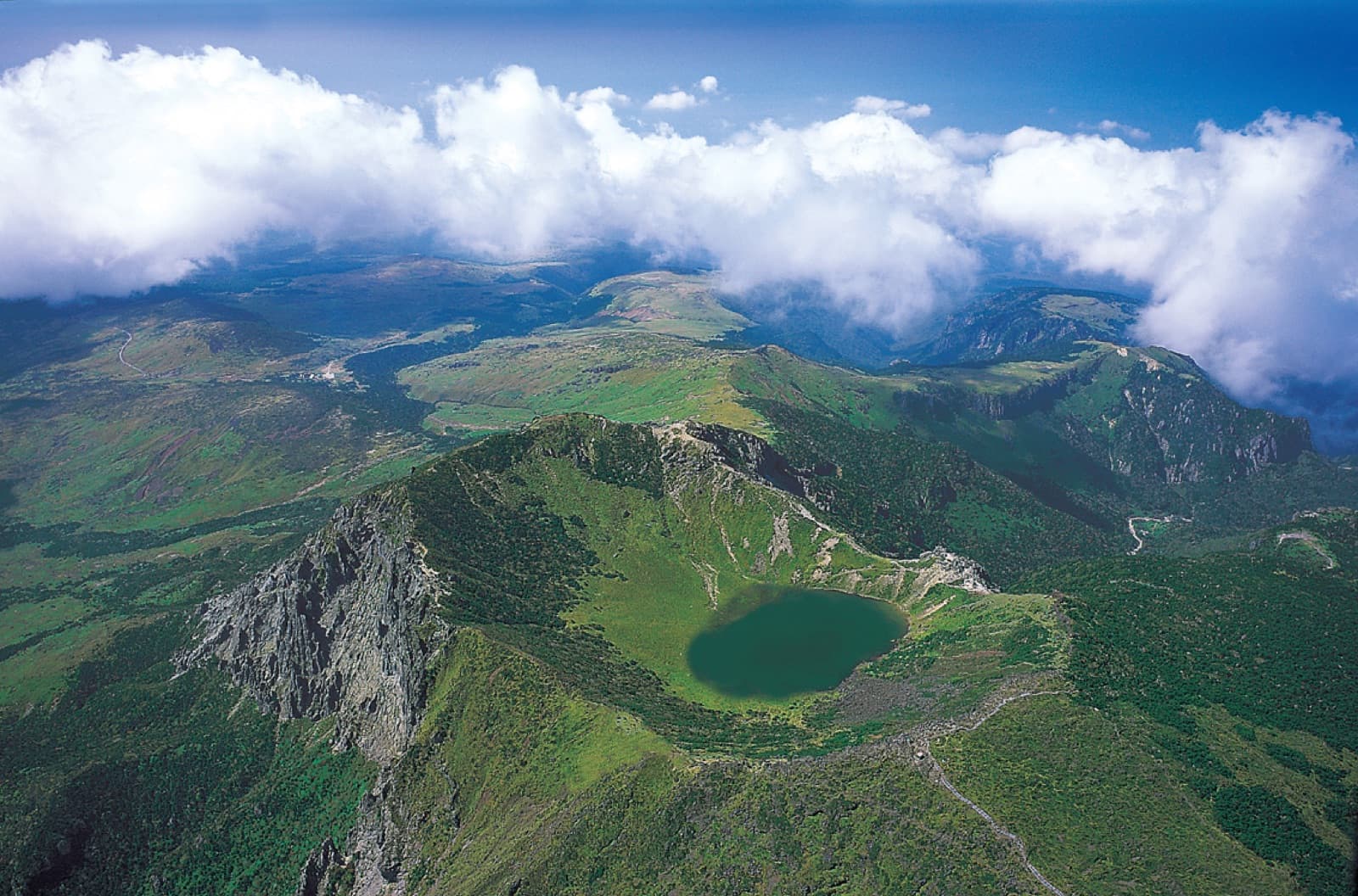
Aerial view of a green crater lake at the top of Hallasan volcano on Jeju Island

Photo 路 Wikimedia Commons

What is it?

Jeju Island is the biggest island in South Korea. It sits off the south coast and was made by a volcano - the whole island is, basically, one giant mountain that grew up out of the sea. Right in the middle is Hallasan, the tallest mountain in the country at 1,947 metres, with a small crater lake at the very top.

Tell me more

Jeju was built by lava flowing out of the sea bed millions of years ago. As the lava cooled, it created the soil, the cliffs, and the strange lava tubes - long underground tunnels - that you can still walk through today. Some Jeju lava tubes are so impressive that UNESCO has made them a World Heritage Site.

The island has its own dialect (a slightly different version of Korean) and its own traditions. The most famous Jeju tradition is the haenyeo (頃措厐) - women divers who swim down 10 metres or more without any breathing equipment to collect shellfish from the seabed. Some of the divers are over 70 years old and have been doing it their whole lives.

Jeju is much warmer than the rest of South Korea. While the north of the country gets snow in winter, Jeju mostly stays green. Mandarin oranges grow here - a sweet, easy-peel fruit - and the island is famous for them. Many South Korean families visit Jeju on holiday the way British families might visit Cornwall.

All over Jeju you'll see funny stone statues called dol hareubang ('stone grandfathers'). They have round bellies, big noses, and hats. People used to put them at the gates of villages to keep watch. Today they are everywhere - in front of cafes, on postcards, and as giant souvenirs you can buy on the way home.

In the classroom

Walk your class through this in 15 minutes.

Talk together

Discussion prompts

  1. 01How could a whole island grow up out of the bottom of the sea?
  2. 02The haenyeo divers can hold their breath for over a minute. What's the longest you have ever held yours? How would you feel diving 10 metres down?
  3. 03Why might islands often have their own dialect, different from the rest of the country?
Try this

Classroom activity

As a class, hold your breath together while the teacher times it. Don't push too hard - just see how long feels comfortable. Then talk about how a haenyeo trains for years to hold her breath safely for 60 to 90 seconds underwater. What other jobs need a lot of practice with breathing (singers, runners, swimmers)?