
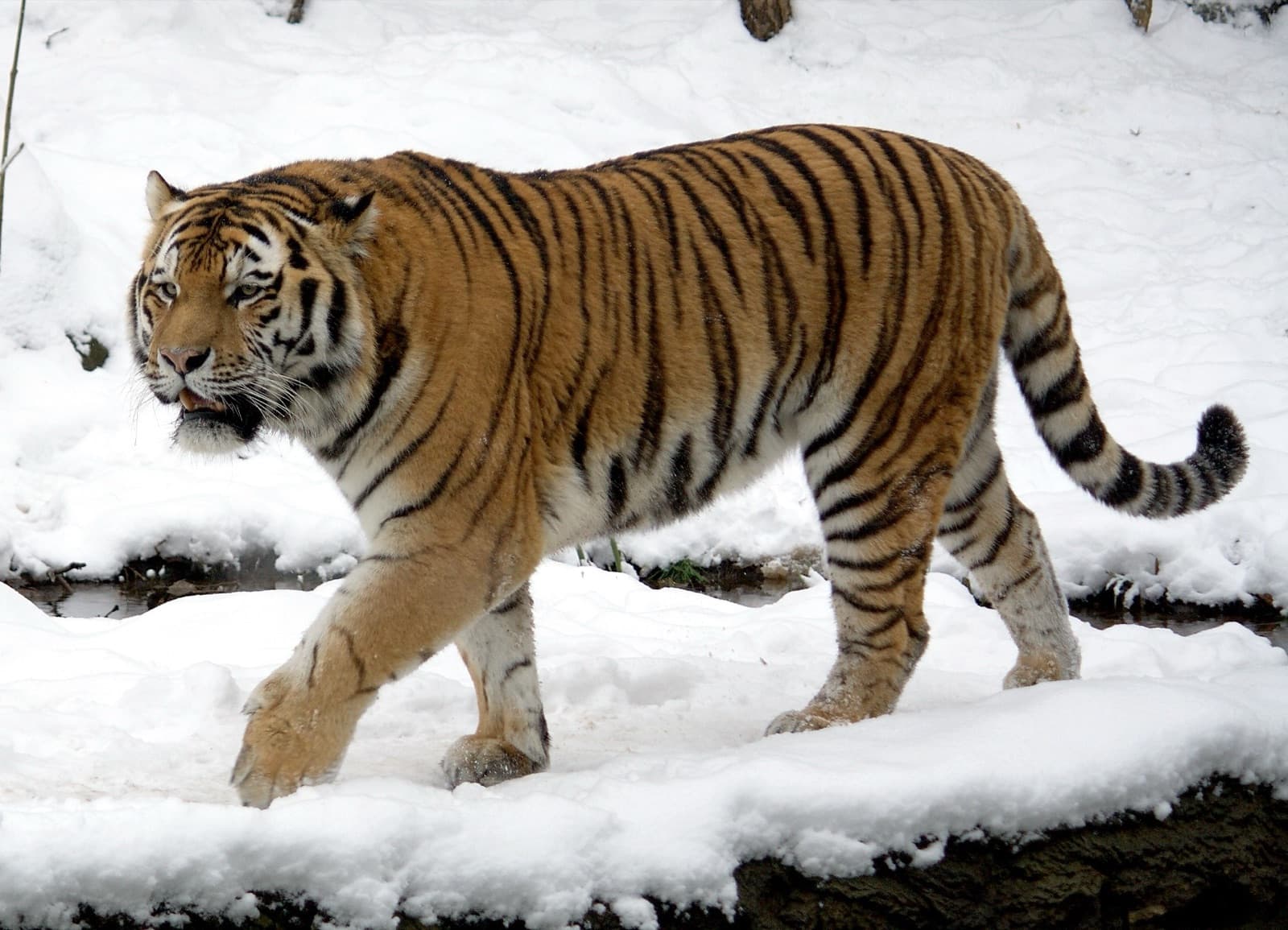
A grown Siberian tiger is enormous. From nose to tail it can stretch over 3 metres - longer than a small car - and it can weigh as much as three adult humans put together. Its thick orange-and-black-striped fur keeps it warm even when the temperature drops to -30°C in winter.
Korean folk stories are full of tigers. Almost every old fairy tale starts with the words '호랑이 담배 피우던 시절...' which means 'back in the days when tigers smoked pipes...' - a fun way of saying 'a very long time ago'. The tiger in these stories is often clever, sometimes a bit silly, and usually outwitted by a small, brave child or a clever rabbit.
Tigers used to live across the whole Korean peninsula. Today, the closest wild tigers are in north-east Russia and China, but they are still called the same animal: the same big striped cat that Korean grandparents grew up listening to stories about. Conservation groups now work to protect them so the species can recover.
South Korea loves its tigers. The mascot of the 1988 Seoul Olympics was a cheerful little tiger called Hodori. The mascot of the 2018 Winter Olympics in PyeongChang was a friendly white tiger called Soohorang. When South Koreans want to show pride in something - a sports team, a stamp, a postcard - the tiger is often there.