
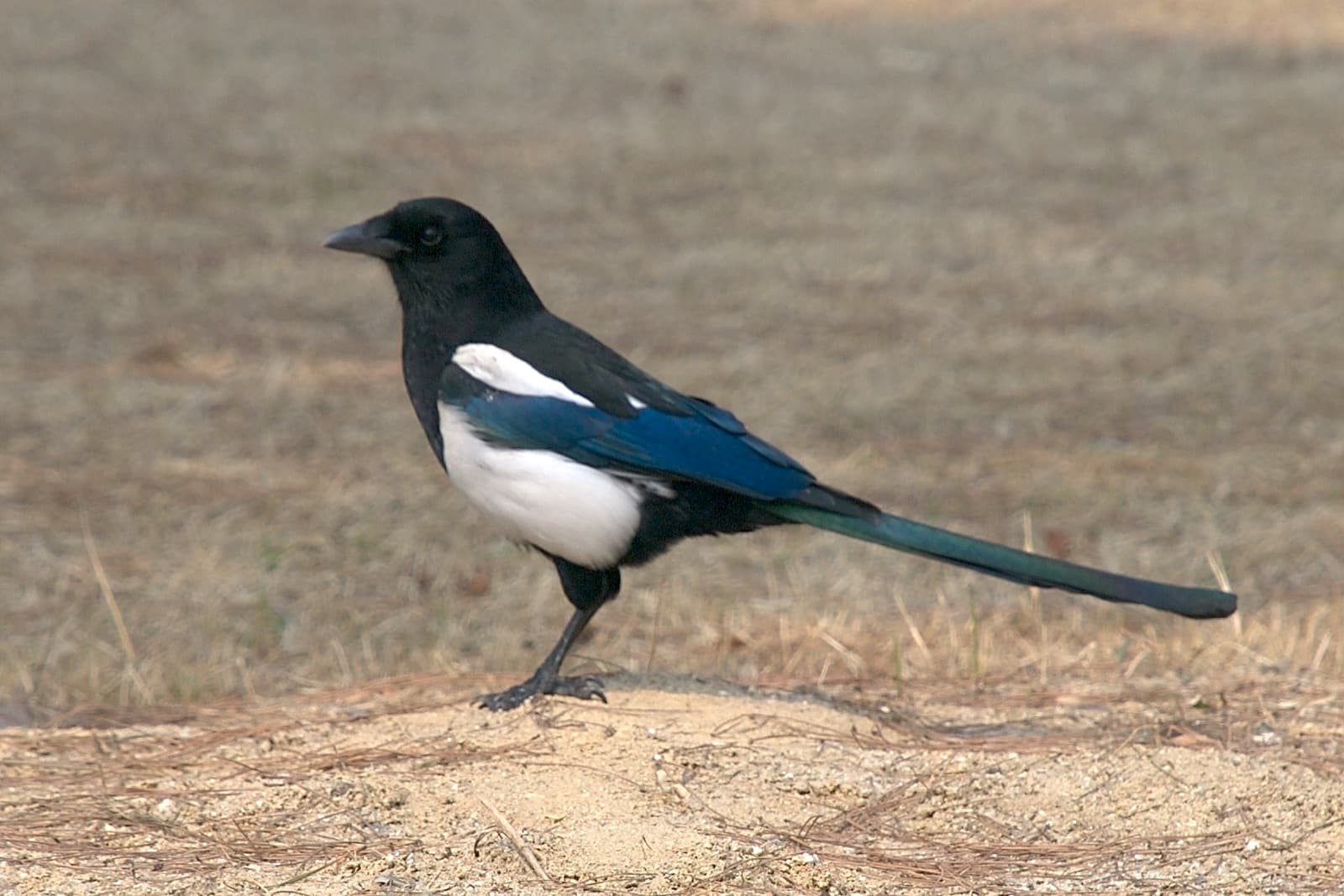
Magpies are one of the smartest birds on Earth - some scientists put them in the same brainy club as crows and parrots. They can recognise themselves in a mirror, which very few animals can do. They use sticks as tools to dig insects out of cracks, and they remember dozens of different human faces.
Korean magpies live in noisy family groups. They build huge stick nests, often near the tops of telephone poles, and the whole family helps to look after the babies. If you walk past a nest, the parents will scold you loudly. They never forget which humans are friendly and which ones aren't.
Magpies are part of an old Korean story: each year on the seventh day of the seventh month, all the magpies and crows of the world are said to fly up to the sky and use their bodies to make a bridge across the Milky Way. The bridge lets two star-lovers (Gyeonu and Jiknyeo) meet for one night a year. Children look for magpies with bare heads in late summer - a sign, in the story, that they have just come back from holding up the bridge.
Today, the Korean magpie is the official bird of many South Korean cities. It is on the logos of newspapers and football clubs. Even the cartoon mascot of a giant railway line in Seoul is a friendly magpie. Whatever the season, you are never far from one.