
Classroom lesson 路 Wildlife馃嚢馃嚪 South Korea

The Asiatic black bear

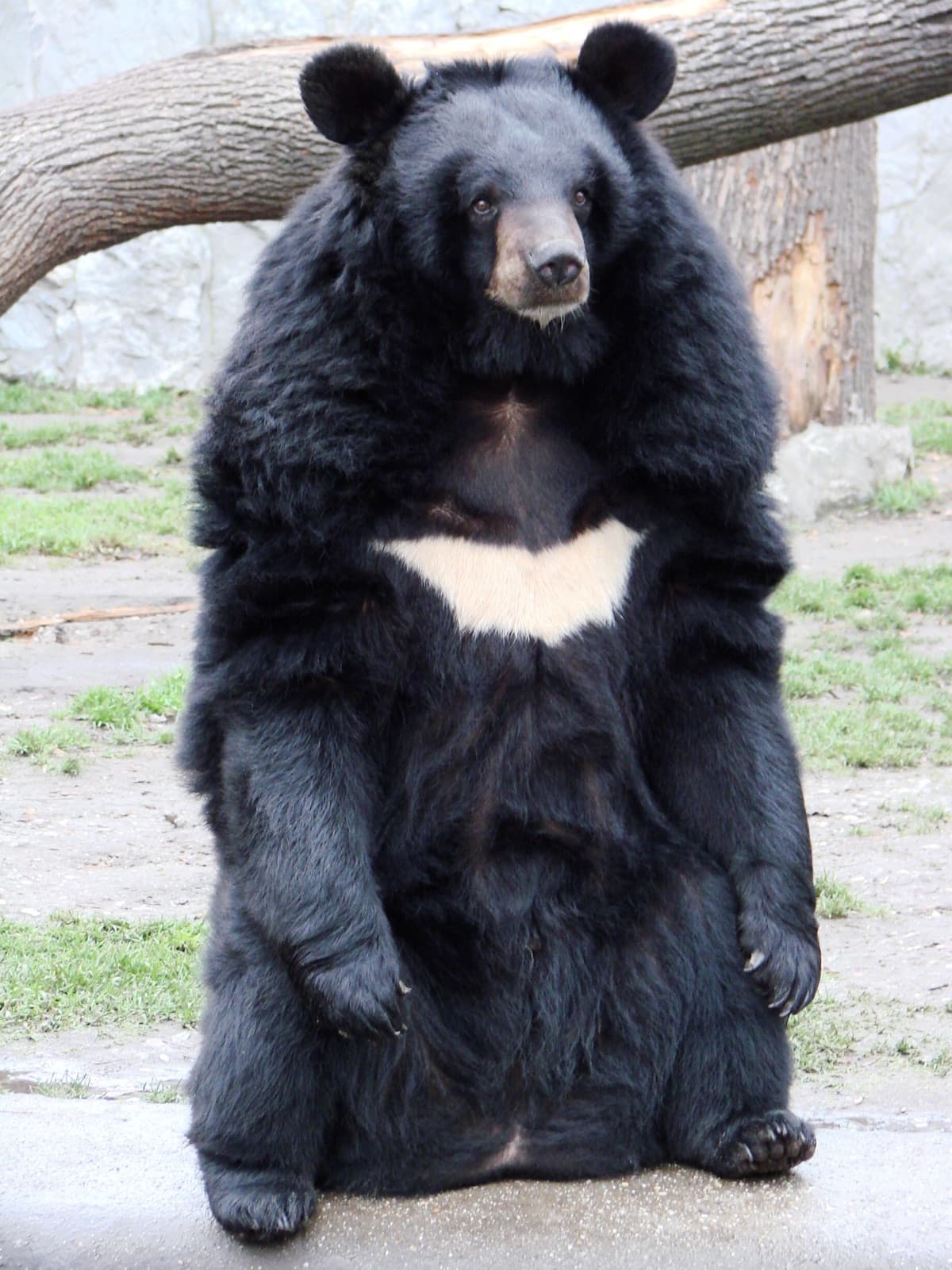
Korea's 'moon bear', with a bright white patch on its chest

An Asiatic black bear sitting upright with a white V-shaped patch on its chest

Photo 路 Wikimedia Commons

What is it?

The Asiatic black bear is Korea's native bear. It is sometimes called the 'moon bear' because of the bright white crescent-moon-shape patch of fur on its chest. They live in the mountain forests of South Korea, especially in Jirisan National Park, where rangers carefully protect them.

Tell me more

Moon bears are great climbers. Their strong legs and long claws are made for going up trees. They build daytime nests high in the branches by bending in leaves and twigs - a bit like a giant bird's nest. From the nest they can rest, watch out for danger, and reach the best fruit.

They eat almost anything: berries, nuts, leaves, ants, honey, and the bark of certain trees in spring. Moon bears love acorns. In autumn they can spend almost the whole day under an oak tree, eating fallen acorns to build up enough fat for winter sleep.

Through the coldest months, moon bears curl up in caves or hollow trees and sleep. This is called hibernation. Mother bears even give birth to their cubs during hibernation, and the cubs stay warm against her chest until spring. When they finally come out of the cave, the cubs see the world for the very first time.

Korean rangers work hard to protect them. In the 1990s, fewer than 10 wild moon bears were left in South Korea. Special teams started carefully looking after cubs in protected forests, then releasing them as adults. Today there are several dozen wild moon bears in Jirisan - still rare, but growing slowly back.

In the classroom

Walk your class through this in 15 minutes.

Talk together

Discussion prompts

  1. 01Why might a bear build its nest up in a tree instead of on the ground?
  2. 02Why is it useful for an animal to be able to sleep for several months?
  3. 03Bringing an animal back from very low numbers takes years. What kinds of jobs do you think the rangers have to do?
Try this

Classroom activity

On paper, design a 'bear-friendly forest'. Mark: a stream for drinking, oak trees for acorns, a quiet cave for sleeping, and a tall tree for a nest. Explain to a partner why each one matters. As a class, count how many things a bear needs to live - it's more than you might think.