
Classroom lesson 路 Food馃嚢馃嚪 South Korea

Kimchi - Korea's most famous food

Spicy, sour cabbage that almost every Korean meal includes

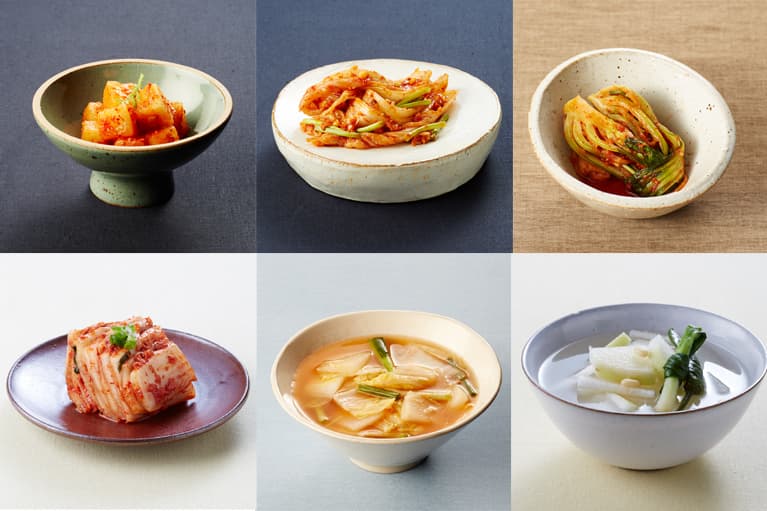
Six small bowls of different colourful kinds of kimchi

Photo 路 Wikimedia Commons

What is it?

Kimchi is the most famous food in Korea. It is a side dish made by mixing vegetables (usually cabbage or radish) with salt, garlic, ginger, chilli and other tasty seasonings - then leaving it in a pot for days or weeks to slowly turn sour, like good cheese or yoghurt. The result is bright red, crunchy, spicy, and a little bit fizzy on the tongue.

Tell me more

Almost every Korean meal includes kimchi. Even breakfast. There are over 200 different kinds. Some are made with whole leaves of napa cabbage. Others use white radish cut into cubes, cucumbers, spring onions or even fruit. Each family has its own way of making it, and a grandmother's recipe is a treasured thing.

Making kimchi is a community activity. Once a year, in late autumn, families gather to make kimjang - a giant batch of kimchi that will last all winter. Parents, grandparents and children all help: washing leaves, mixing the spices, packing the jars. The tradition is so important that UNESCO has officially listed it as part of the world's cultural heritage.

Kimchi gets its tangy flavour from a process called 'fermentation'. Tiny helpful bacteria, called Lactobacillus, eat the sugars in the cabbage and turn them into a mild acid. That is what makes the vegetables sour, fizzy and easier to digest. Yoghurt, bread and pickles work the same way.

Because it is so well loved, Korea even has a museum dedicated to kimchi in Seoul. You can see jars from 100 years ago, learn how to make your own kind, and taste a flight of different kimchis the same way some people taste different cheeses.

In the classroom

Walk your class through this in 15 minutes.

Talk together

Discussion prompts

  1. 01Why might it have been important, long ago, to have a food that kept all winter?
  2. 02Are there foods in your culture that bring families together to make?
  3. 03What other foods do you eat that change flavour because of helpful bacteria (yoghurt, cheese, sourdough bread, pickles)?
Try this

Classroom activity

As a class, look at the kimchi photo and list every colour you can see. Then look up two other countries' famous fermented foods (e.g. sauerkraut in Germany, miso in Japan, kefir in Russia). Add them to a 'world map of fermented foods'. How many can you find?