
Classroom lesson · Food · 🇰🇷 South Korea

Bibimbap - a rainbow in a bowl

A bowl of rice topped with neat piles of vegetables - then mixed up

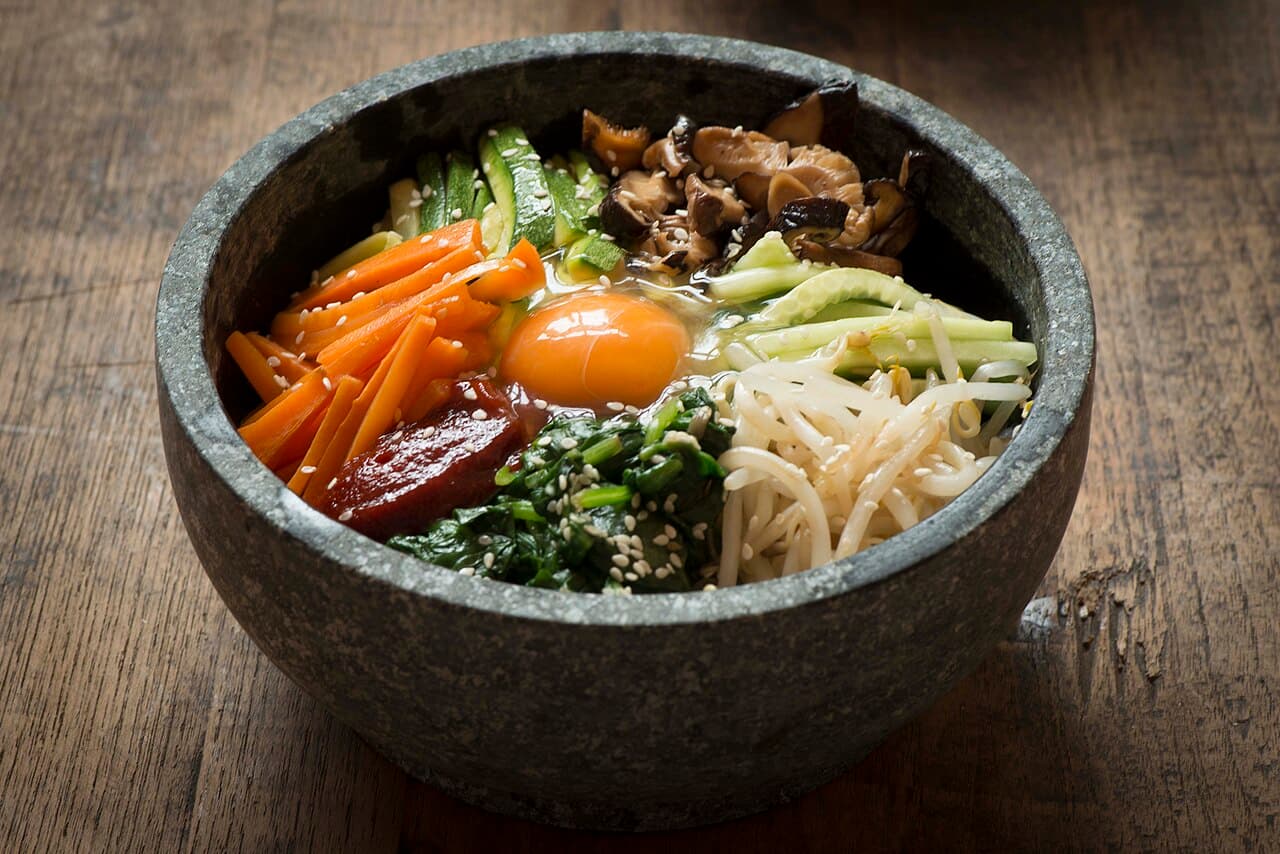
A bowl of bibimbap with rice, carrots, mushrooms, spinach, bean sprouts and an egg yolk

Photo · Wikimedia Commons

What is it?

Bibimbap (비빔밥) means 'mixed rice'. It is a Korean meal of rice in a bowl, with bright piles of different vegetables arranged on top - and sometimes an egg in the middle. You squeeze a little red sauce called gochujang on top, and then... you stir it all together. The neat arrangement disappears, the flavours combine, and every spoonful tastes a tiny bit different.

Tell me more

Bibimbap is one of the most popular Korean meals served in restaurants around the world. Part of why people love it is the look: the vegetables are arranged in a perfect colour wheel, like a circle of paint, before you mix them. Then you ruin the picture on purpose with your spoon. That's the whole point.

There's a clever idea behind the colours. Traditional bibimbap uses five 'lucky' colours - red, yellow, green, white and black - the same colours that appear on a hanbok. Each colour stands for a direction and a food group. So a single bowl has carrots (orange-red), pumpkin or egg yolk (yellow), spinach (green), bean sprouts (white) and dried seaweed or mushrooms (black). Eat one bowl and you've eaten a balanced rainbow.

There's a fancier version called dolsot bibimbap. The 'dolsot' is a hot stone bowl, served sizzling. When the rice at the bottom meets the hot stone, it crisps into a golden crust - the crunchiest, most delicious part of the meal. Some Koreans say the crispy bit is the whole reason to order dolsot bibimbap in the first place.

Bibimbap is super flexible. Vegetarian, meat-eater, spicy or mild, anything goes. It started in old times as a way of using up little bits of all the side dishes left at the end of the day. Today, it appears on aeroplane meals and in restaurants from Seoul to São Paulo.

In the classroom

Walk your class through this in 15 minutes.

Talk together

Discussion prompts

  1. 01Why might a meal be designed to look like a colour wheel before you eat it?
  2. 02Bibimbap started as a way to use up leftovers. What 'using up leftovers' meals do you know from your own family?
  3. 03If you designed a bowl of food with five colours, what would you put in it?
Try this

Classroom activity

On paper, each child draws a circle and divides it into five wedges. Fill each wedge with a different colour and write the name of one food in that colour (e.g. green - cucumber; red - tomato; yellow - sweetcorn; white - rice; black - olive). Compare bowls as a class. Whose looks the most delicious?