
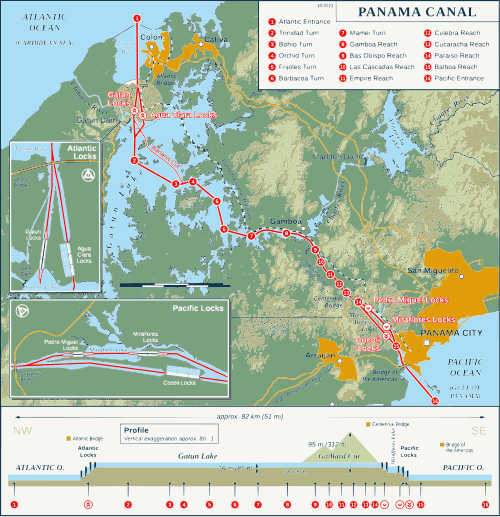
Panama is shaped a bit like a wiggly bridge between North and South America. At its narrowest point, the country is only about 80 kilometres wide, with one ocean on each side. Engineers spotted this and thought: 'What if we just dug a channel from sea to sea?' The canal opened in 1914 after decades of work.
The clever bit is that the two oceans are at different heights, and the land in between is hilly. So the canal uses giant 'locks' - big rectangular pools with huge doors at each end. A ship sails in, the doors close, water is added or drained, and the ship is gently lifted up (or lowered down) like an elevator full of water. Each lock can hold enough water to fill 500 Olympic swimming pools.
About 14,000 ships use the canal every single year - that is nearly 40 ships a day. They carry everything from bananas and cars to children's toys and breakfast cereal. If you've ever opened a present, it is very possible some part of it travelled through Panama on the way.
In 2016 the canal was made bigger so that the new mega-sized container ships - some longer than three football pitches - could fit through. Today about 6% of all the world's sea trade passes through this one narrow strip of land.