
Classroom lesson 路 Food馃嚨馃嚘 Panama

Sancocho - the Sunday soup

Panama's national soup, eaten on slow weekend afternoons

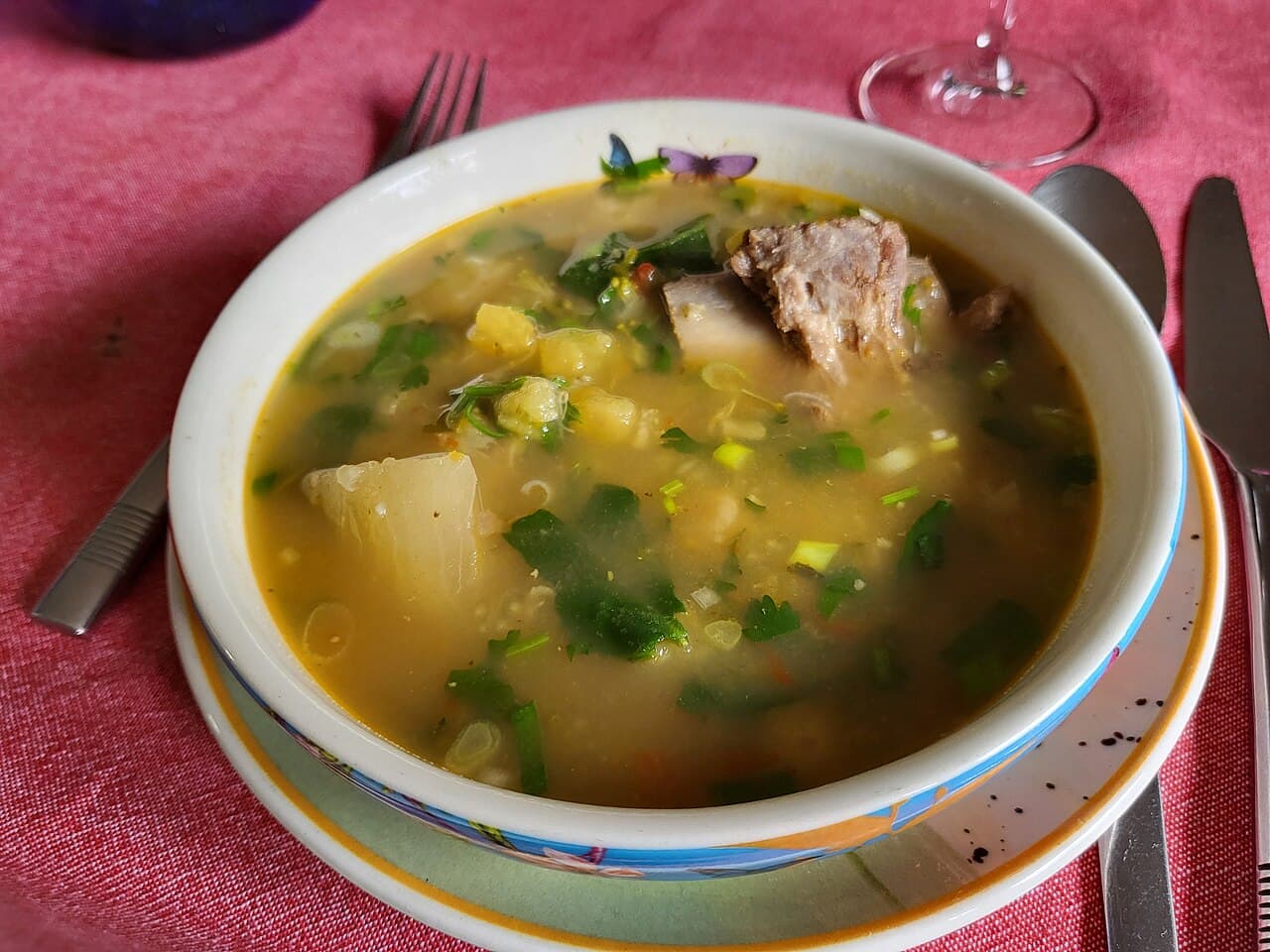
A steaming bowl of sancocho soup with chicken, yam and herbs

Photo 路 Wikimedia Commons

What is it?

Sancocho is Panama's national soup. It is a thick, golden chicken broth flavoured with a leafy herb called culantro (a cousin of coriander), with chunks of yam, plantain and corn. It is the kind of meal Panamanians eat on a relaxed weekend, often with rice on the side.

Tell me more

The basic recipe is simple, but every family in Panama has its own way of making it. The province of Veraguas is especially famous for its sancocho. Locals say a real sancocho needs free-range chicken, plenty of fresh culantro, and at least an hour of patient simmering on the stove.

The most important herb is culantro. It looks a bit like a long, jagged blade of grass, but it tastes like a stronger, more peppery cousin of coriander. Many Panamanian kitchens have a little pot of it growing on a sunny windowsill.

Sancocho is sometimes called 'levanta muerto' - which playfully means 'wakes you up'. People drink a small cup of warm broth on cold mornings or when they are feeling a bit tired. It is meant to put a smile back on your face.

Sharing sancocho is part of how Panamanian families spend time together. The pot sits in the middle of the table, and everyone helps themselves and chats while they eat. A Sunday sancocho can easily last two or three hours.

In the classroom

Walk your class through this in 15 minutes.

Talk together

Discussion prompts

  1. 01Why might one soup become the national dish of a whole country?
  2. 02What is one meal your family makes at weekends that takes a long time to eat together?
  3. 03A small herb (culantro) makes a big difference in sancocho. What is one small thing that makes a big difference to a meal you know?
Try this

Classroom activity

As a class, write a 'class soup' recipe together. Each pupil adds one ingredient that is special in their family. Don't worry if it gets strange - the point is the variety. Then discuss: would a soup of everyone's ingredients still be one soup, or many?