
Classroom lesson 路 Wildlife馃嚨馃嚘 Panama

Jaguar - the silent jungle cat

The biggest cat in the Americas, with the strongest bite of any cat

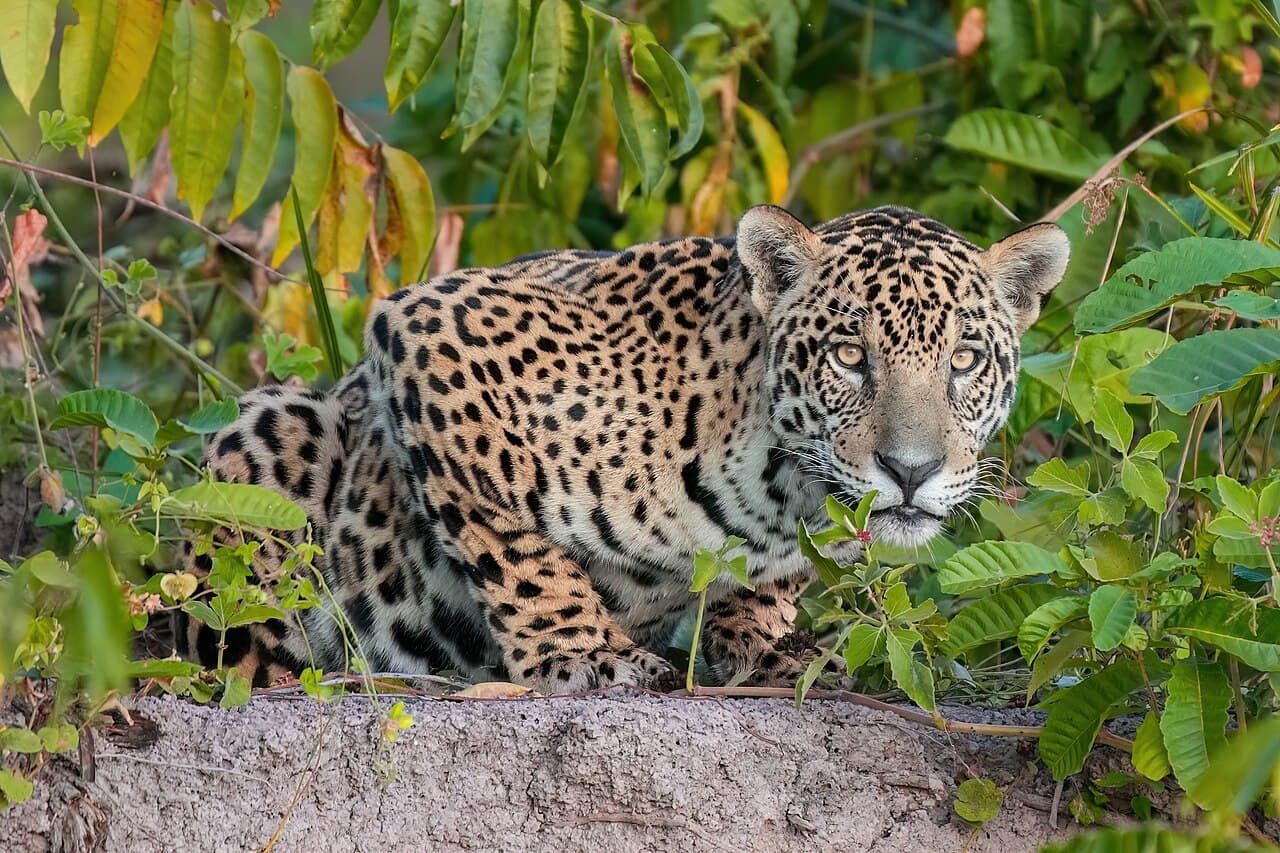
A jaguar with spotted golden fur walking through rainforest undergrowth

Photo 路 Wikimedia Commons

What is it?

The jaguar is the largest wild cat in the Americas, and the third largest in the world (after the tiger and the lion). It lives in the rainforests of Panama, especially in the Dari茅n. Its golden coat is covered in dark rings called 'rosettes' - each jaguar's pattern is unique, like a fingerprint.

Tell me more

Jaguars are powerful swimmers. Unlike most cats, they actually like water, and they often hunt fish, caimans (a kind of small alligator) and turtles in rainforest rivers. Their dark spots help them blend in with shadows in the water.

Jaguars have the strongest bite of any big cat. They can crack right through a turtle's shell. Their name comes from a word in the Tupi language meaning 'one who kills with one leap'.

Jaguars are 'apex predators' - that means they sit at the very top of the rainforest food chain. Because of that, scientists watch jaguar numbers carefully: if jaguars are doing well, the whole rainforest is usually doing well. If jaguars are struggling, something deeper is wrong.

Wild jaguars are very shy. Most Panamanians, even those who live near jaguar country, have never actually seen one. But camera traps - cameras that automatically take a photo when an animal walks past - show that they are still moving silently through the Dari茅n rainforest at night.

In the classroom

Walk your class through this in 15 minutes.

Talk together

Discussion prompts

  1. 01Why might scientists use one animal (like the jaguar) as a clue about how the whole forest is doing?
  2. 02Camera traps photograph jaguars without disturbing them. What other ways could we study shy animals?
  3. 03Most Panamanians have never seen a wild jaguar. Why might that be a good thing for the jaguars?
Try this

Classroom activity

Each pupil designs their own 'unique rosette pattern' on a sheet of paper - jaguars never have the same spots twice. Stick them all on the wall. Then look closely: can you spot which is yours from across the room? That is exactly the puzzle scientists solve when they study real jaguars.