
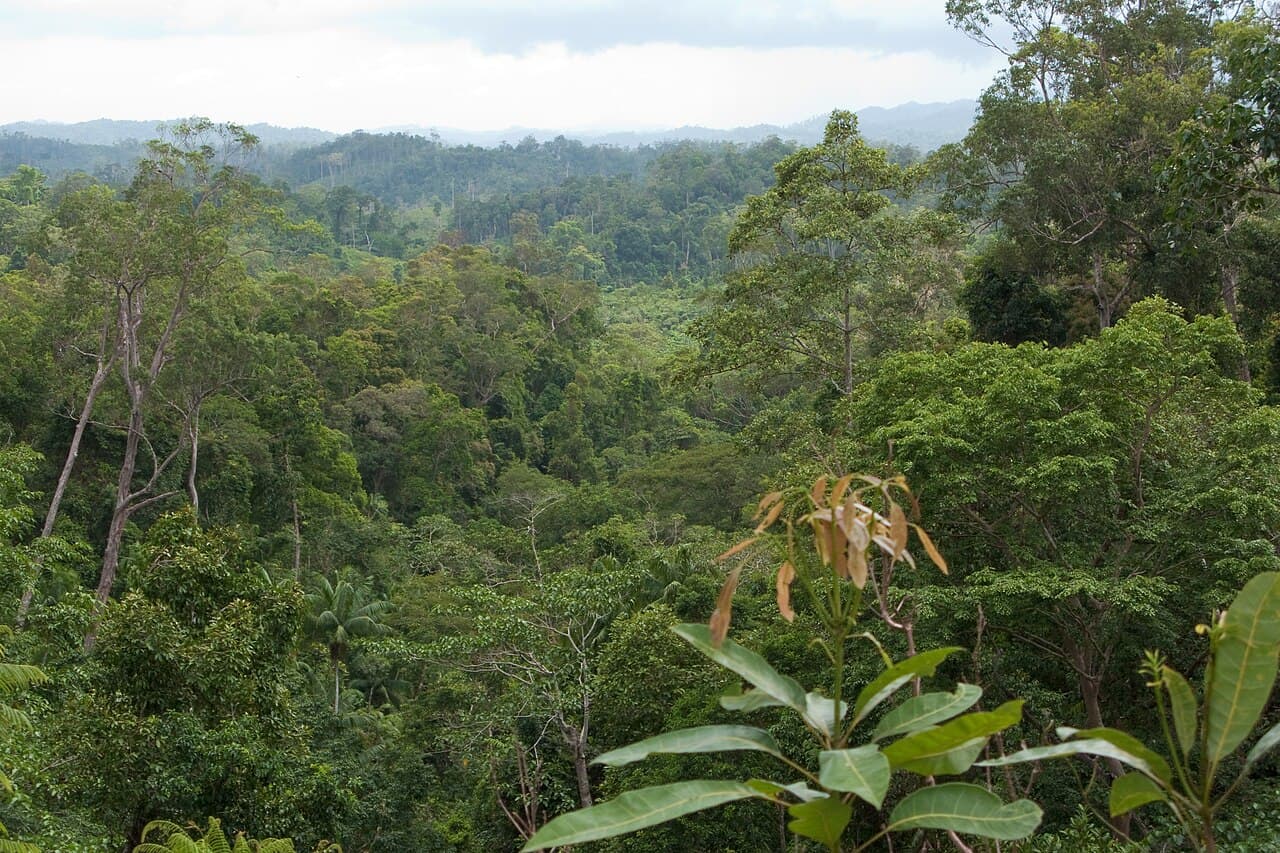
About 3 million years ago, North and South America were two separate landmasses with a gap of ocean between them. Then, very slowly, a thin strip of land rose out of the sea and joined them together. That strip is Panama. It changed the planet - currents flowed differently, animals moved north and south, and new species evolved.
Today around 1,000 species of bird have been recorded in Panama. There are also around 250 mammals, 230 reptiles, and at least 220 amphibians. Many of these species exist nowhere else in the world - they are 'endemic' to Panama, like the bright golden frog.
Around a quarter of Panama is set aside as protected national parks. Some are tropical rainforests, some are misty cloud forests on mountainsides, some are coral reefs in the sea. Visitors can hike for hours and not see another person, just the calls of toucans and howler monkeys.
A famous research place called Barro Colorado Island sits in the middle of Lake Gatún (the lake that was created when the Panama Canal was built). Scientists from all over the world come here to study tropical animals. It is one of the most-studied patches of rainforest on Earth.