
Classroom lesson · Trolls in Norwegian folklore · 🇳🇴 Norway

Trolls in Norwegian folklore

Big, lumpy mountain creatures from very old Norwegian stories

A wooden troll statue with a large nose, often seen at Norwegian roadside stops

Photo · Wikimedia Commons

What is it?

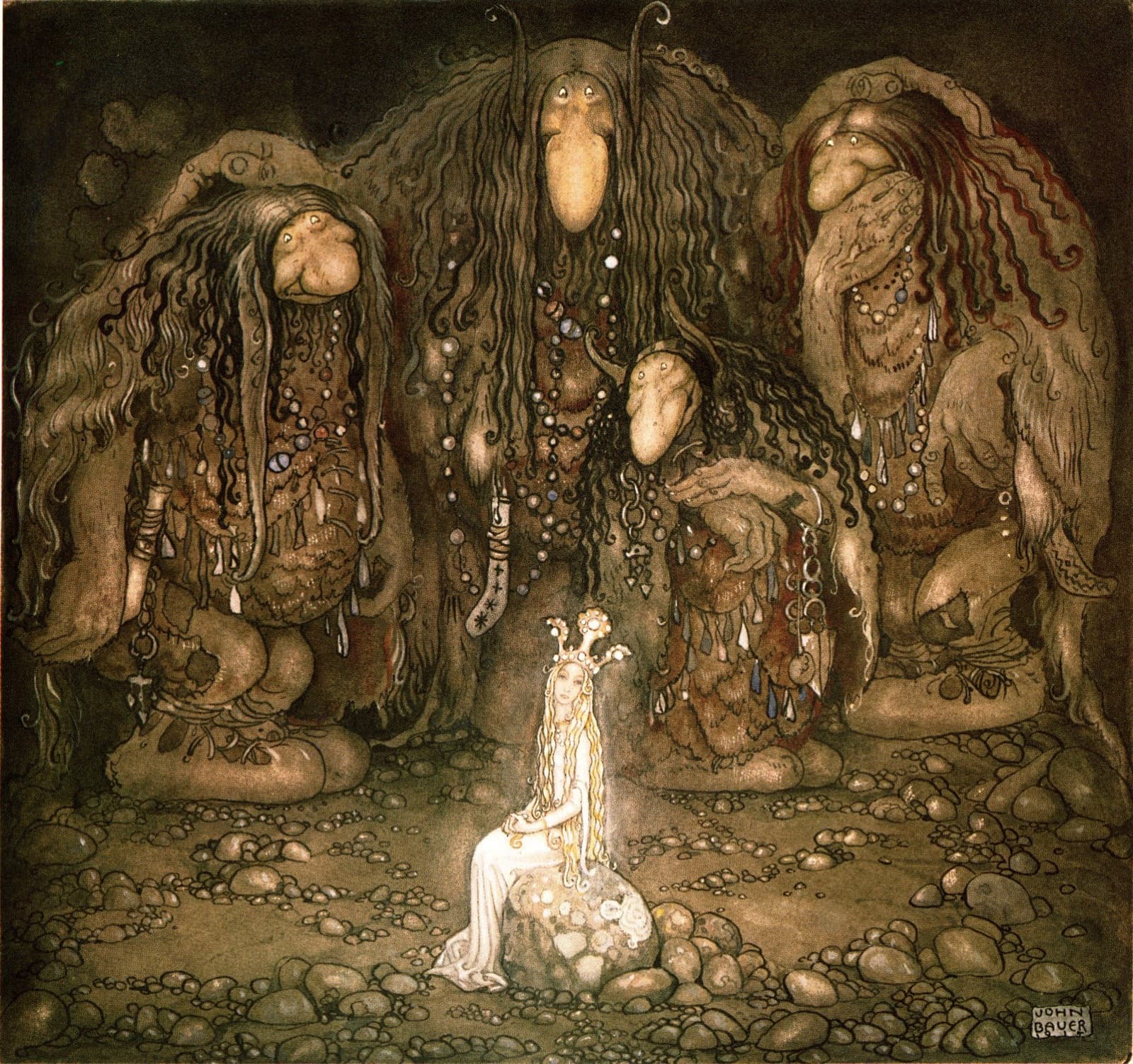
In old Norwegian stories, trolls are huge, lumpy creatures who live in mountains, forests and under bridges. They have giant noses, wild hair, and are usually slow and a bit grumpy. They are not real - but they are everywhere in Norwegian culture, from books to films to roadside statues.

Tell me more

Norwegian stories say trolls turn to stone in sunlight. That's why in old tales, you only meet a troll at night or in the deep shadows under a bridge. If a troll is caught out by the rising sun, it freezes in place forever - and that, the stories say, explains all those funny rock shapes you see in the Norwegian mountains.

Trolls have huge noses, mossy hair, and tails they try to hide. They are not exactly bad - they are just slow, hungry, easily fooled and a bit lonely. In one famous story called The Three Billy Goats Gruff, three goats trick a troll under a bridge by sending the smallest goat first and the biggest last.

Trolls live on in Norwegian place names. There is a road called Trollstigen ('the Troll's Path'), a mountain called Trollveggen ('the Troll's Wall'), and a peak called Trolltunga ('the Troll's Tongue'). Each one has a story behind the name.

Modern Norwegian children grow up reading troll books and watching troll films. You will see wooden troll statues at gift shops by the fjords, with kind faces and silly grins. They are friendly reminders of one of Norway's oldest folk traditions.

In the classroom

Walk your class through this in 15 minutes.

Talk together

Discussion prompts

  1. 01Why might people long ago have made up stories about strange rock shapes in the mountains?
  2. 02What folk tales or stories from your country have creatures that aren't real but everyone knows?
  3. 03Trolls in stories are usually slow and easily tricked. Why do you think the heroes in folk tales are often the smaller, cleverer ones?
Try this

Classroom activity

Each pupil designs their own troll: where does it live, what does it look like, what's its weakness, what's the trick to outwit it? Then write a tiny three-paragraph story about a child outsmarting their troll. Read a few out as a class - which troll would be hardest to escape?