
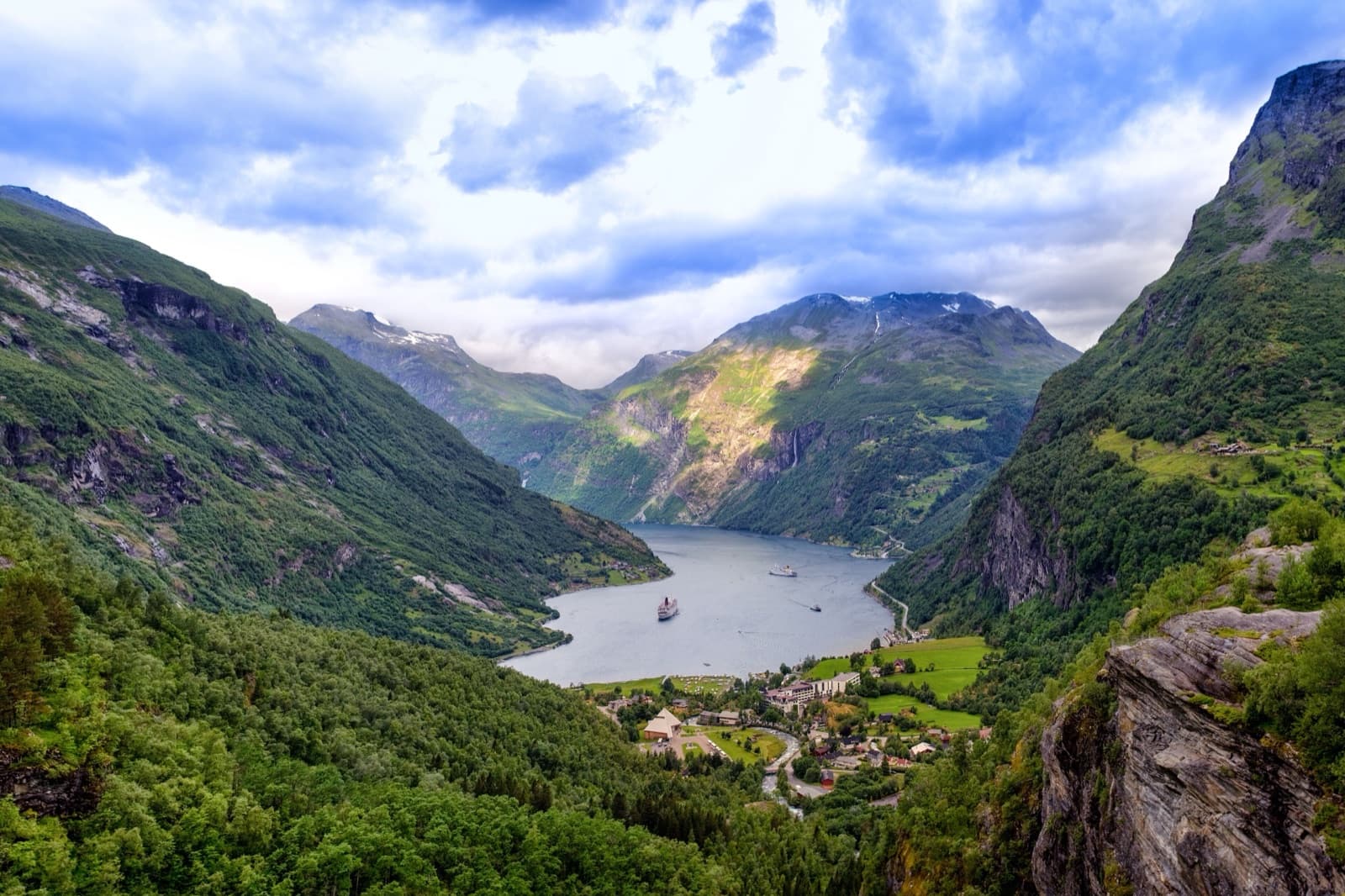
Fjords were made by glaciers - huge, slow rivers of ice. During the last Ice Age, thick sheets of ice covered Norway. As the ice slid down towards the sea, it scraped out deep, U-shaped valleys in the rock. When the ice melted, the sea flowed in and filled them up. The result: a fjord.
Sognefjord, the king of Norwegian fjords, is over 200 kilometres long. That is longer than the distance from London to Manchester. At its deepest, it is 1,308 metres deep - deep enough to hide three Eiffel Towers stacked on top of each other.
Tiny villages cling to the strips of flat land at the foot of the cliffs. Many of them can only be reached by boat or by a winding road carved into the rock. Waterfalls tumble down the cliffs - sometimes hundreds of them in a single fjord after heavy rain.
Geirangerfjord is so beautiful that it is a UNESCO World Heritage Site - protected for everyone in the world to enjoy. Cruise ships sail right up the middle, and the passengers stare up at cliffs that look like they were drawn by a giant.