
Classroom lesson · The midnight sun and the polar night · 🇳🇴 Norway

The midnight sun and the polar night

In the far north, the sun doesn't set for weeks - then doesn't rise for weeks

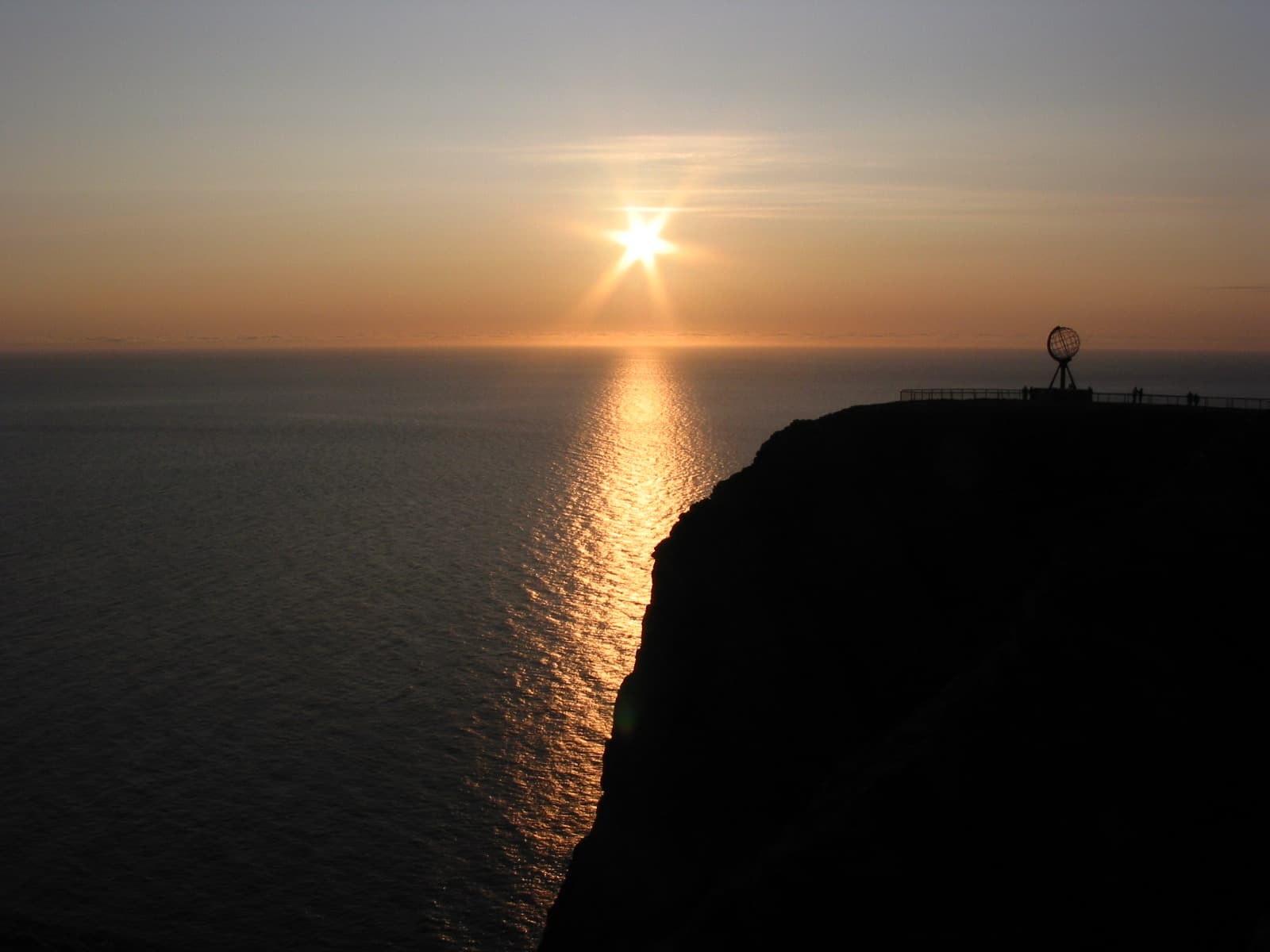
The sun glowing low over the sea at midnight in northern Norway

Photo · Wikimedia Commons

What is it?

The very top of Norway sits inside a part of the world called the Arctic Circle. Up there, daylight goes through extremes most people never see. In summer, the sun doesn't set for weeks - it stays bright all night long. In winter, the sun doesn't rise for weeks - the days stay dark.

Tell me more

Why does this happen? The Earth is tilted on its axis. As it spins around the sun once a year, the top of the world leans towards the sun in our summer and away from it in our winter. The further north you go, the bigger that effect gets.

In Tromsø, a city in the far north of Norway, the sun stays above the horizon for about two months in summer without ever setting. People play football at midnight in full sunshine. To sleep, they pull thick black curtains across the windows so the bedroom feels like night.

In midwinter, the opposite happens. The sun doesn't rise at all for almost two months. The sky goes light grey around the middle of the day, but the sun never quite climbs over the horizon. Children walk to school in the dark and home in the dark. Streetlights stay on all day, and people light extra candles in their homes to feel cosy.

Norwegians have a word for this winter cosiness: koselig. It means warm, snug and content - like hot chocolate, blankets, candles and good company. The dark season is hard, but families and schools fill it with light, songs and time together.

In the classroom

Walk your class through this in 15 minutes.

Talk together

Discussion prompts

  1. 01How would your day change if the sun never set? What would you do at midnight when it's still bright?
  2. 02How would your day change if the sun never rose? What would you miss the most?
  3. 03Why might it help to know the dark winter is just the Earth's tilt - not something gone wrong?
Try this

Classroom activity

Hold a torch (the sun) and a ball (the Earth) at the front of the class. Tilt the ball slightly. Now spin it slowly. Watch how a sticker stuck on the top of the ball is always in light, then always in shadow. This is how the Arctic gets endless daylight in summer and endless darkness in winter.