
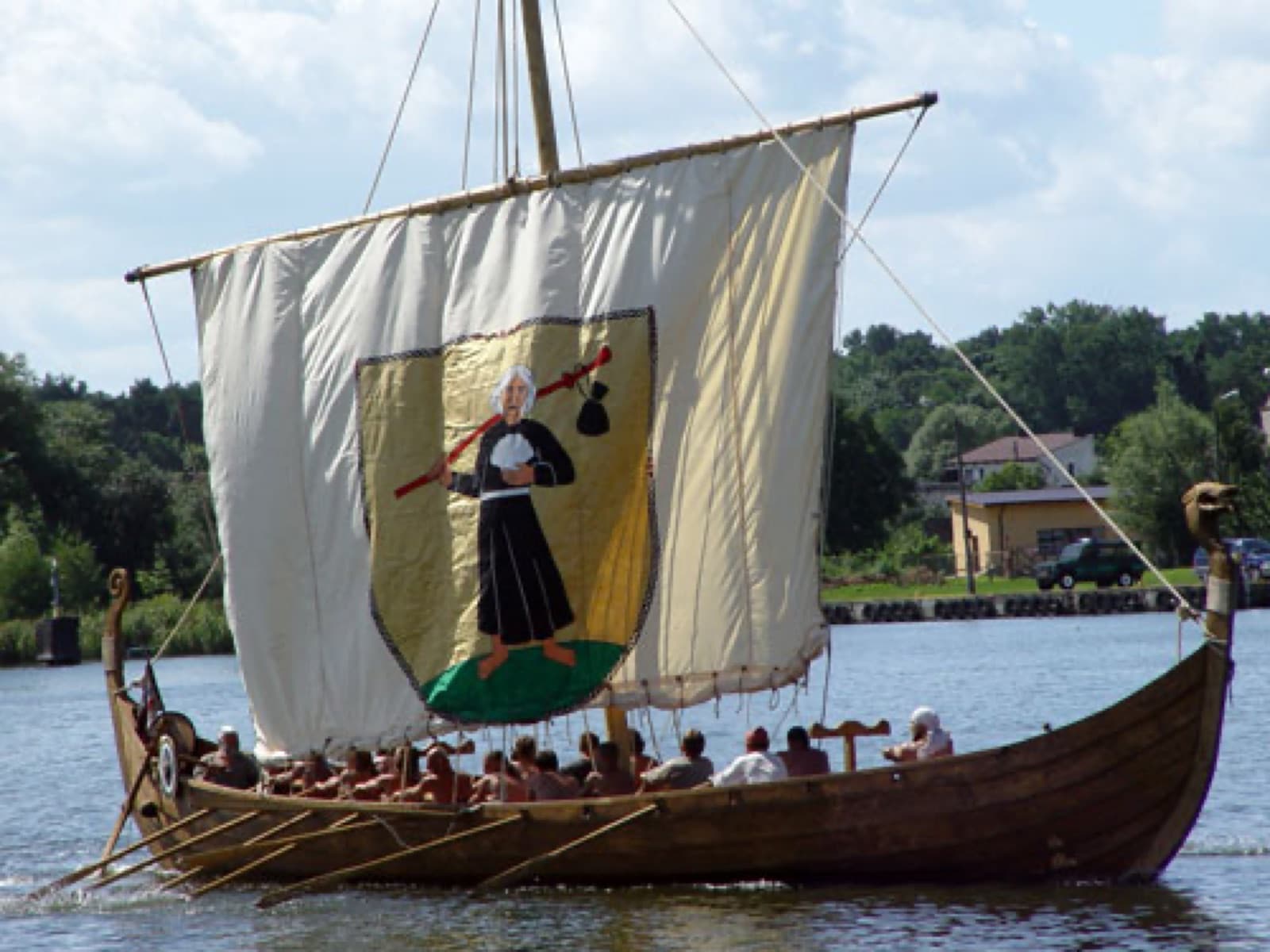
A Viking longship is a stunning piece of engineering. The hull was built from overlapping wooden planks, light enough to sail in shallow rivers but strong enough to cross the Atlantic. Each side had a row of oars, and a single big square sail. They were among the best ships in the world at the time.
Using these ships, Norwegian Vikings sailed further west than anyone else in Europe. They settled Iceland. Then they reached Greenland. Then, around the year 1000, a sailor called Leif Eriksson reached the coast of North America - about 500 years before Christopher Columbus. They called the place Vinland, which probably means 'wine-land', because of the wild grapes growing there.
Vikings were also traders. They sailed all the way down the rivers of eastern Europe to trade with people as far away as Baghdad. Archaeologists have dug up silver coins from the Middle East in Viking villages in Norway. They brought back silk, glass beads and spices.
On land, Vikings were farmers. They grew barley, kept sheep and cows, and made beautiful jewellery, wooden carvings and woven cloth. Their stories - called sagas - were passed down for centuries, full of curious heroes, clever inventors and far journeys.