
Classroom lesson · The Northern Lights · 🇳🇴 Norway

The Northern Lights

Curtains of green, pink and purple light that dance across the winter sky

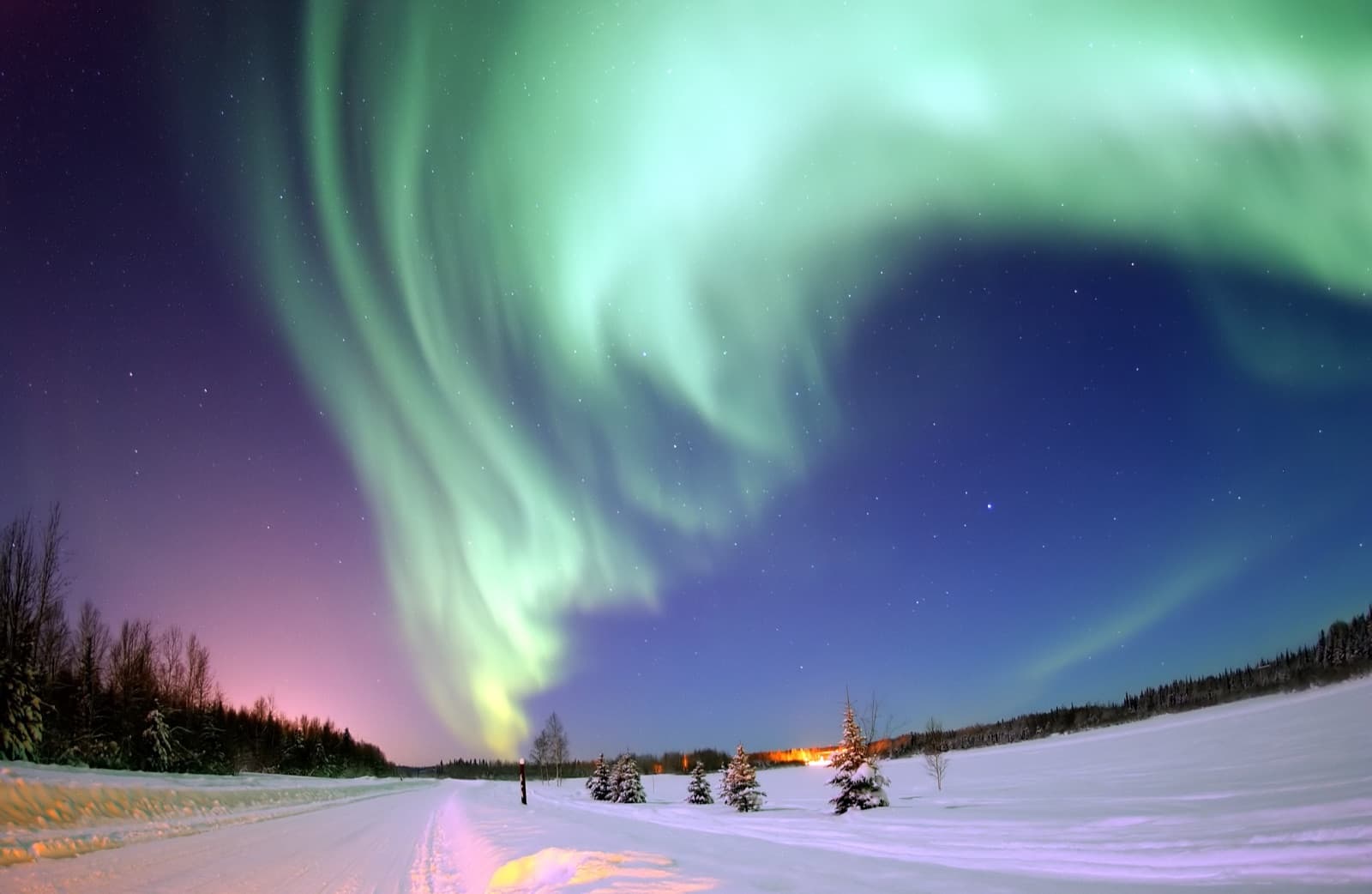
Green and pink aurora borealis swirling above a snowy Norwegian landscape

Photo · Wikimedia Commons

What is it?

The Northern Lights - or aurora borealis - are huge ribbons of glowing colour that ripple across the night sky in the Arctic. They are caused by tiny particles from the sun crashing into the air high above the Earth. Northern Norway is one of the best places in the world to see them.

Tell me more

Our sun is always sending out a stream of tiny particles into space. Scientists call this the 'solar wind'. Most of the time, the Earth's invisible magnetic field protects us from it - the particles whoosh past us into outer space.

But near the North and South Poles, the magnetic field dips down and lets some of those particles in. As they smash into the air, they make the gas glow - a bit like a giant neon sign in the sky. Different gases glow different colours. Oxygen makes green and red. Nitrogen makes pink and purple.

The aurora doesn't just sit there - it moves. Curtains of light ripple, swirl and shimmer across the sky. Sometimes they fade in seconds, sometimes they dance for hours. People stand outside in the freezing cold just to watch.

Long before scientists understood the aurora, Sami people in northern Norway told their children to stay quiet and respectful when it appeared. Some stories said the lights were the spirits of friends and ancestors, dancing in the sky. Different cultures around the Arctic told different stories about what the lights might be.

In the classroom

Walk your class through this in 15 minutes.

Talk together

Discussion prompts

  1. 01How does it feel to know that a colour in the sky can come from particles travelling 150 million km from the sun?
  2. 02Different cultures told different stories about the aurora. Why do people make up stories about things they don't yet understand?
  3. 03If you could pick a colour for the aurora to glow tonight, what would you choose, and why?
Try this

Classroom activity

In a darkened classroom, give pupils torches with green and pink coloured film over the lens. Project the beams onto the ceiling and slowly wave them. That's roughly what an aurora looks like. Then draw what you saw - and add your own story about what the lights might be.