
Classroom lesson · Wildlife · 🇳🇴 Norway

The white-tailed sea eagle

Europe's biggest bird of prey, with a wingspan over 2 metres

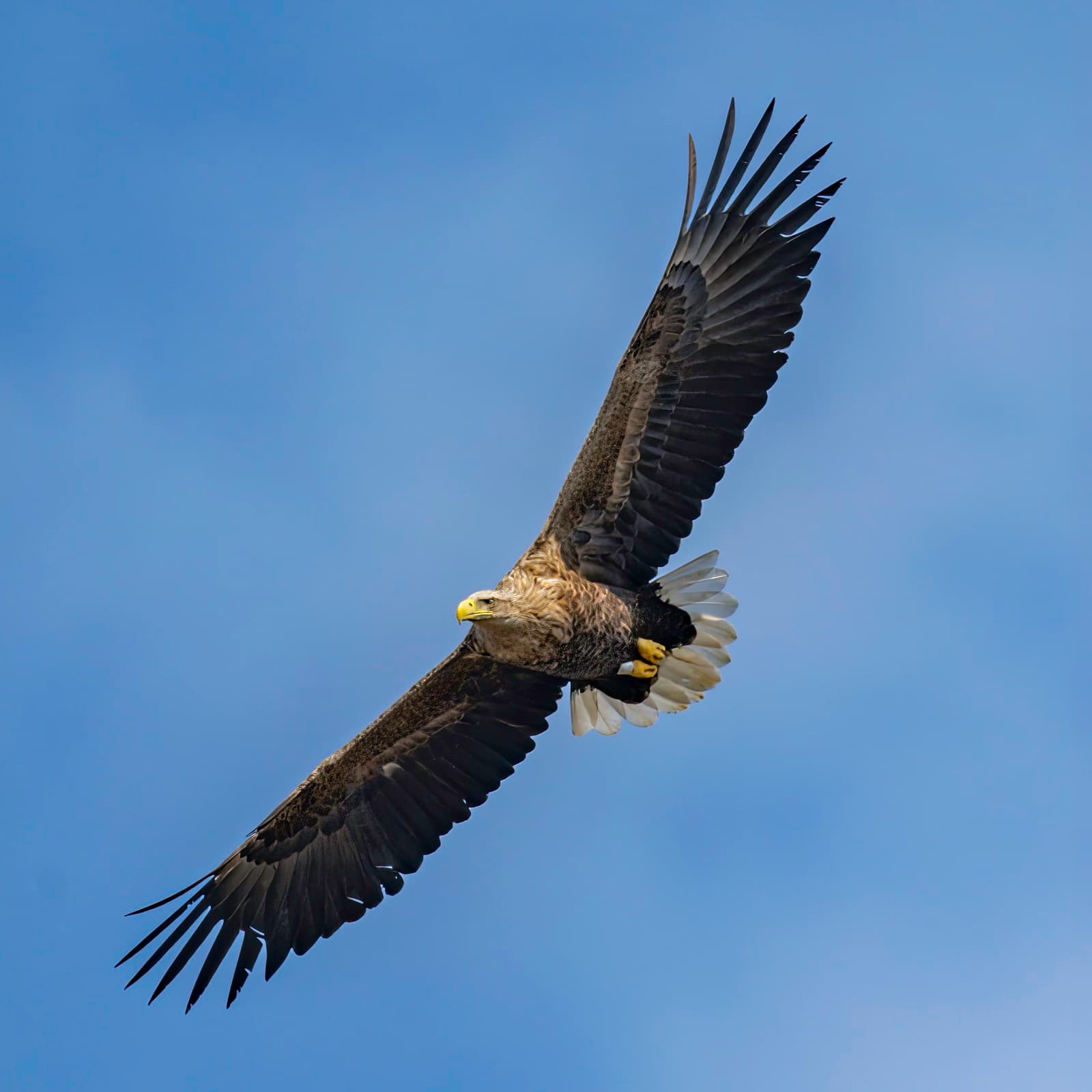
A white-tailed sea eagle in flight above a Norwegian fjord

Photo · Wikimedia Commons

What is it?

The white-tailed sea eagle is Europe's largest bird of prey. Its wings stretch more than 2 metres from tip to tip - wider than a tall adult is high. Norway has one of the biggest sea eagle populations in the world, mostly along the rugged northern coast.

Tell me more

When a sea eagle soars over a fjord, you can spot it instantly: huge dark wings held out flat, a wedge-shaped pure-white tail, and a yellow beak almost the size of a small banana. They mostly fly low over the water, watching for fish.

Their hunting trick is amazing. The eagle dives at the surface of the water and snatches a fish out with its claws (called talons) - without slowing down. Then it lifts off again, the fish wriggling in its grip. They mainly eat fish, but they also catch seabirds and sometimes small mammals.

Sea eagles build the biggest bird nests in Europe. A nest sits on a cliff or in the top of a giant tree, and a pair will use the same one year after year, adding more sticks each time. Some nests are over 2 metres wide and weigh more than a child.

By the 1960s, sea eagles had almost died out in many parts of Europe because of pollution and hunting. Norway protected them, and the numbers slowly grew. Today, Norway has so many that some birds have been carefully moved to Scotland and Ireland to bring back populations there.

In the classroom

Walk your class through this in 15 minutes.

Talk together

Discussion prompts

  1. 01How does a bird hunt by snatching food without ever landing? What does that need its body to be able to do?
  2. 02A pair of sea eagles use the same nest year after year, getting bigger and bigger. What other animals build something they keep returning to?
  3. 03Sea eagles almost died out and were saved. What does it take, do you think, to bring back a species that has nearly disappeared?
Try this

Classroom activity

Stretch your arms out wide. Measure the distance from one fingertip to the other - that is your 'wingspan'. Now compare it to a sea eagle's, which is over 2 metres. As a class, work out: how many of your wingspans fit across one eagle's?