
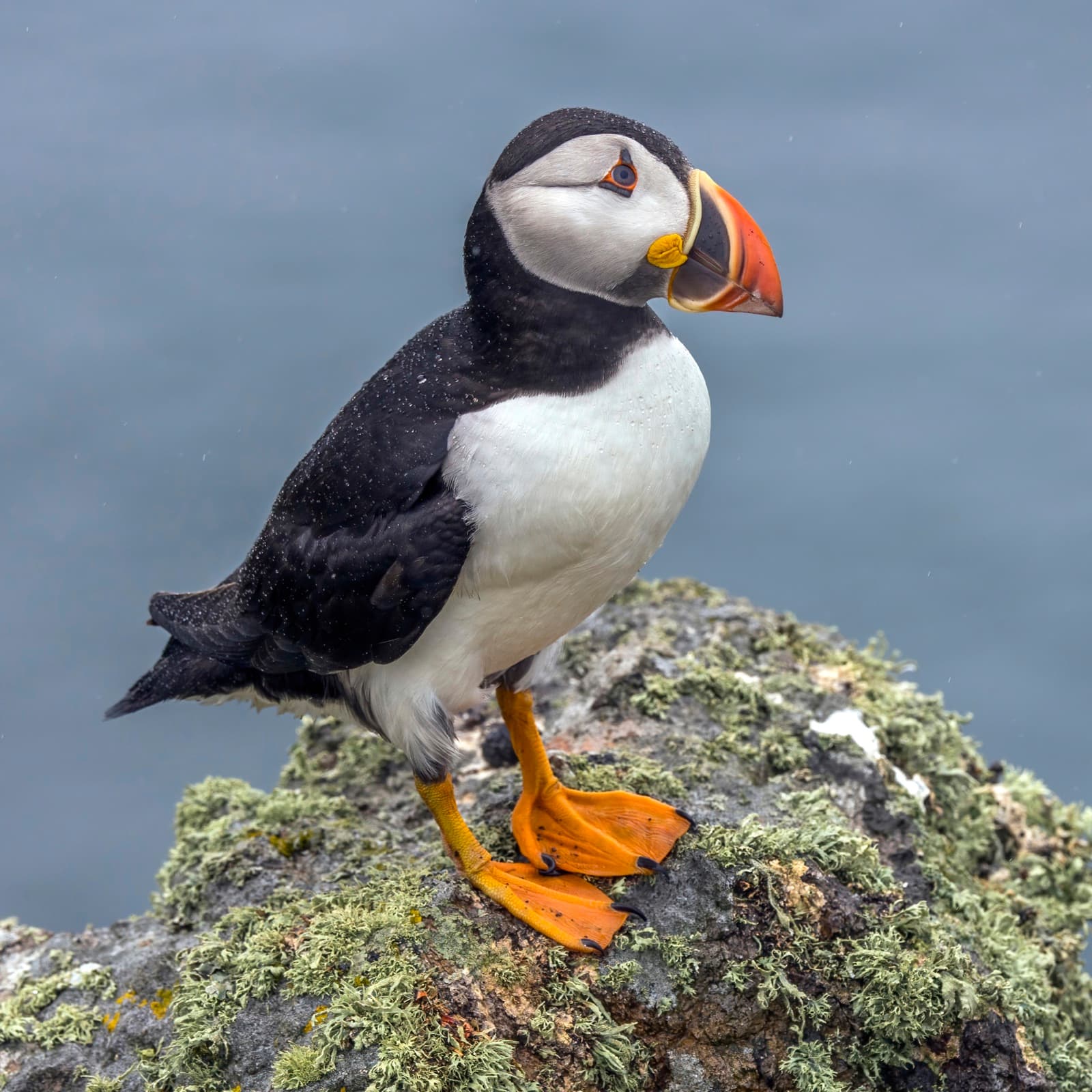
Puffins spend most of the year out at sea, bobbing on waves and diving for fish. They only come to land for a few months each summer, to lay eggs and raise their babies (called 'pufflings'). They nest in burrows - long tunnels they dig into the soft soil on top of sea cliffs.
A puffin's bright orange beak is part-show, part-tool. In summer, the colour is at its brightest to help them find a partner. By winter, it fades to grey. The beak is also brilliant for fishing: a puffin can hold up to 30 small fish at once, lined up neatly across its beak, while still catching more.
Underwater, puffins are amazing swimmers. They use their wings like paddles - basically flying through the water - to chase fish. They can dive 60 metres deep and stay under for a minute. On land they waddle slowly. In the air they flap so fast (400 flaps a minute) that they look like a fuzzy bullet.
The biggest puffin colony in the world is on the island of Runde, off the west coast of Norway. About 100,000 pairs nest there every summer. The cliffs are so packed with birds that they look from far away like the rocks are moving.