
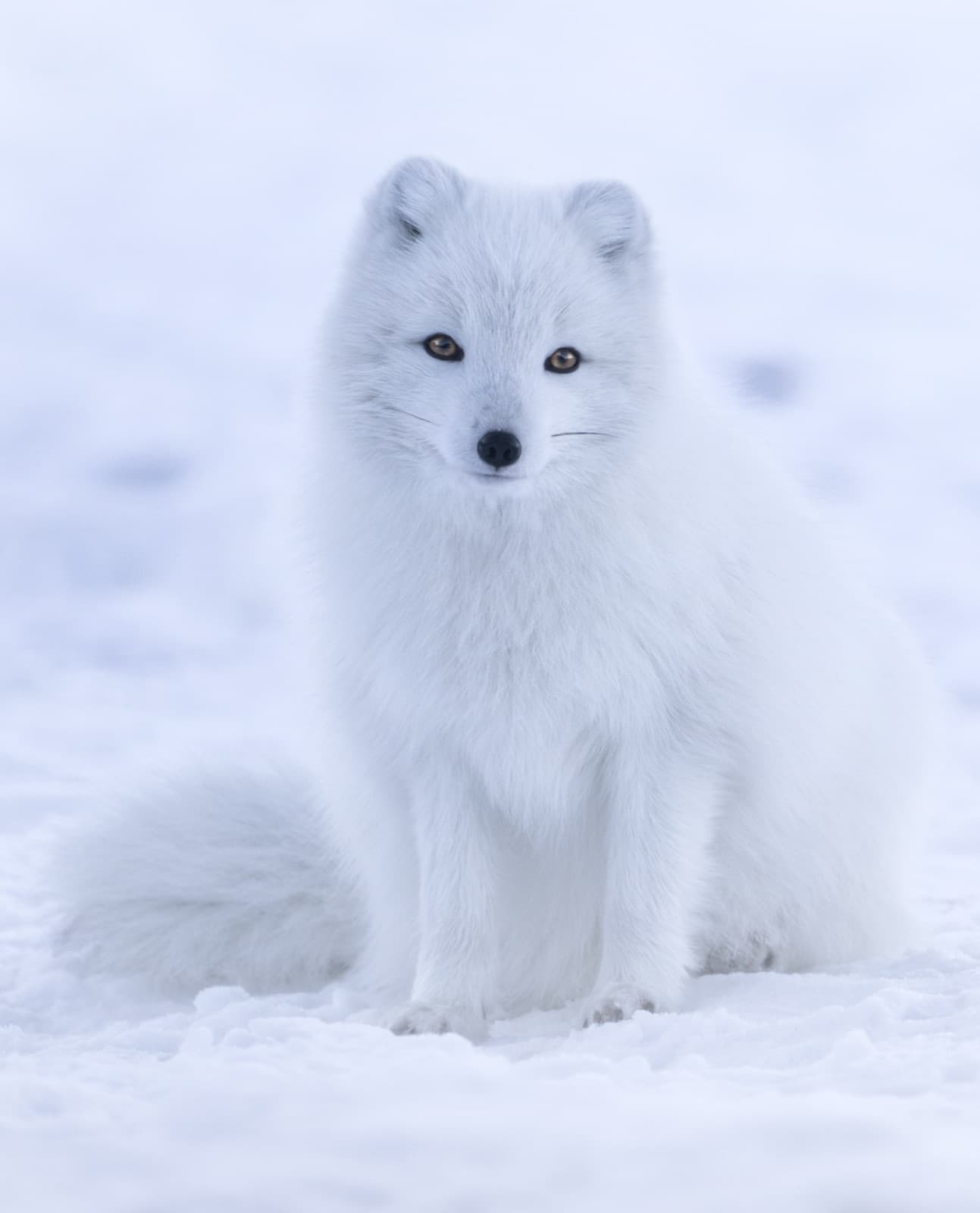
An Arctic fox is built to survive temperatures down to -50°C. Its fur is the warmest of any mammal on Earth. It has small, rounded ears (less heat lost), a short muzzle (less frozen breath), short legs (less heat lost) and a huge fluffy tail it wraps around itself like a scarf when it sleeps.
The coat colour-change is amazing. In summer, the fox is grey-brown so it blends in with rocks and moss. In autumn, it starts to grow a new white coat. By midwinter, every hair is white - perfect camouflage against the snow. Then in spring, the white fur sheds and the brown comes back. The same trick happens with snowshoe hares and stoats.
Arctic foxes mostly eat small rodents called lemmings. They listen carefully for lemmings moving under the snow, then leap high in the air and pounce down through the snow head-first to grab one. It looks funny but it is brilliant hunting.
Arctic foxes were once almost extinct in Norway. In the 1900s there were only a few dozen left. Today, thanks to scientists, ranchers and a Norwegian breeding programme, the numbers are climbing again. Hundreds of cubs have been released into the wild in the last 20 years.