
Classroom lesson 路 Atlas mountain goats馃嚥馃嚘 Morocco

Atlas mountain goats

Brilliant climbers - including the famous tree-climbing goats

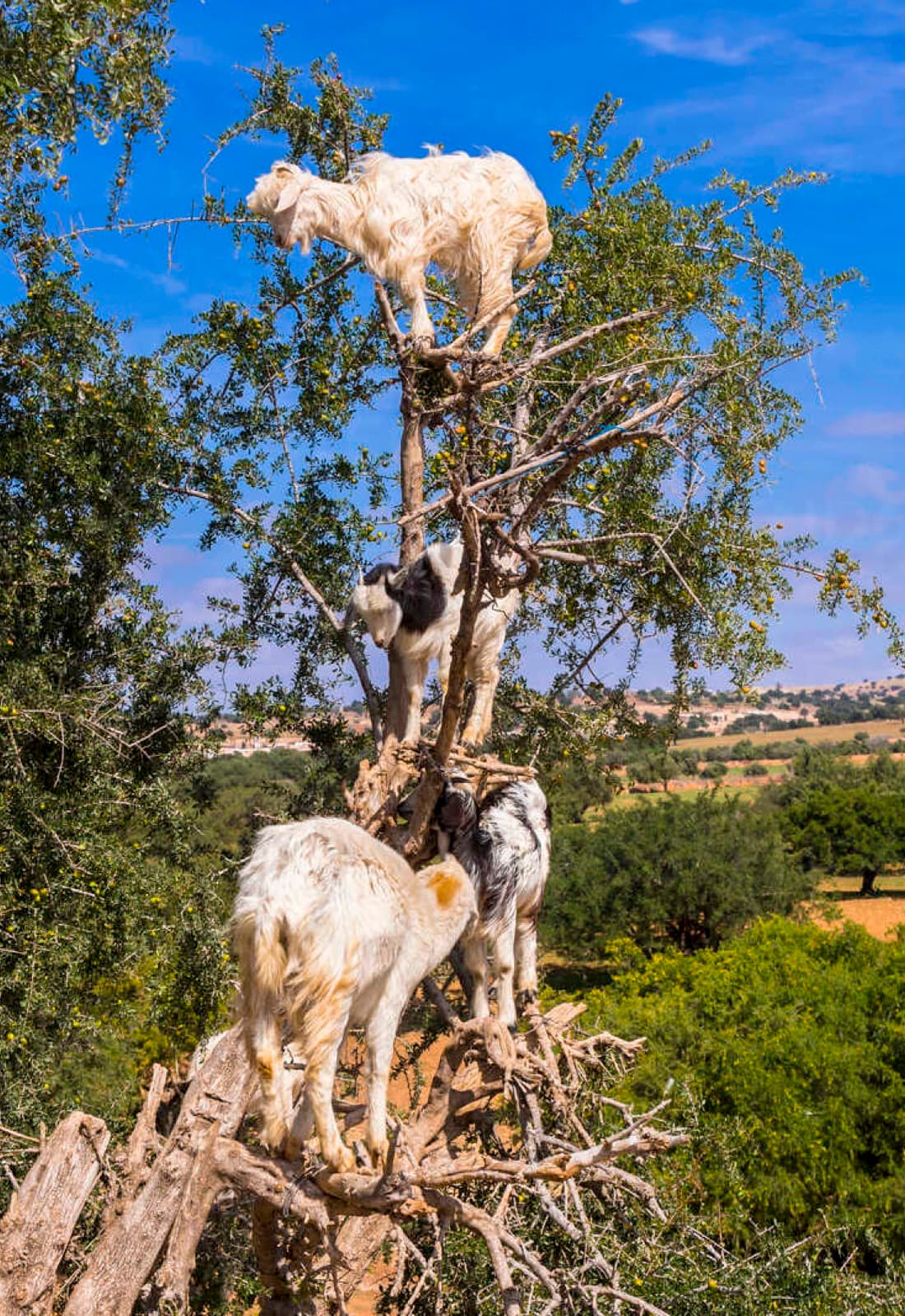
White and grey goats balancing on the branches of an argan tree in southern Morocco

Photo 路 Wikimedia Commons

What is it?

Goats are everywhere in rural Morocco - from the snowy High Atlas down to the southern argan tree forests. They are one of the most important animals for many farming families, giving milk for cheese, hair for weaving, and helping clear scrubby land.

Tell me more

Mountain goats are some of the best climbers on Earth. Their hooves are split into two parts that can move separately, gripping tiny ledges that look impossibly thin. They can stand on a rock the size of a tea cup.

In southern Morocco, where the argan trees grow, goats famously climb up into the branches. Six or seven might balance on one tree at a time. Tourists drive for hours to see this and many people don't believe it is real until they see it for themselves.

Goats are friendly, curious and clever. They are sometimes called 'mountain dogs with horns' because they will follow people, recognise their shepherds, and learn their own names. They have a wide range of bleats - one for hungry, one for hello, one for 'something's not right'.

In the Atlas Mountains, goat's milk is made into a soft white cheese - especially around Chefchaouen, the blue town. Sometimes the cheese is wrapped in green leaves to keep it fresh on long mountain walks.

In the classroom

Walk your class through this in 15 minutes.

Talk together

Discussion prompts

  1. 01How do split hooves help an animal climb? Try gripping a pen with two of your fingers vs. a flat hand.
  2. 02Why might a farmer prefer goats to cows in the mountains?
  3. 03Goats can recognise their names. What other animals you know can do that?
Try this

Classroom activity

Set up a small 'mountain' obstacle course in the playground - low rocks, planks, stepping stones. Tell pupils to try crossing it using only the balls of their feet, like a goat. Talk about how hooves and bare feet feel different on rocks.