
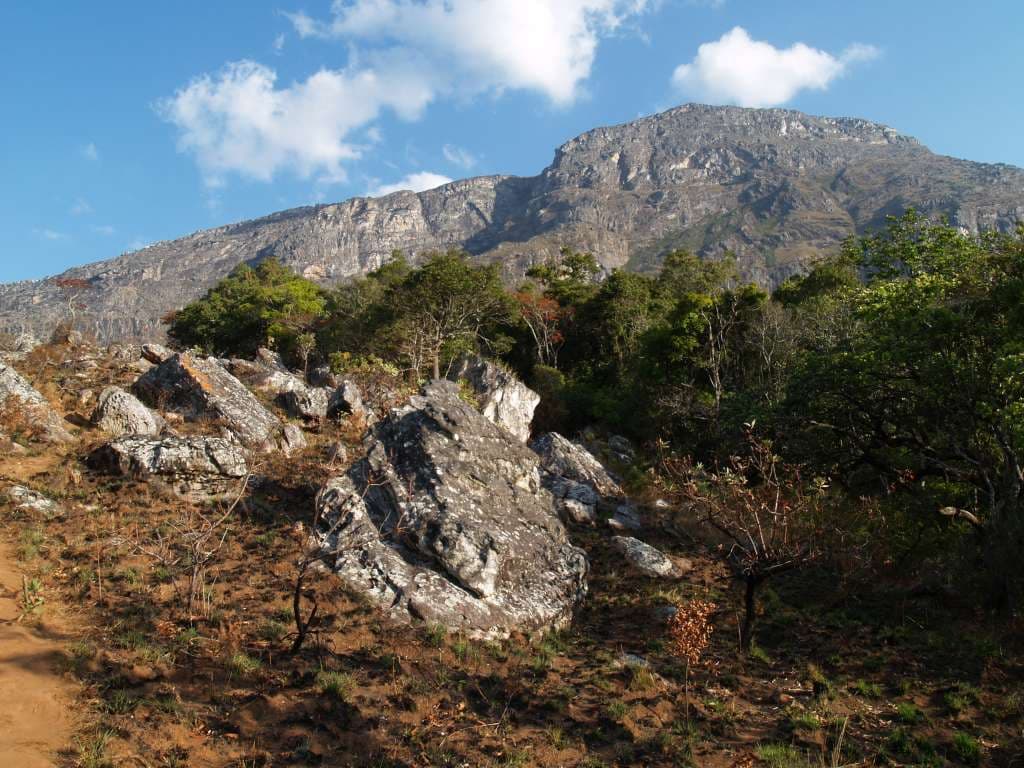
Zimbabwe is mostly a high, flat plateau - but the Eastern Highlands rise above it in three sections: Nyanga in the north, Bvumba in the middle, and Chimanimani in the south. The tallest peak, Mount Nyangani, is just over 2,500 metres high - about a quarter of the way up Mount Everest.
Because the highlands catch the moisture coming off the Indian Ocean, they get much more rain than the rest of the country. Streams tumble down the slopes into rivers and waterfalls. One of them, Mtarazi Falls, drops nearly 800 metres - one of the longest waterfalls in Africa.
The highlands are full of cool-climate plants you wouldn't expect to see in southern Africa: ferns, mosses, wild orchids and pine forests. Farmers grow apples, coffee and tea here. Local markets along the mountain roads sell mountain berries, honey and small wooden carvings made from local hardwoods.
Nyanga National Park has stone ruins much older than Great Zimbabwe. Ancient farmers built thousands of small stone terraces into the hillsides to make flat fields for growing crops. Some of those terraces still hold their shape after more than 1,500 years.