
Classroom lesson 路 Matobo Hills - the place of balancing rocks馃嚳馃嚰 Zimbabwe

Matobo Hills - the place of balancing rocks

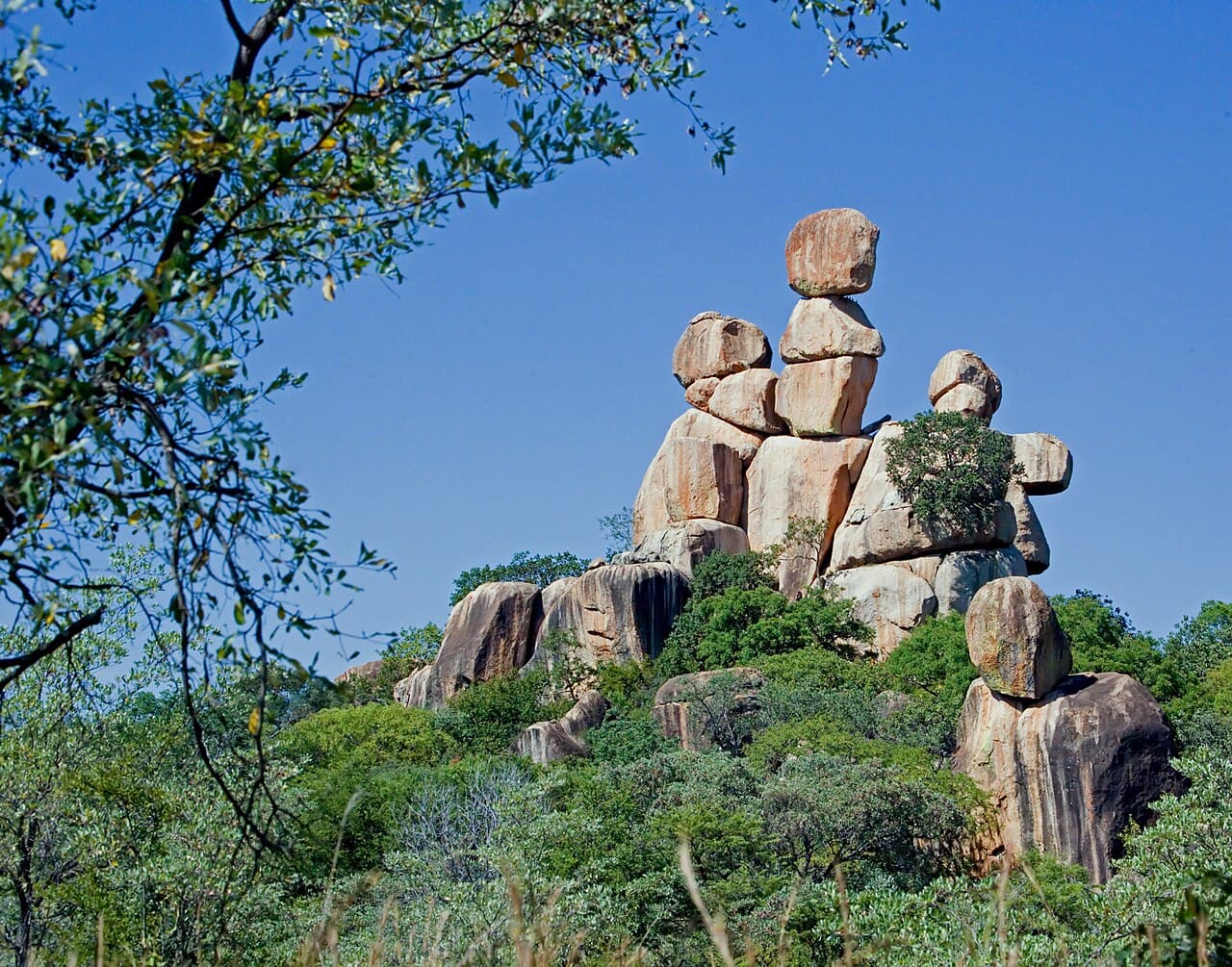
Giant stacked boulders that look like they could topple at any moment

Massive granite boulders balanced on top of each other in the Matobo Hills

Photo 路 Wikimedia Commons

What is it?

Matobo Hills is a wild landscape of enormous granite boulders in the south-west of Zimbabwe, near the city of Bulawayo. Some of the boulders are the size of houses, balanced on top of each other in stacks that look like they should fall over at any second. They have actually been standing like that for millions of years.

Tell me more

Matobo means 'bald heads' in the Ndebele language - because the smooth, round, mossy boulders really do look a bit like giant heads. Geologists think the rocks were once underground. Soft soil washed away from around them over millions of years, leaving the hard granite boulders behind, balanced in odd shapes.

Long before there were cities or towns, people sheltered in the caves of Matobo. They left paintings on the cave walls - over 3,000 different ones have been counted. The paintings show animals (elephants, giraffes, antelopes), hunters with bows, dancers and patterns. Some of them are more than 13,000 years old. The artists used minerals and plant juices to make the colours.

Today, Matobo is a national park. Black eagles soar between the boulders, and the park has one of the highest concentrations of leopards in the world (though they are very shy and hard to see). Rhinos live here too, protected by rangers who patrol on foot every day.

The hills are a sacred place for the local people. The Mwali religious shrine at Njelele in Matobo has been an important place of prayer for hundreds of years - people travel from across Zimbabwe and beyond to ask for rain at the start of the planting season.

In the classroom

Walk your class through this in 15 minutes.

Talk together

Discussion prompts

  1. 01How can a boulder the size of a house balance on another boulder for millions of years without falling?
  2. 02Cave painters 13,000 years ago wanted to show animals and dancers. Why might they have wanted to record those things?
  3. 03If you were going to paint a picture for someone to find in 13,000 years, what would you paint?
Try this

Classroom activity

Mix paint colours using only natural things you can find (grass juice, mud, charcoal, beetroot). Then 'cave paint' an animal on a sheet of brown paper. Compare results as a class. Which colours lasted? Which faded? What does this teach you about making art that lasts thousands of years?