
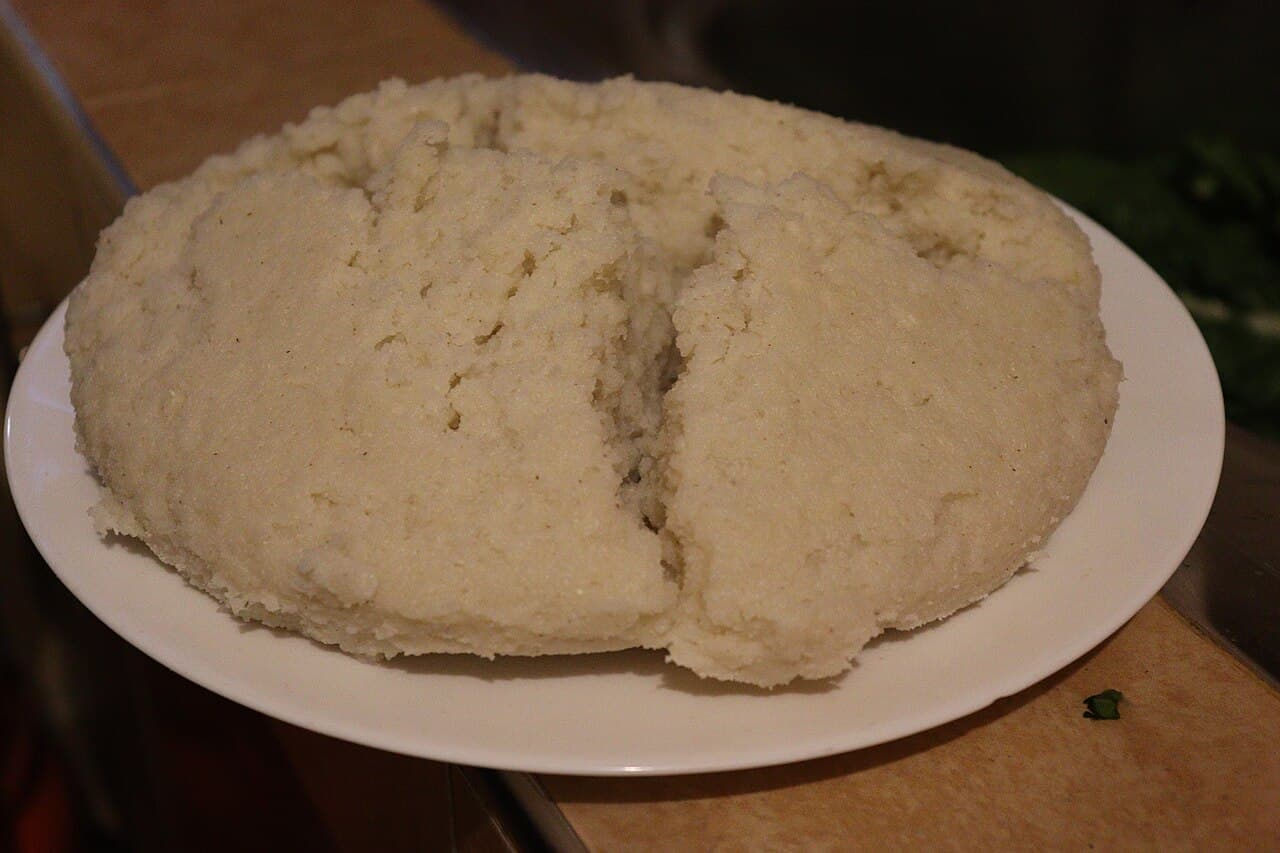
Making sadza is simple but takes a strong arm. The cook boils water in a pot, slowly stirs in maize meal, and keeps stirring as it thickens into a firm dough. After a few minutes, the cook tips it onto a plate, where it cools into a soft, sliceable block. There is a special wooden stirring stick called a mugoti just for sadza.
Most Zimbabwean families eat sadza with their hands. You break off a small piece from the block, roll it gently in your palm to make a little scoop, and use it to pick up the side dishes. The side dish is called 'relish' in Zimbabwean English. Common relishes are vegetable stews (covo, rape leaves or chomolia), beans, or grilled meat.
Almost every country has a 'staple' food - the everyday thing the whole family grew up eating. In Italy it might be pasta. In Mexico, tortillas. In Japan, rice. In Tanzania, ugali. In Zimbabwe, it is sadza. Many Zimbabweans say they don't feel like they have really eaten until they have had sadza.
Maize, the plant sadza is made from, didn't always grow in Zimbabwe. It first grew in the Americas thousands of years ago and slowly travelled around the world. Today it is the most important food crop across much of southern Africa - so important that 'maize' and 'food' are almost the same word in many Zimbabwean families' homes.