
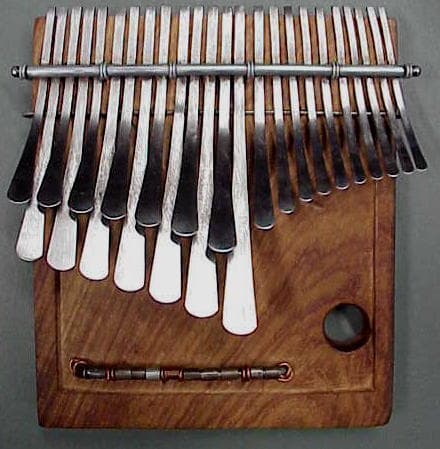
There are different kinds of mbira. The most famous is called the mbira dzavadzimu, which means 'mbira of the ancestors'. It has 22 to 28 metal tines arranged in three rows. Players hold it in both hands and pluck the tines with their thumbs and one finger. The sound is shimmery and watery, like rain falling on a metal roof.
To make the sound bigger, the mbira is often placed inside a large hollow gourd called a deze. Small shells, bottle tops or seed pods are sometimes attached to the deze - so as the player plays, the whole instrument also rattles and buzzes gently. It is meant to sound like an entire band even though only one person is playing.
Mbira music has been played at gatherings for hundreds of years. The patterns are like puzzles - the right thumb plays one rhythm, the left thumb plays another, and together they make a third melody that nobody is actually playing. Mbira players say the music seems to 'appear' between the two hands.
Famous Zimbabwean musicians like Thomas Mapfumo and Stella Chiweshe have brought mbira music to audiences all over the world. Today you can find mbira players in schools, concert halls and street markets in Harare. UNESCO has put mbira on its list of important world cultural traditions.