
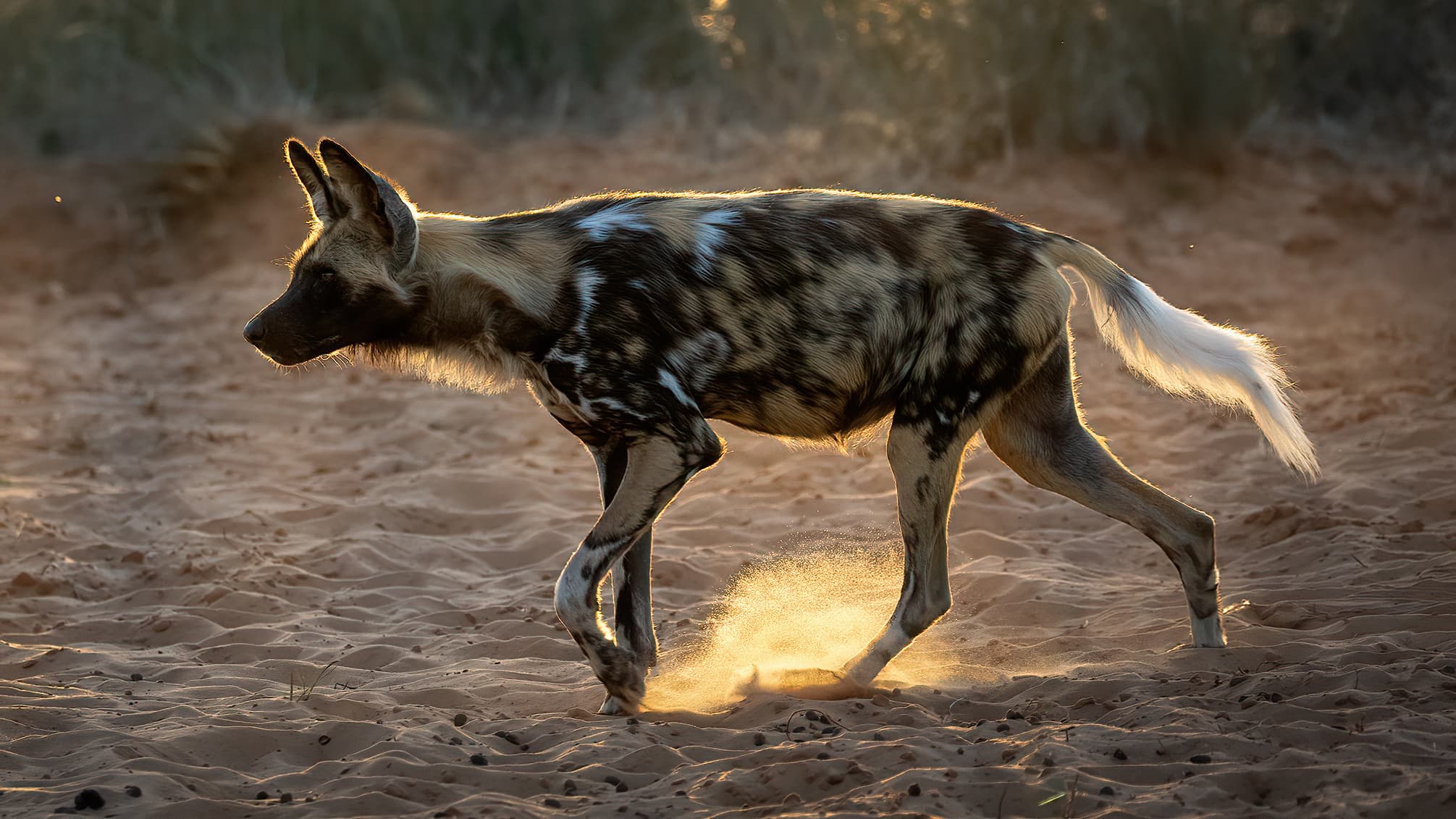
Wild dog packs work together more than almost any other animal. The whole pack helps raise the puppies, even dogs that are not the parents. When the pack goes hunting, one or two adults stay behind to babysit. When the hunters return, they share their food with the pups and the babysitters, often by bringing food back in their stomachs and spitting it up at the den.
Before going hunting, wild dogs hold a strange little meeting. They greet each other, wag their tails and run around in circles. Then some of them start to sneeze. Scientists in Botswana and Zimbabwe noticed that if enough dogs sneeze, the pack agrees to go hunting. Fewer sneezes means 'not yet'. It is the only known animal that 'votes' by sneezing.
Wild dogs are amazing endurance runners. They can run at 60 km/h for long distances - much further than a lion or a leopard. They wear out their prey by simply chasing it. Pack members take turns leading at the front, like cyclists in a peloton.
There are fewer than 7,000 African wild dogs left in the world. Zimbabwean rangers and scientists at the Painted Dog Conservation centre near Hwange protect them by fitting some with tracking collars and looking after orphaned puppies. School visits to the centre are a popular trip - kids can learn how to recognise individual dogs by their unique patterns.