
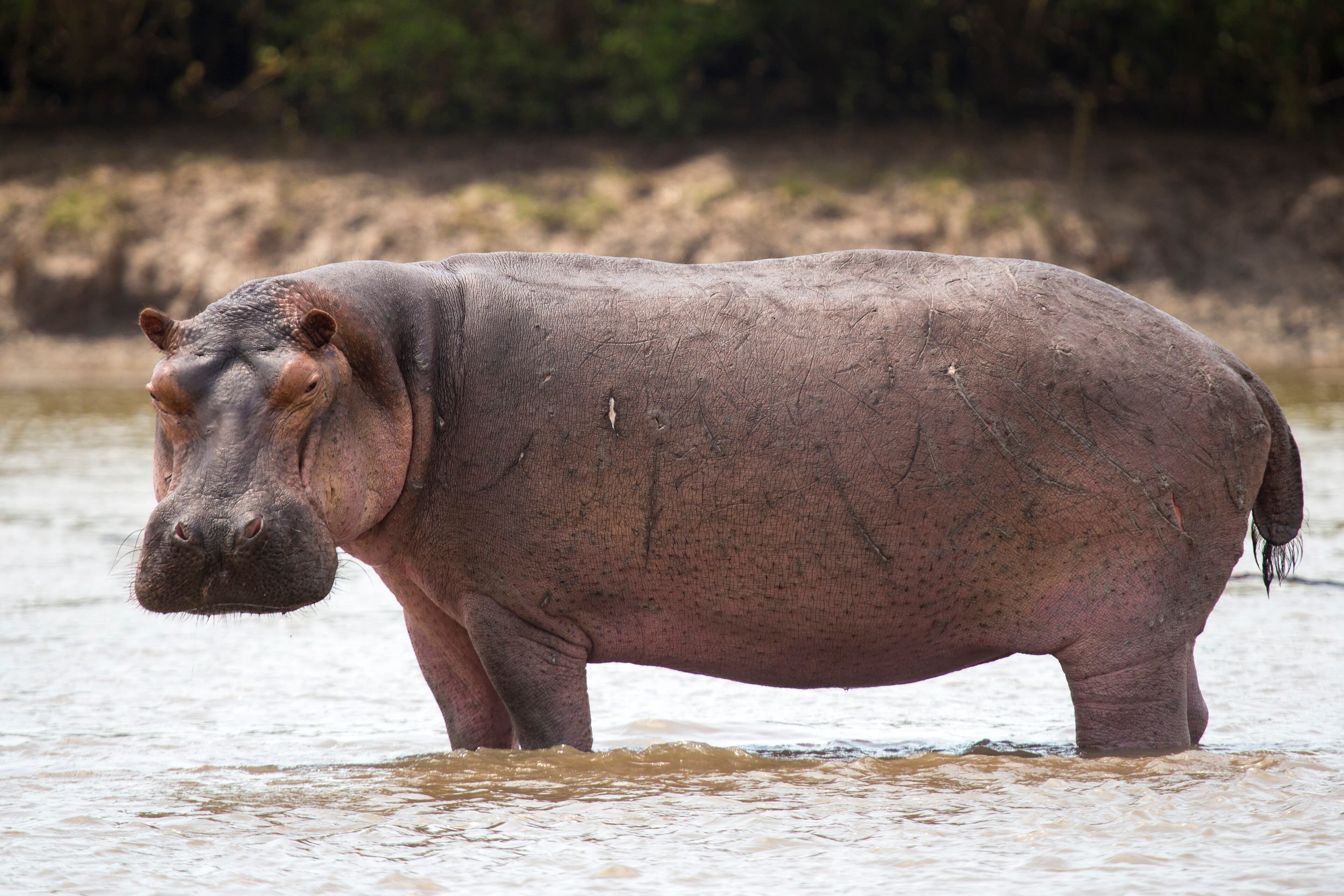
An adult hippo weighs around 1,500 kilograms - as much as a small car. Most of the day they stay underwater, with just their eyes, ears and nostrils above the surface. Their skin is sensitive to the sun, so the water keeps them cool. At sunset, they climb out and walk on land to find grass to eat - sometimes 10 kilometres in a single night.
Even though they live in water, hippos can't actually swim. They walk along the bottom or push off the bottom like a swimmer in a pool. They can hold their breath underwater for around five minutes. When sleeping in water, they automatically rise to the surface to breathe without waking up.
Hippos look slow on land, but they can run at 30 km/h for a short distance - much faster than a human. They are also one of the most dangerous large animals in Africa to come too close to. They are very protective of their calves and their stretch of river.
A baby hippo (called a calf) is born underwater and can swim straight away. The mother nudges it up to the surface for its first breath. Calves stay with their mothers for around eight years, learning where the best grass is and which routes are safe to walk at night.