
Jazz grew from the songs and rhythms of African American communities in the south of the United States. Musicians took different musical ideas - work songs, church music, brass band marches - and mixed them together into something brand new. By the 1920s, jazz had spread from New Orleans up the Mississippi River and across the whole country.
A jazz band can be small (just a piano and a trumpet) or big (a whole orchestra of saxophones, trumpets, drums and double bass). The musicians take turns having a 'solo' - their own moment in the spotlight where they get to invent a new musical line on top of the tune.
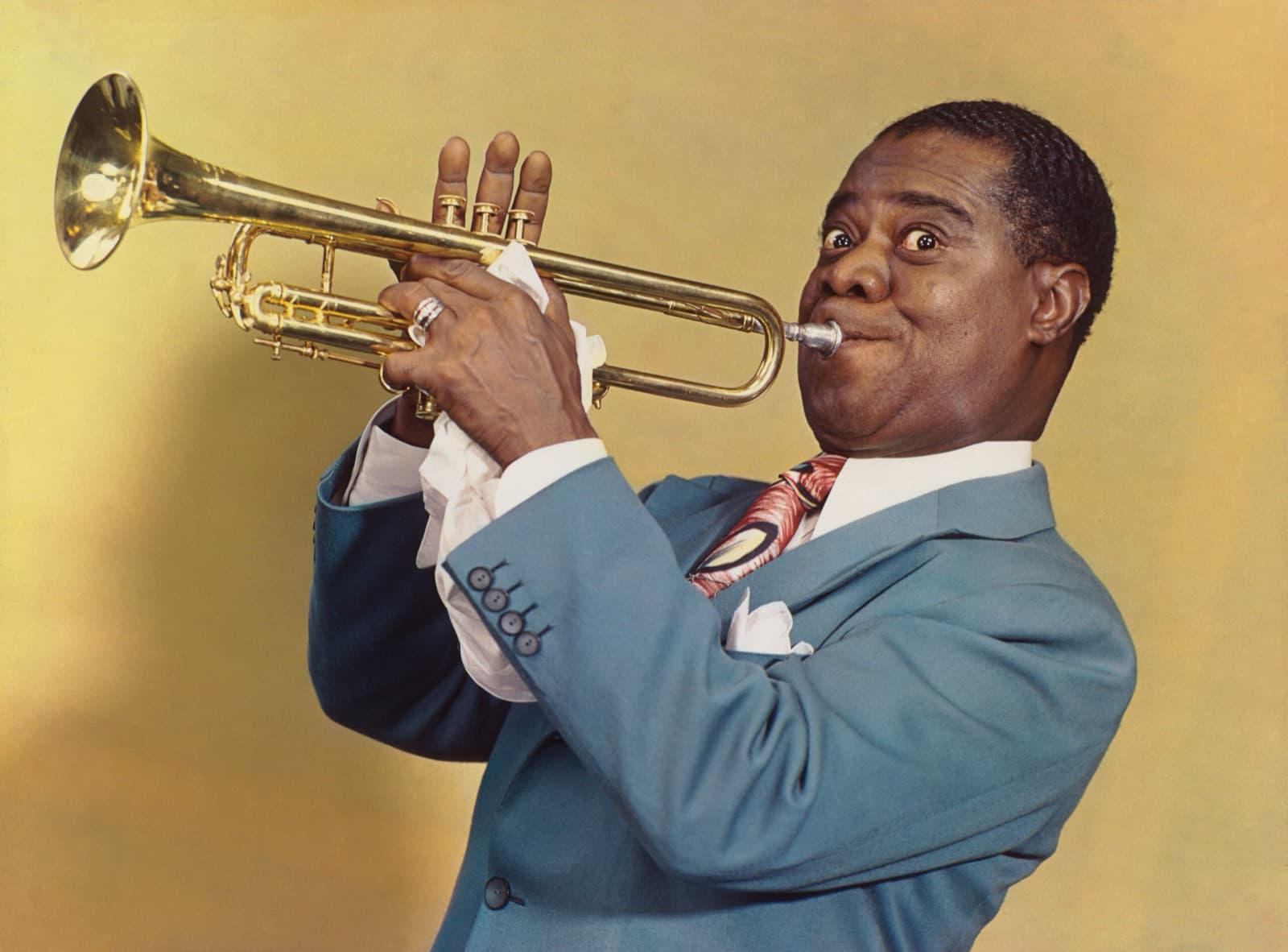
One of the most famous jazz musicians ever was Louis Armstrong, a trumpet player from New Orleans. His playing was so warm and so daring that he changed the way every trumpet player after him approached the instrument. He also had a friendly, gravelly singing voice. His songs are still played and loved around the world today.
Jazz has travelled. It has shaped music in almost every country - jazz scenes thrive in Cuba, in France, in Japan and in many African countries. New kinds of music, including rock and roll, hip-hop and pop, all have jazz somewhere in their family tree. Without jazz, music today would sound very different.