
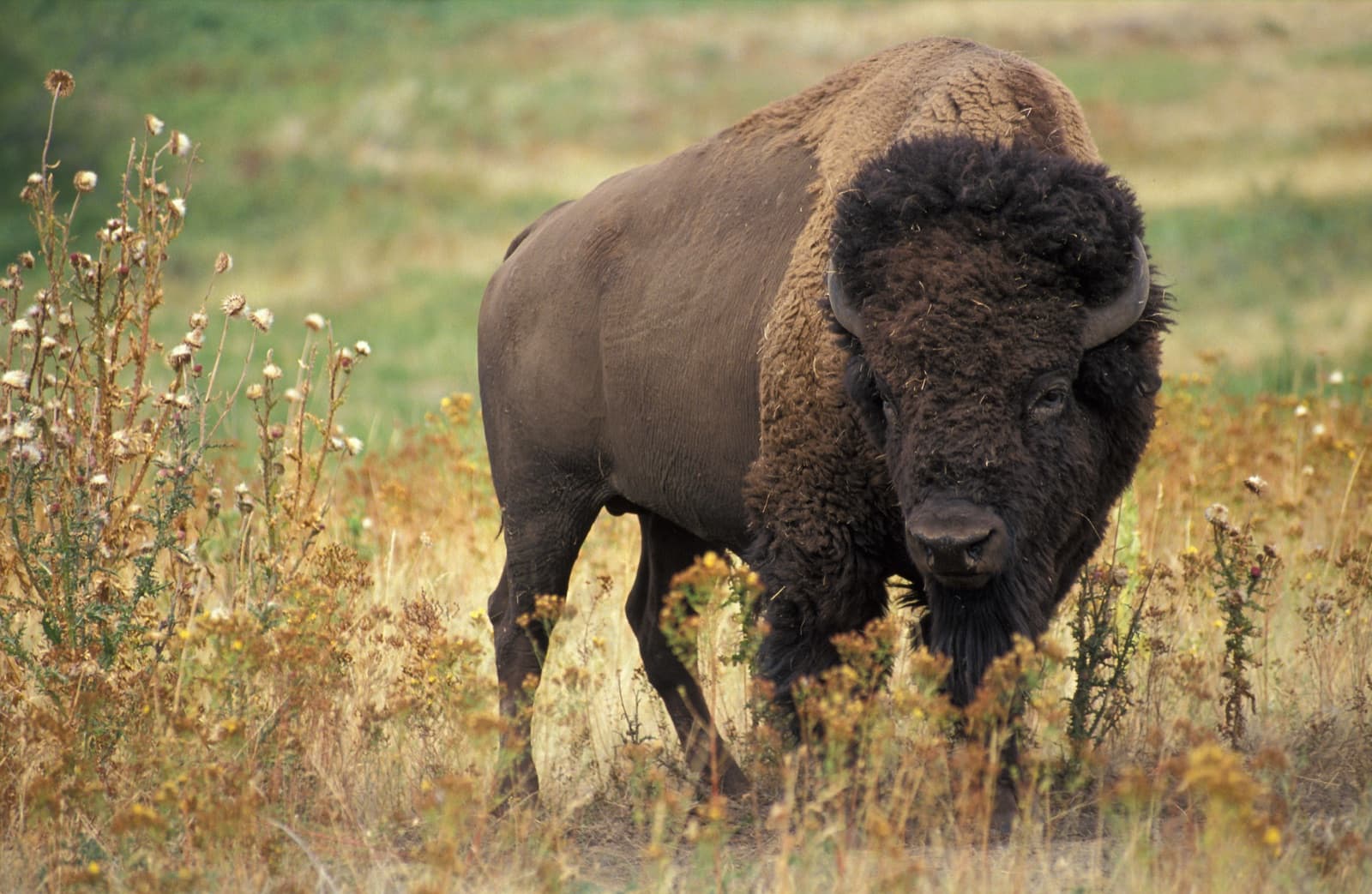
Bison are huge but surprisingly nimble. They can run at 55 km/h - faster than the fastest human - and jump nearly two metres high. Their massive shoulders are built like a snowplough, so they can push through deep snow with their heads to reach grass underneath in winter.
Before the 1800s, around 30 million bison roamed across the grasslands of North America. The Indigenous peoples of the Plains lived alongside them, treating the bison with great respect. By 1900, after a lot of hunting, only about 1,000 bison were left. The country had nearly lost its biggest animal.
The rescue is one of the great wildlife comeback stories. A small group of bison was protected inside Yellowstone National Park - the world's first national park. From those few animals, the population slowly grew. Today bison live in many parks and reserves, including a big public herd at Yellowstone and another at the National Bison Range in Montana.
Bison live in family groups led by older females, a bit like elephants. Calves are born with reddish-orange fur that turns brown after a few months. The whole herd takes turns watching the babies. In summer, bison love to roll in dust and mud - it cools them down and keeps biting flies away.