
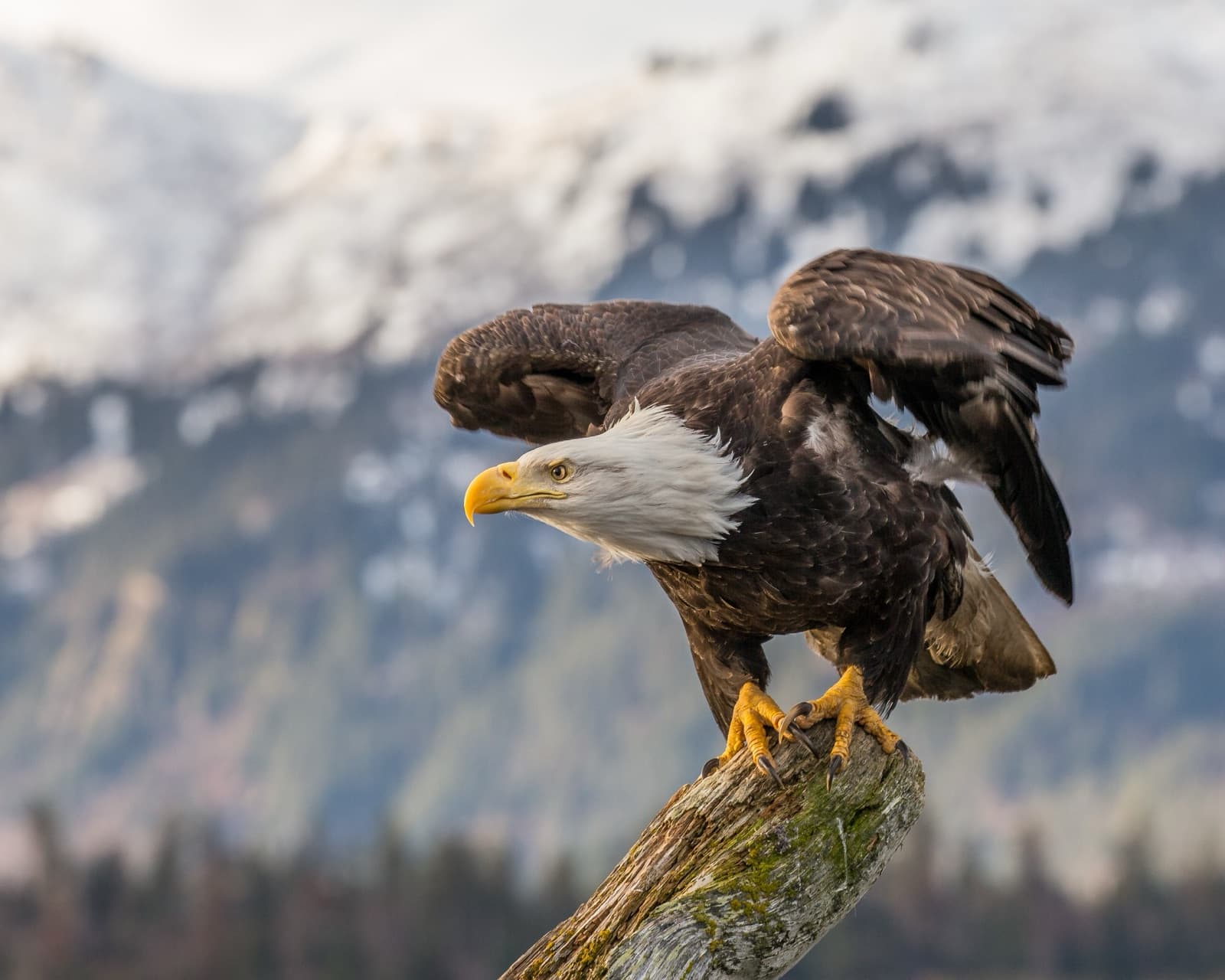
Bald eagles have feathers all over their body. The grown-up birds have a snowy-white head and tail, a dark brown body, and a bright yellow beak and feet. Young bald eagles look completely different - all brown - until they are about five years old. Then the white feathers come in like a slow magic trick.
Their eyesight is one of the best in nature. A bald eagle can spot a fish in the water from over a kilometre away, then dive at over 150 km/h to catch it with its talons. They mostly eat fish, scooping them up from rivers, lakes and the sea without even getting their bodies wet.
Bald eagles build the biggest nests of any bird in North America. A nest is usually high up in a tree, made of sticks woven together, and it gets bigger every year as the same pair adds more sticks. The biggest one ever found weighed nearly two tonnes - heavier than a small car.
The bald eagle is also a comeback story. About 60 years ago, the bird almost disappeared because of a chemical called DDT that made their eggshells too thin. People stopped using the chemical and protected the birds. Today there are tens of thousands of bald eagles again, soaring over rivers and forests across the US.