
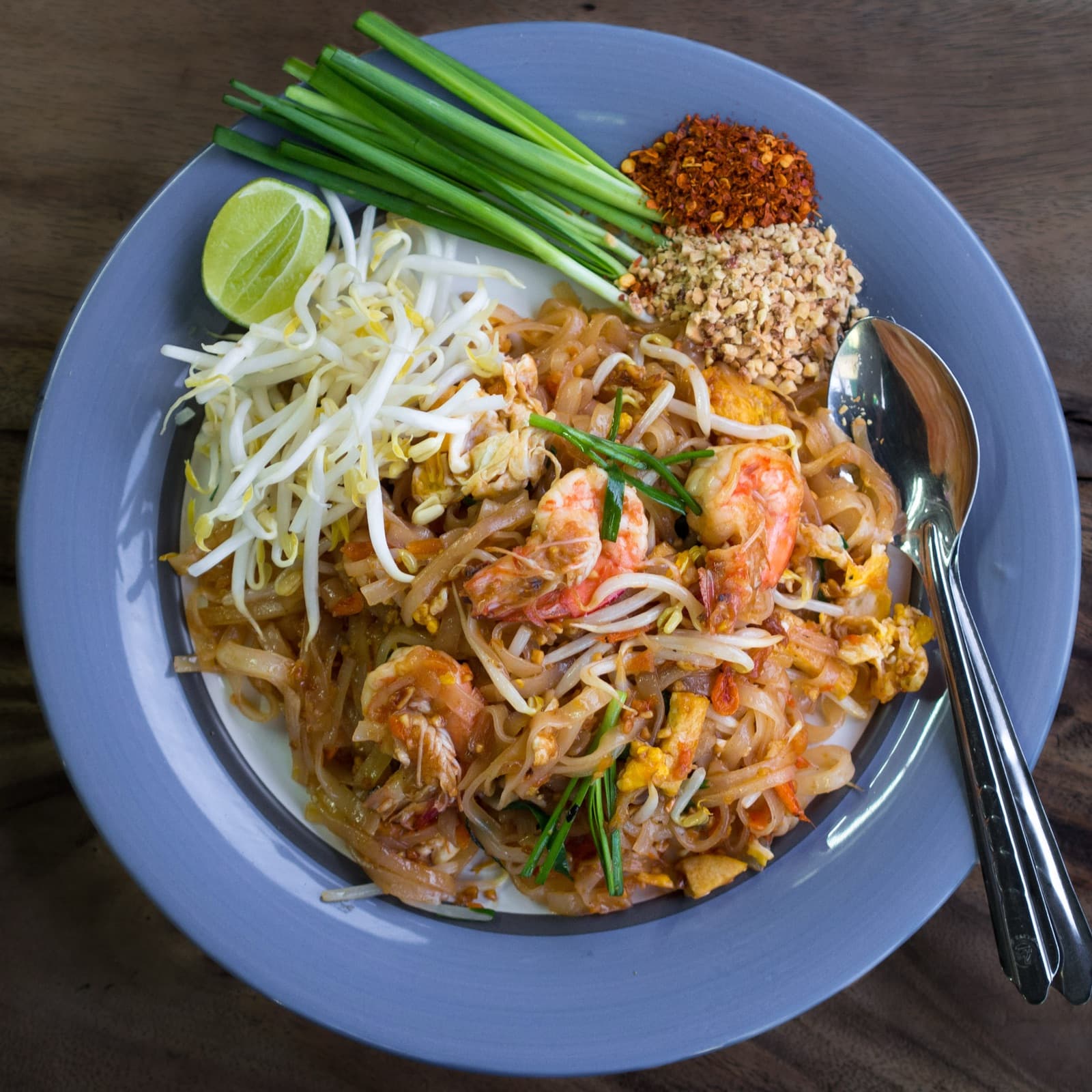
A cook making pad thai works fast. They heat a wok until it is almost smoking, then throw in the noodles, egg, vegetables and sauce one after another, tossing the whole thing in the air with a metal spatula. The whole dish is ready in about three minutes. Done well, it tastes sweet (from sugar), salty (from fish sauce), sour (from tamarind) and a bit nutty (from peanuts) all at once.
It is most often served with a lime wedge to squeeze over, some crunchy bean sprouts on the side, and crushed peanuts sprinkled on top. Many cooks add a few cooked prawns or chicken. Vegetarian pad thai - with just tofu instead - is also common.
Pad thai is a 'street food'. That means it is most often cooked at little stalls on the pavement, with a wok on a gas burner and a small queue of people on plastic stools waiting for their plate. A whole bowl can cost less than a bus ticket. Many Thai families eat lunch like this every day.
It became popular in the 1930s because the Thai government wanted everyone to eat more noodles and less rice during a difficult time. They printed simple pad thai recipes on cards and handed them out for free. The recipe spread, people loved it, and it has been Thailand's most famous dish ever since.