
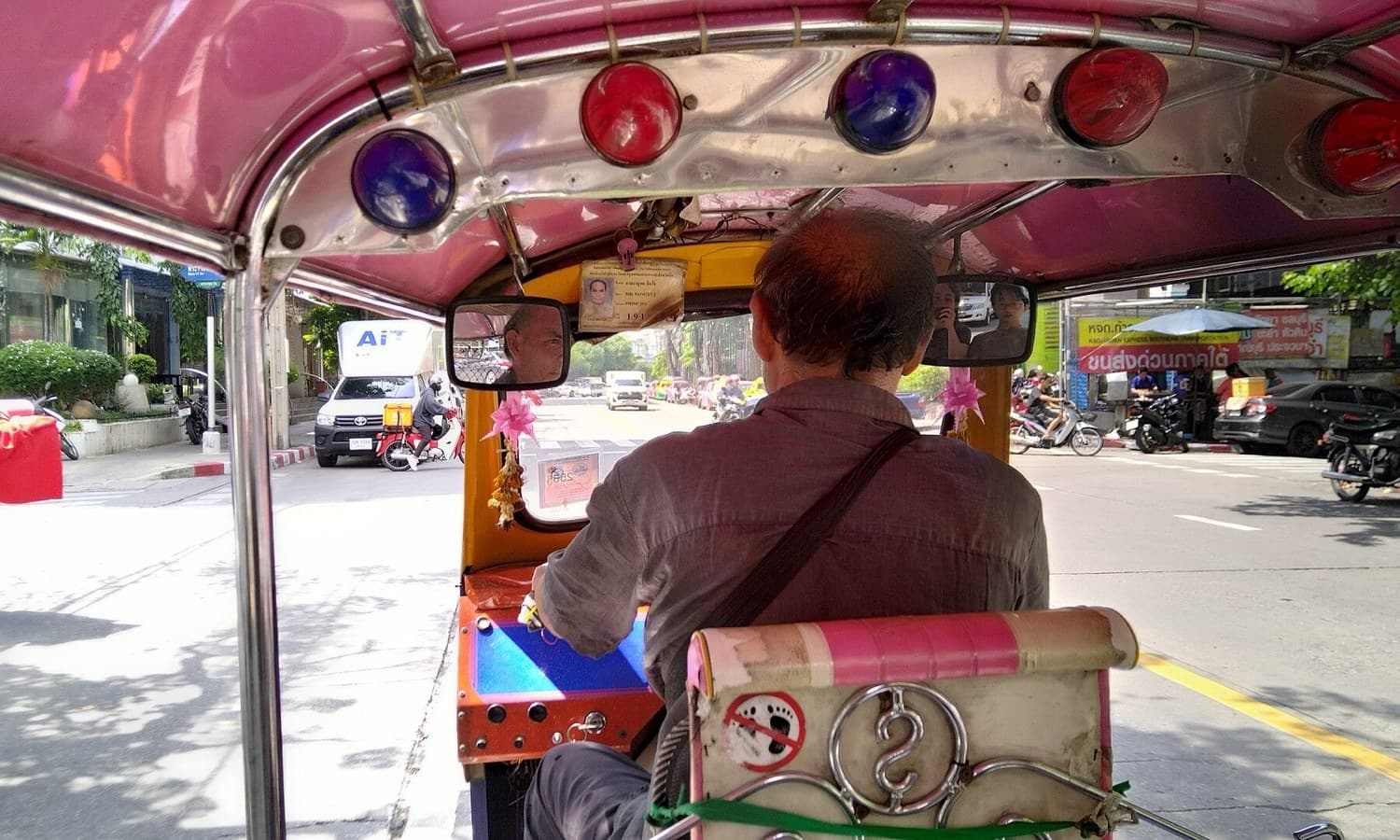
A tuk-tuk is like a motorbike at the front and a tiny open-sided buggy at the back, all under one curved roof. The driver sits at the handlebars, just like on a motorbike. Two or three passengers squeeze onto a padded bench behind. There are no doors and no windows, so the wind whooshes through as you ride.
Tuk-tuks come in bright colours - pink, yellow, sky blue - and many drivers decorate them with garlands, lights, stickers and little soft toys. Each one is a bit different, and many drivers think of their tuk-tuk as their second home; they sometimes sleep in them between rides.
Because they are so small and light, tuk-tuks can dart down narrow alleys where bigger cars can't fit. They are perfect for short city journeys - a quick zip to the market, the school gate, or the river ferry pier. In big traffic jams, they slip between the cars while bigger taxis sit still.
Tuk-tuks were originally inspired by motorised rickshaws from Japan that arrived in Thailand in the 1960s. Since then, Thai builders have made them their very own design, with bright colours and curling little roofs you wouldn't see anywhere else. Today they are one of the most recognisable Thai things in the world.