
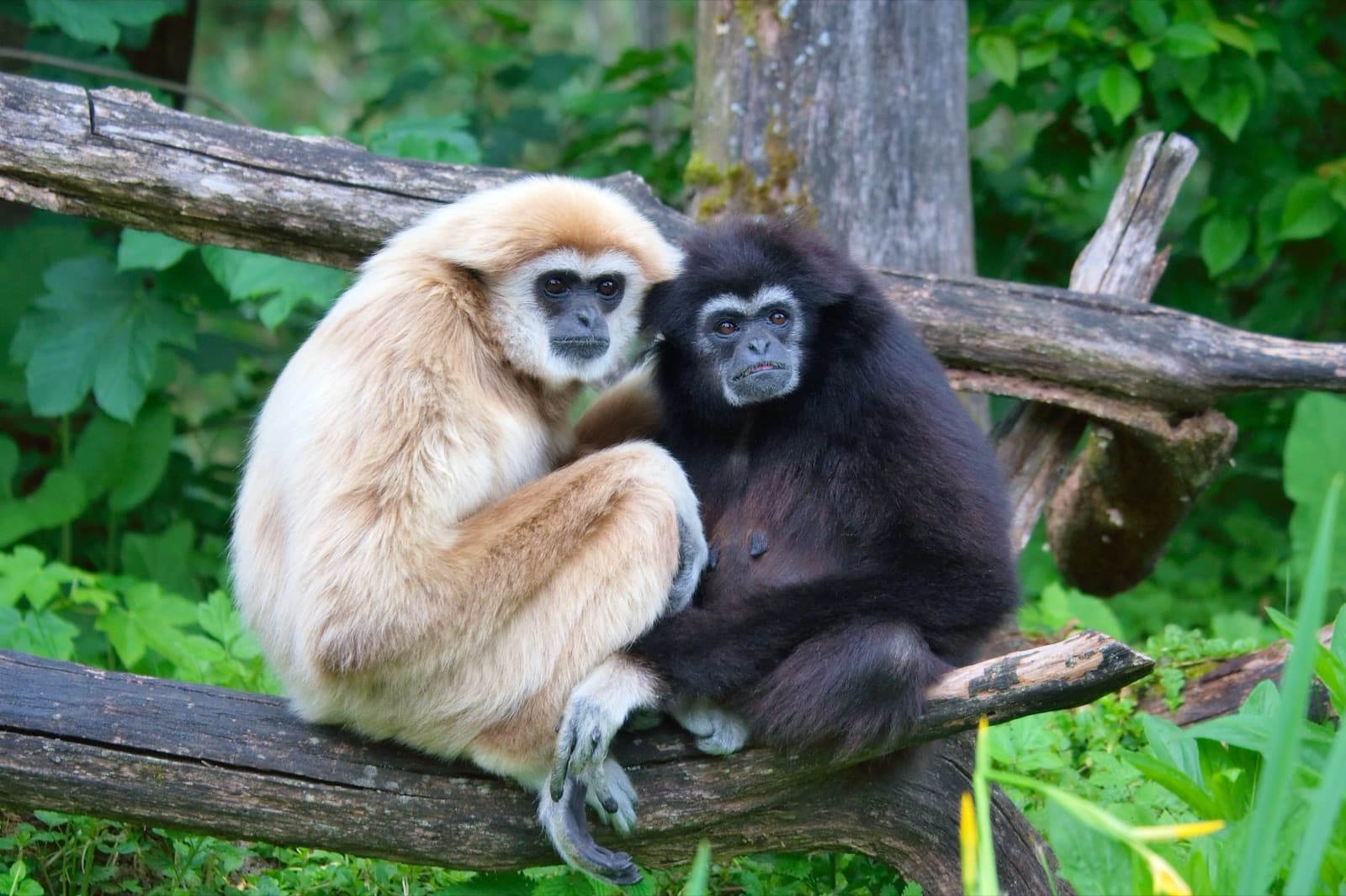
A gibbon's arms are extra long - longer than its body - and they have hook-like fingers built for grabbing branches. To get around, they 'brachiate' - which is the science word for swinging hand over hand. A big gibbon can swing 15 metres in a single leap, which is wider than most school classrooms.
Gibbons travel in family groups: a mum, a dad and their children. They stay with one partner for their whole lives, which is rare in nature. Every morning at sunrise, the parents sing a duet together. The mum starts a high, whooping call; the dad joins in with a deeper rumble. The song says 'this is our patch of forest - other gibbons keep out, please'.
Their colour can be confusing. In the same family, some gibbons are creamy gold and some are jet black - it isn't about being male or female, it just changes from one animal to the next. You can have a gold mum, a black dad and two black babies, or any other combination.
Gibbons eat mostly fruit, with some leaves and the occasional insect. They love figs, and a family will return to the same favourite fig tree every few days when it has new fruit. Because they spread the seeds around the forest in their droppings, gibbons are like tiny gardeners planting new trees.