
Classroom lesson 路 Wildlife馃嚫馃嚢 Slovakia

The Eurasian lynx

A shy, silent wild cat with tufted ears

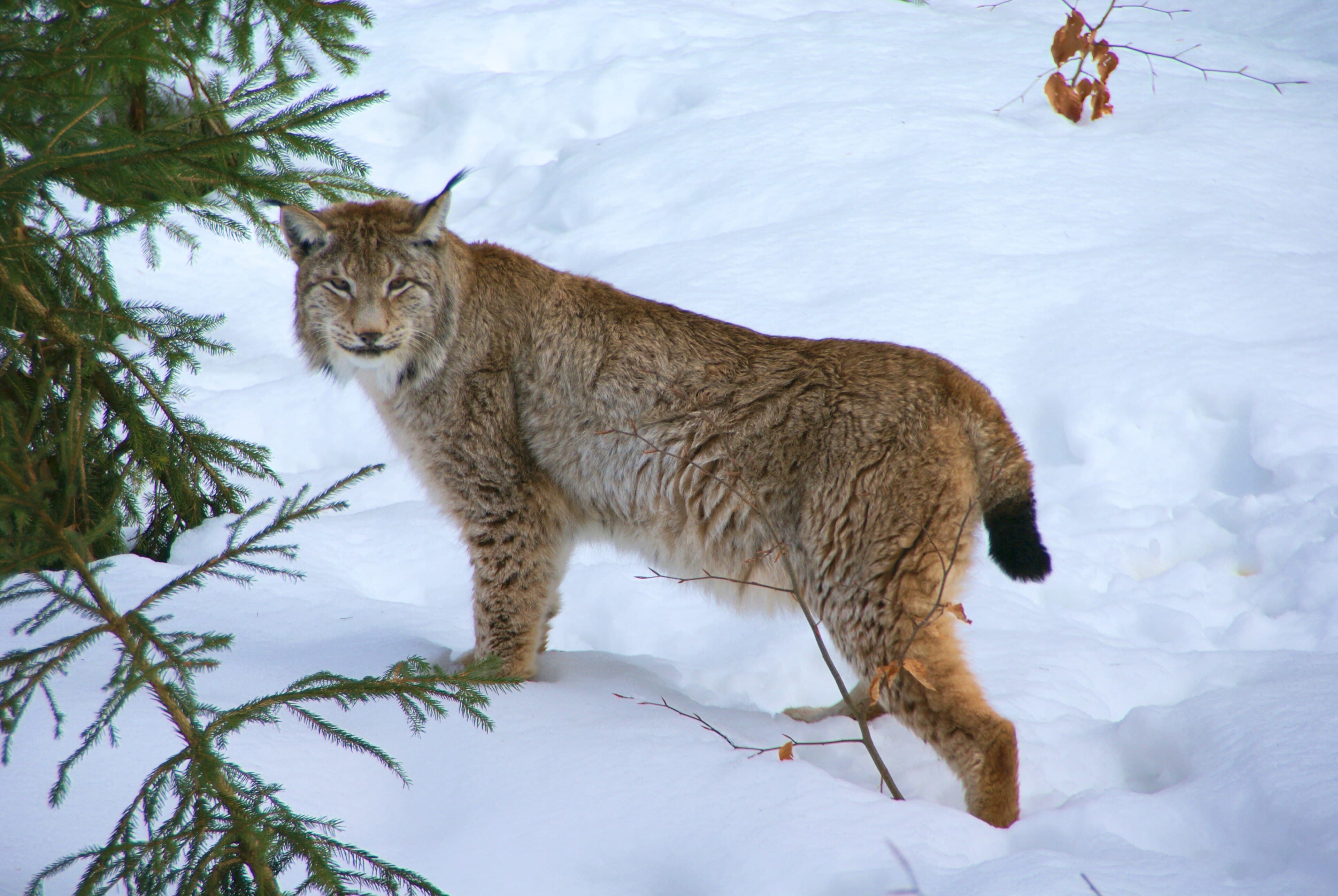
A Eurasian lynx with thick fur and tufted ears walking through snowy forest

Photo 路 Wikimedia Commons

What is it?

The Eurasian lynx is the biggest wild cat in Europe. About the size of a large dog, with long legs, a short tail and famously tufted ears, it lives deep in Slovakia's forests. There are around 300 lynx in the country - so shy and quiet that most Slovaks have never seen one in their lives.

Tell me more

Lynx are built for cold forests. They have huge paws that work like snowshoes, spreading their weight over deep snow so they don't sink. Their thick spotted coat helps them disappear against tree bark, sun patches and fallen leaves. A lynx can sit a few metres from a person and not be noticed.

Those famous black tufts on the tips of their ears are not just decoration. Scientists think they help focus sounds, a bit like little antennae. A lynx can hear a mouse moving under the snow from many metres away.

Lynx hunt alone, mostly at night. They sneak forward, freeze, sneak forward again, and then pounce. They can leap up to 4 metres in one jump - the length of a small car. Their favourite prey is the roe deer, but they will also catch hares, foxes and birds.

A mother lynx will raise her kittens (usually two or three) on her own. The kittens stay with her for about ten months, learning to hunt by watching, before heading off to find their own piece of forest. Slovakia, Poland and Romania are now some of the best places in Europe to be a lynx.

In the classroom

Walk your class through this in 15 minutes.

Talk together

Discussion prompts

  1. 01Why might an animal want to be invisible to other animals - even when it isn't being hunted?
  2. 02Lynx can hear sounds that humans cannot. What would it be like to have super-hearing for a day?
  3. 03Most Slovaks have never seen a lynx in real life. Why might it actually be a good sign that an animal is so hard to spot?
Try this

Classroom activity

Try a 'lynx walk' across the playground or hall. Take one slow step, freeze, listen, then another step. Now try the same walk but with one rule: don't make any sound. Discuss: what is hard about it? How long can you keep it up?