
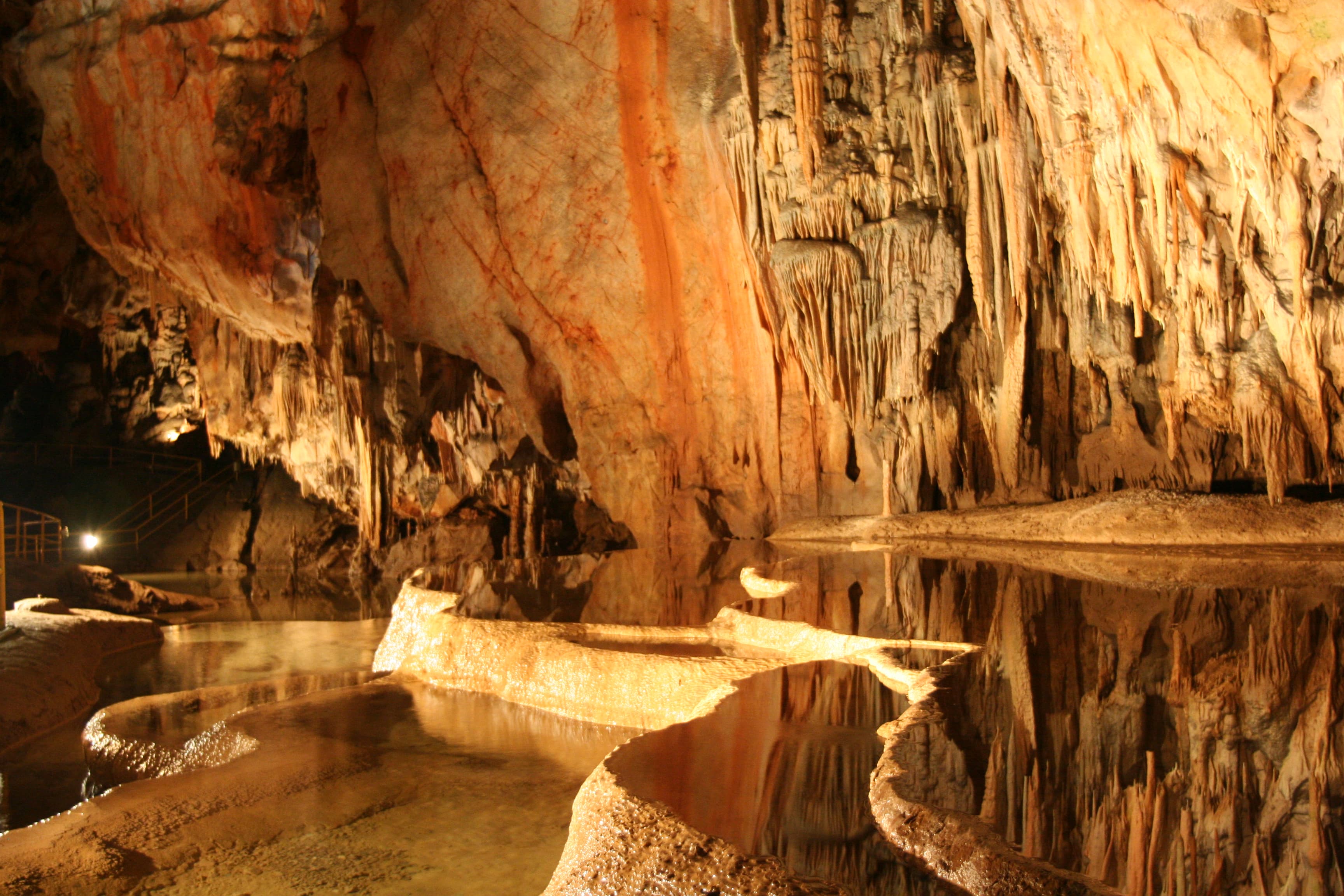
The most famous cave is called Domica, in the Slovak Karst near the Hungarian border. Visitors walk along a path inside, past stalactites (pointy bits hanging from the ceiling) and stalagmites (pointy bits growing up from the floor). At one point they get into a small boat and float along an underground river.
Another famous cave is the Demänovská Ice Cave, in the Low Tatras. Even in the middle of summer, when the surface is hot, the cave stays cold. Sheets of solid ice cover parts of the cave floor and walls all year round, glowing pale blue when the lights are switched on.
Caves grow incredibly slowly. A stalactite the length of your finger might have taken 100 years to form. They are made by water dripping through limestone rock - each drop leaves a tiny bit of mineral behind, and over thousands of years those tiny bits become huge stone pillars.
Lots of animals live in Slovak caves. Bats roost on the ceilings during the day and pour out at dusk to hunt for insects. Some caves also have rare blind salamanders, and even ancient cave-bear bones have been found in deep tunnels. It is a very quiet, very dark world, just underneath all the noise on top.