
A traditional Slovak band might have one or two fiddles, a viola, a double bass, and sometimes a cimbalom - a large wooden box with strings that the player hits with little hammers. The cimbalom makes a sparkling, tinkling sound, like a piano made of raindrops. Some bands also include a fujara or a clarinet.
Slovak villagers used to make their own music in the evenings - there were no radios or televisions. People sang songs about love, about working in the fields, about funny things that had happened, about the weather. Many of those songs are still sung today. Children learn them at school in folk choirs.
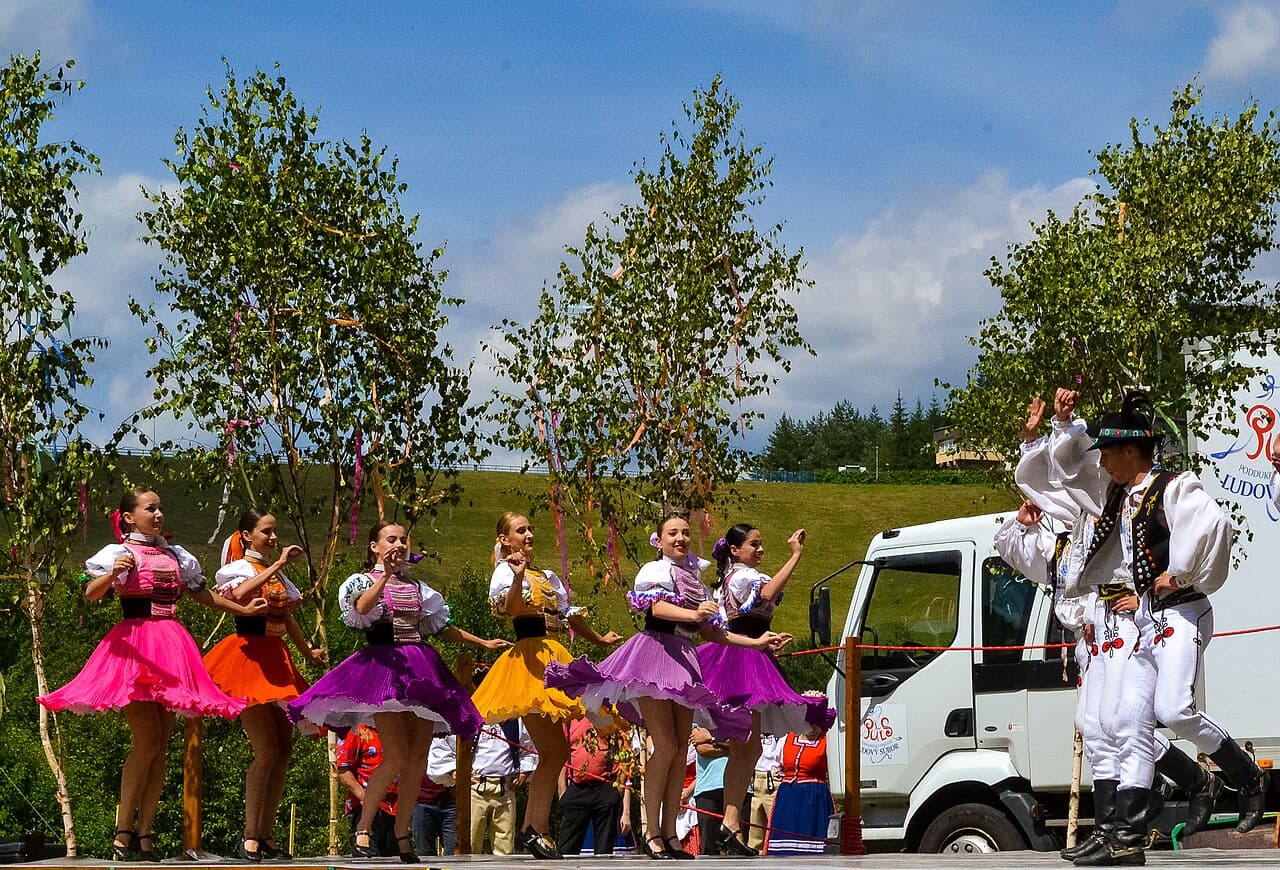
Each region has its own folk costume. In the north, near the Tatras, dancers wear bright white shirts, embroidered with tiny flowers along the sleeves, plus dark trousers or red skirts and tall hats. In the east, costumes have heavier embroidery in red, black and gold. Costumes from different villages can look totally different.
Dancing is a huge part of Slovak folk music. The 'odzemok' is a fast, jumping shepherds' dance, where the dancer leaps in the air and slaps the soles of their boots. The 'čardáš' starts slow and steady, then suddenly speeds up until everyone is spinning. Even small Slovak children learn the basic steps in folk-dance clubs.