
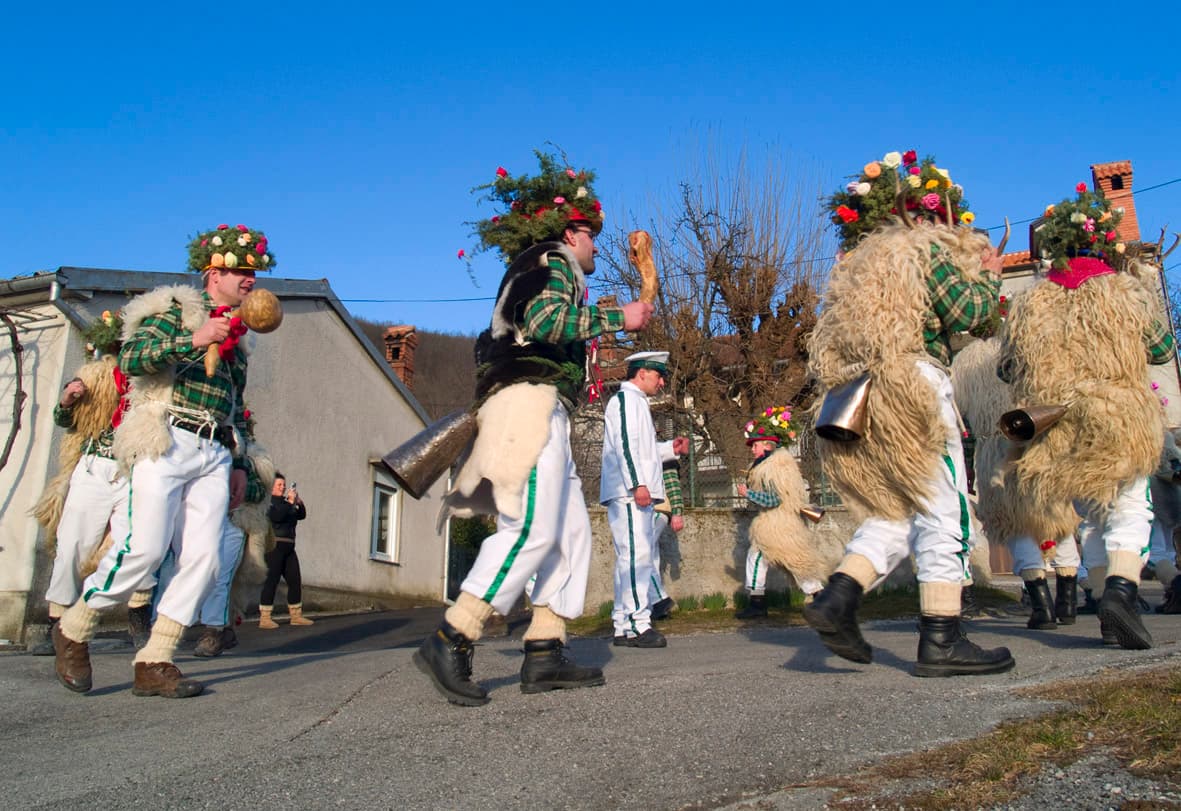
The masks are the heart of Fašiangy. People make them from wood, fabric, fur, feathers and paint. Some are funny, some are scary, some look like animals, some look like village characters from old folk tales. In one part of central Slovakia called Hrochoť, the costumes have been more or less the same for hundreds of years.
Each village has its own customs. In some places a group of masked people walks from house to house, singing, dancing and joking. The family they visit gives them small treats - a piece of bacon, some doughnuts, a few coins - which the group then shares at a big party that evening.
Food is very important. Slovaks eat 'šišky', which are round doughnuts dusted with sugar and often filled with jam. They might also have 'krepy' (pancakes) and 'pampúchy' (smaller doughnuts). All this rich food is to celebrate the last week before Lent, the quieter time before Easter.
Fašiangy ends just before the start of Lent, usually on a Tuesday in February. The very last day is called 'Fašiangový utorok' - Carnival Tuesday. After that, things calm right down again. But on that last evening, the dancing, eating, and music are often the wildest of the year.